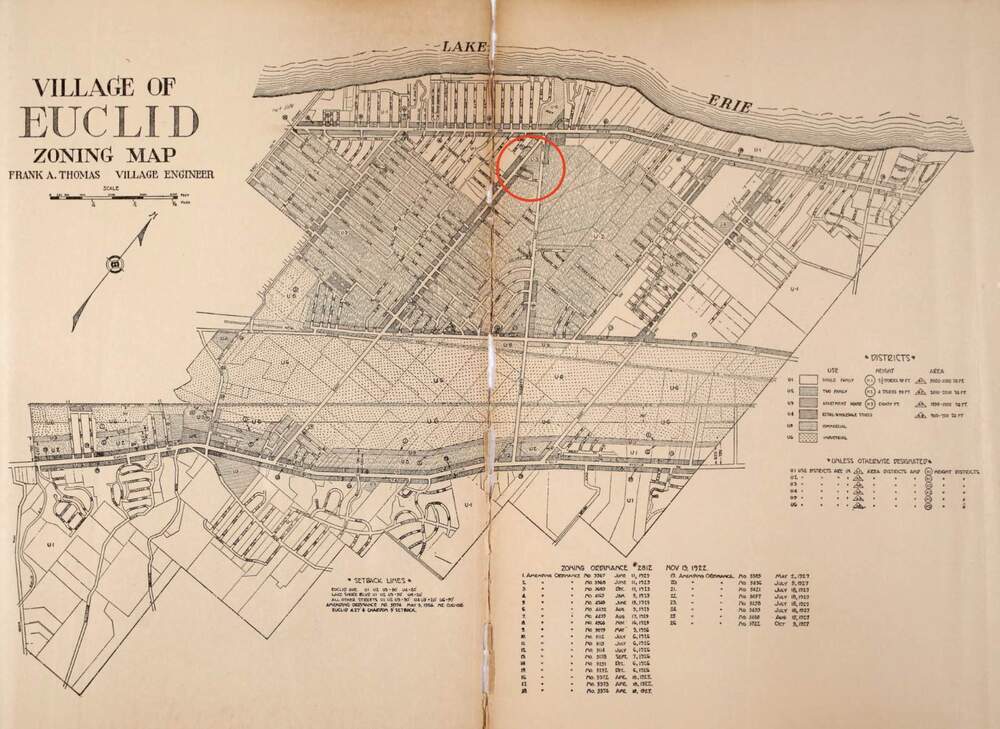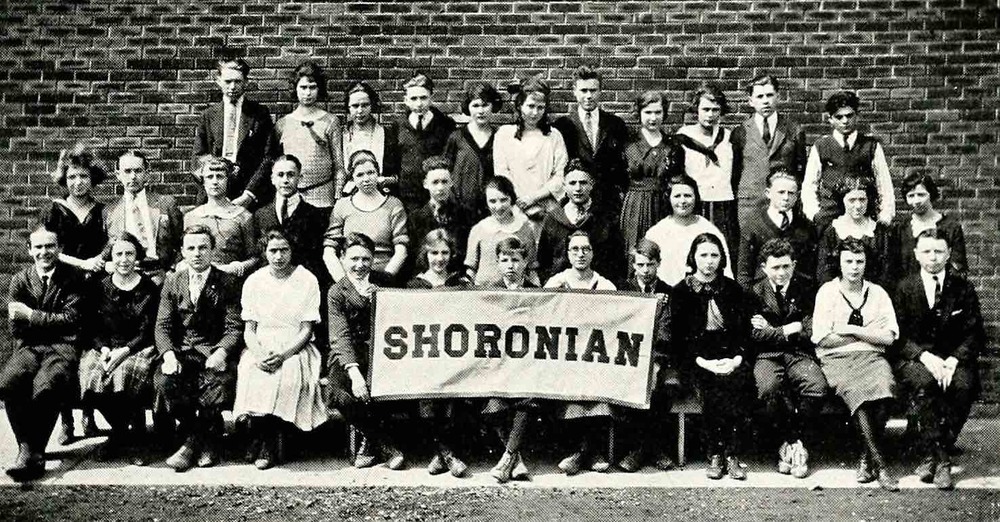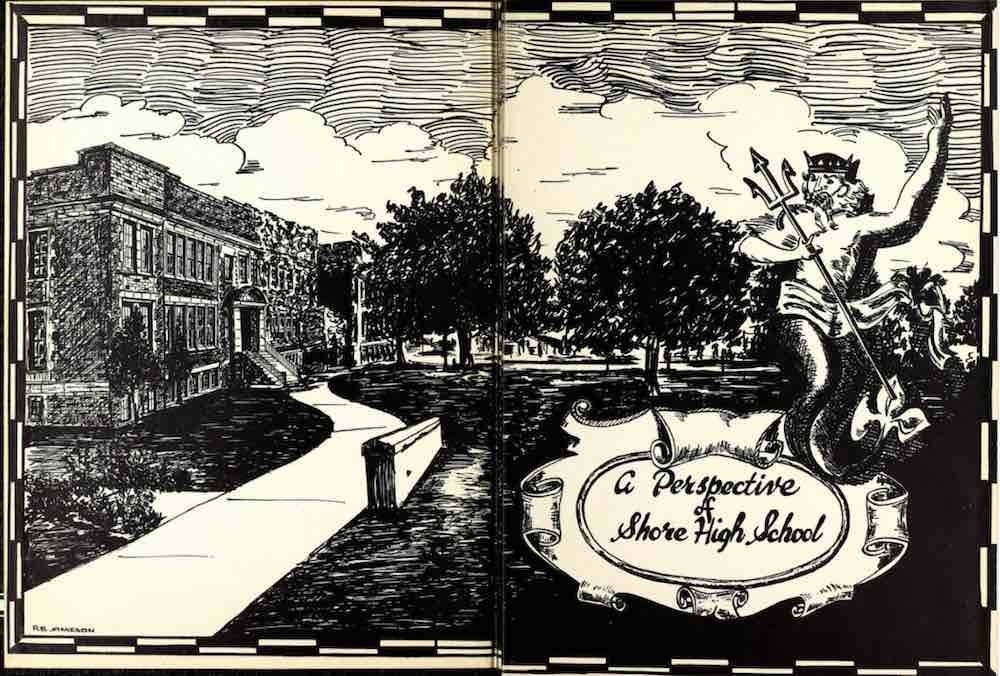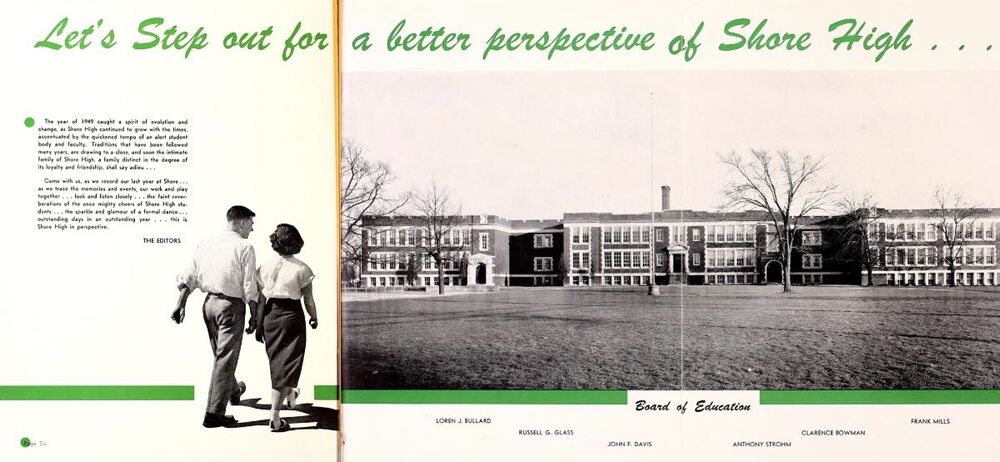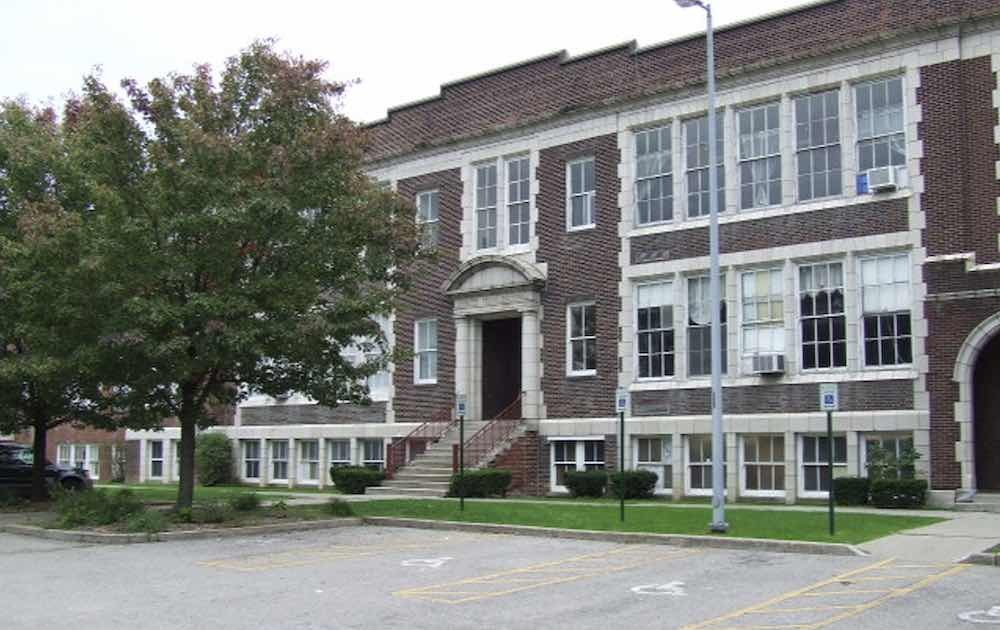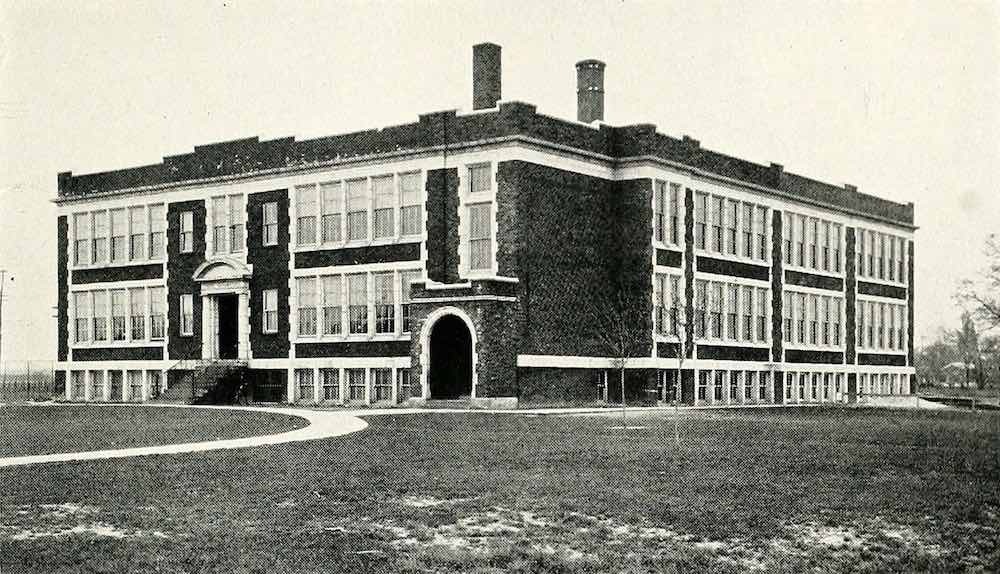
For nearly seven decades, the building that is now Shore Cultural Centre served as a public school. The Euclid Village School District built Shore High School in 1912-13 after it purchased land between Babbitt Road and East 222nd Street near where these roads converged at Lakeshore Boulevard in the heart of the suburban village. The three-story school was constructed at a cost of $42,500 and was paired with another new high school built near Euclid and Chardon Road, Central High School. Although Euclid remained a small village at that time, it stood on the cusp of significant growth as growing numbers of people moved to Cleveland’s first-ring suburbs. In its early years, Shore High School, like Central High, housed all grades. Only the top floor of Shore High School actually housed high school classrooms. Neither of the village’s high school buildings initially had an auditorium, necessitating the use of Euclid City Hall for graduation ceremonies.
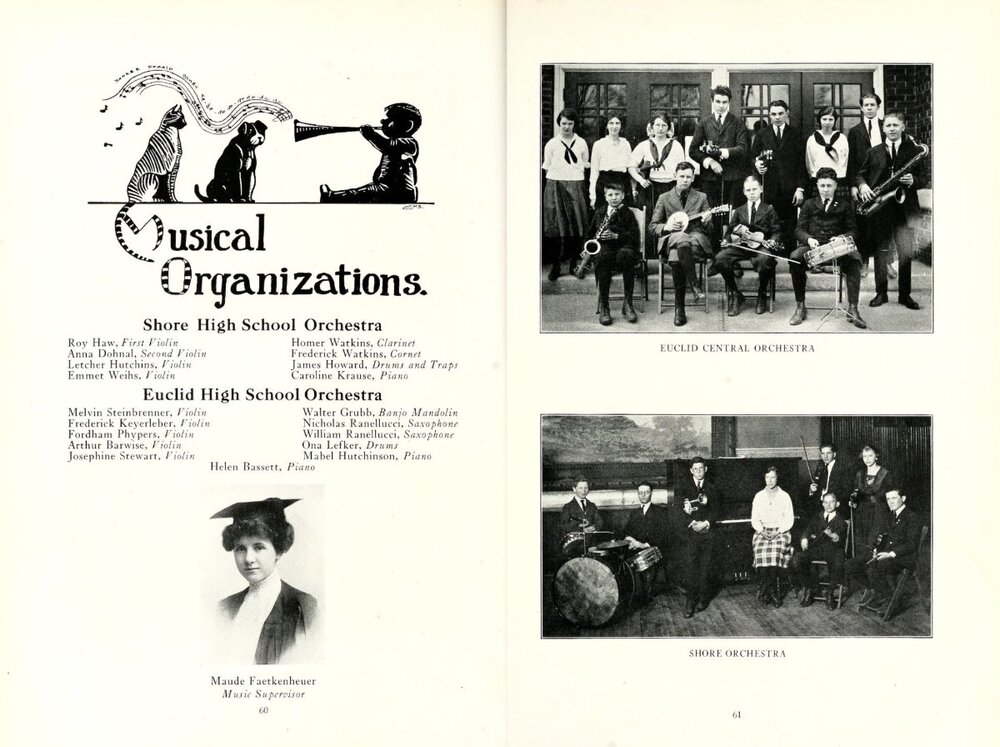
By 1928, according to the Directory of Euclid, Euclid-Central and Euclid-Shore High Schools collectively served 615 pupils, a reflection of Euclid’s growth from about 2,000 to 12,000 people in the time since the schools opened. The directory also noted the strength of Shore High’s Musical Department, which staged many different productions, including “The Spring Maid” and “The Mikado.” The directory also claimed that Euclid had one of the largest village school systems in Ohio, a distinction that reflected the fact that Euclid was still two years away from being incorporated as a city. Shore High School’s continued growth led to the addition of eight new attachments to the original building over the next couple of decades. The school had known nothing but growth, so Euclid residents could only imagine more of the same.
Shore High School’s future became uncertain after World War II. With the suburb’s explosive growth, a new Euclid High School building opened for grades ten to twelve in 1949. As a result, both Shore and Central High Schools were converted into junior high school that housed grades seven to nine. The original Central High School building was demolished in 1968 following the construction of a newer building, while the original Shore High building continued to serve the district until Euclid began to experience population loss in the 1970s. With demand for classroom space receding, Shore Junior High School closed in 1982, leaving the 1913 building’s fate in question.
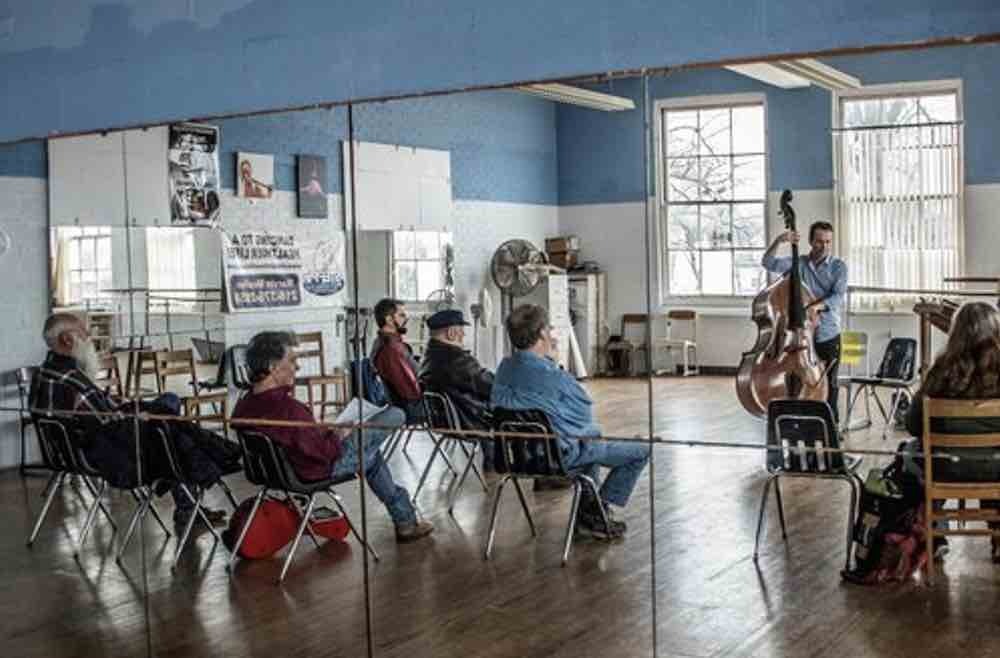
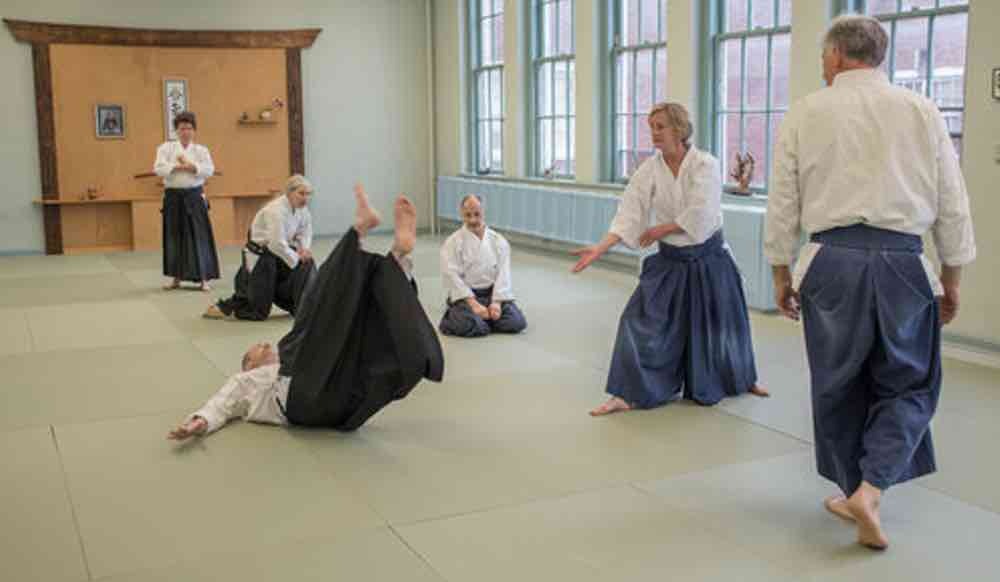
Thanks to the school building’s central location in the community, the city saw many offers over time by people who wanted to redevelop the land. However, the people of Euclid decided instead to recast the building as a community center. Shore Cultural Centre opened in 1985 and, following the school board’s sale of the building to the City of Euclid in 1989, it underwent a major renovation. Shore Cultural Centre reflected efforts by community leaders who had lived in Euclid for decades. One of them, Dolly Luskin, headed the effort to establish this center. Luskin had served on the school board for years in various leadership positions. She believed in the building’s potential as a place for teaching future generations about arts and culture while honoring a physical landmark from the city’s early years. Shore Cultural Centre preserves the memory of Shore High School as it provides cultural activities in the city. Its auditorium is the home of the Euclid Symphony Orchestra and serves other performing arts organizations, as well as some nonprofits and businesses.
Despite Shore Cultural Centre’s updated role in the community, it became the subject of debates about its utility. As early as 2007, some in the community argued that the building should be converted into some other use or sold to the highest bidder due to its land value. Ideas for what should be done with the building came from all angles, as seen in contentious local city council meetings. The problem, some argued, was that Euclid was pouring money into a facility that was losing more money than it made through renting its spaces. The city, which suffered a significant loss of its tax base after losing one-third of its population in the four decades after 1970, struggled in recent years to make needed repairs and improvements to the aging building. As a result, the city continued to troubleshoot the facility’s problems. By 2023, it had made some progress. Shore Cultural Centre received an earmark of federal funds to upgrade some of its infrastructure and was reportedly 93 percent occupied.
Shore Cultural Centre embodies the story of Euclid and, more broadly, of older suburbs. As a school, it rose from humble beginnings, grew with all the vigor of the suburb whose students it served. Then, as in many inner-ring suburbs, Euclid endured the deindustrialization and population flight to more outlying areas or even other states, leaving school facilities in excess of the need. The school’s reinvention was part of a wider effort to reinvest in the community, but like the city, Shore Cultural Centre continues to navigate toward the promise of a sustainable future for a historic asset.
Images