Filed Under Bridges

Detroit–Rocky River Bridge

From Wright's Ferry to the Bridge Building

The Detroit–Rocky River Bridge spans the Rocky River and connects the cities of Rocky River and Lakewood. Prior to 1819, Rufus Wright operated a ferry that carried Rockport residents across the Rocky River. He was a tavern owner as well. Wright later became Lakewood's second postmaster. His sons followed in his footsteps and members of the Wright family were the city's postmaster for several generations.

In 1819, the construction of the first Detroit–Rocky River Bridge began, with Wright paying half the cost. Each of the 18 resident families contributed money, labor, or materials. The bridge was completed in 1821, but crossing it required a hazardous descent and ascent along the river's slippery embankments. The bridge was so dangerous that in November 1848, two stagecoaches capsized on the bridge. Travelers were advised to avoid the Detroit–Rocky River Bridge and instead go along the beach to ford the river.

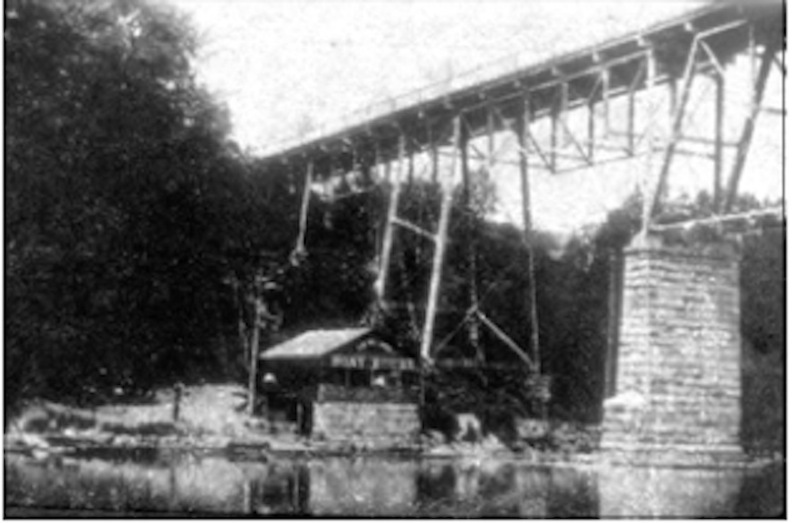
In 1850, the old bridge was replaced by a toll bridge made by the Detroit Plank Road Company. The new bridge made for slightly safer approaches. It was again replaced in 1875 with a wood and iron girder bridge before an even safer bridge was built in 1890. This high-level truss bridge with an oak plank floor and built of iron and stone avoided the embankments altogether. It was toll-free but cost taxpayers $60,000 to construct.

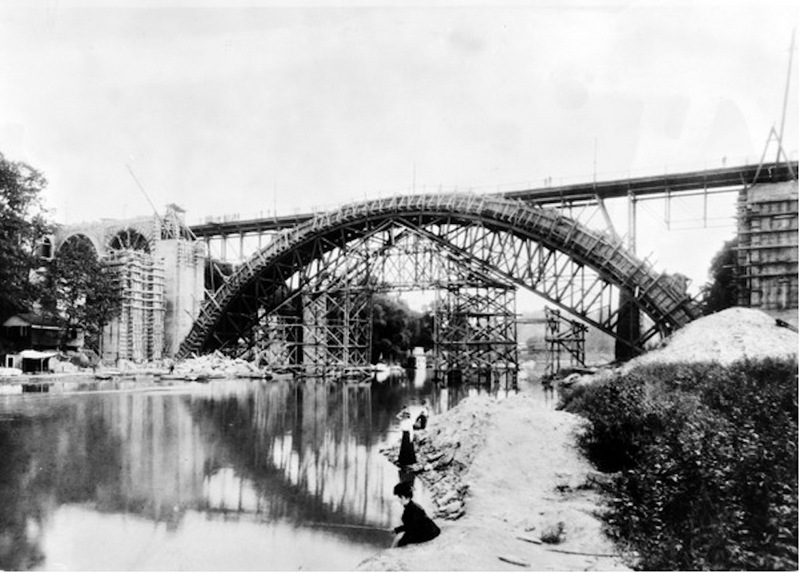
As electric interurban railcars began plying the bridge on the Lake Shore Electric line between Cleveland and Toledo in the early 1900s, the bridge's safety was soon at issue. On May 13, 1905, an interurban car derailed on the bridge and came perilously close to plunging into the gorge. As a result, a fifth bridge, built of concrete and steel, was completed in 1910. The latest Detroit–Rocky River Bridge was the longest stretch of unreinforced concrete in the world at the time, measuring 208 feet.

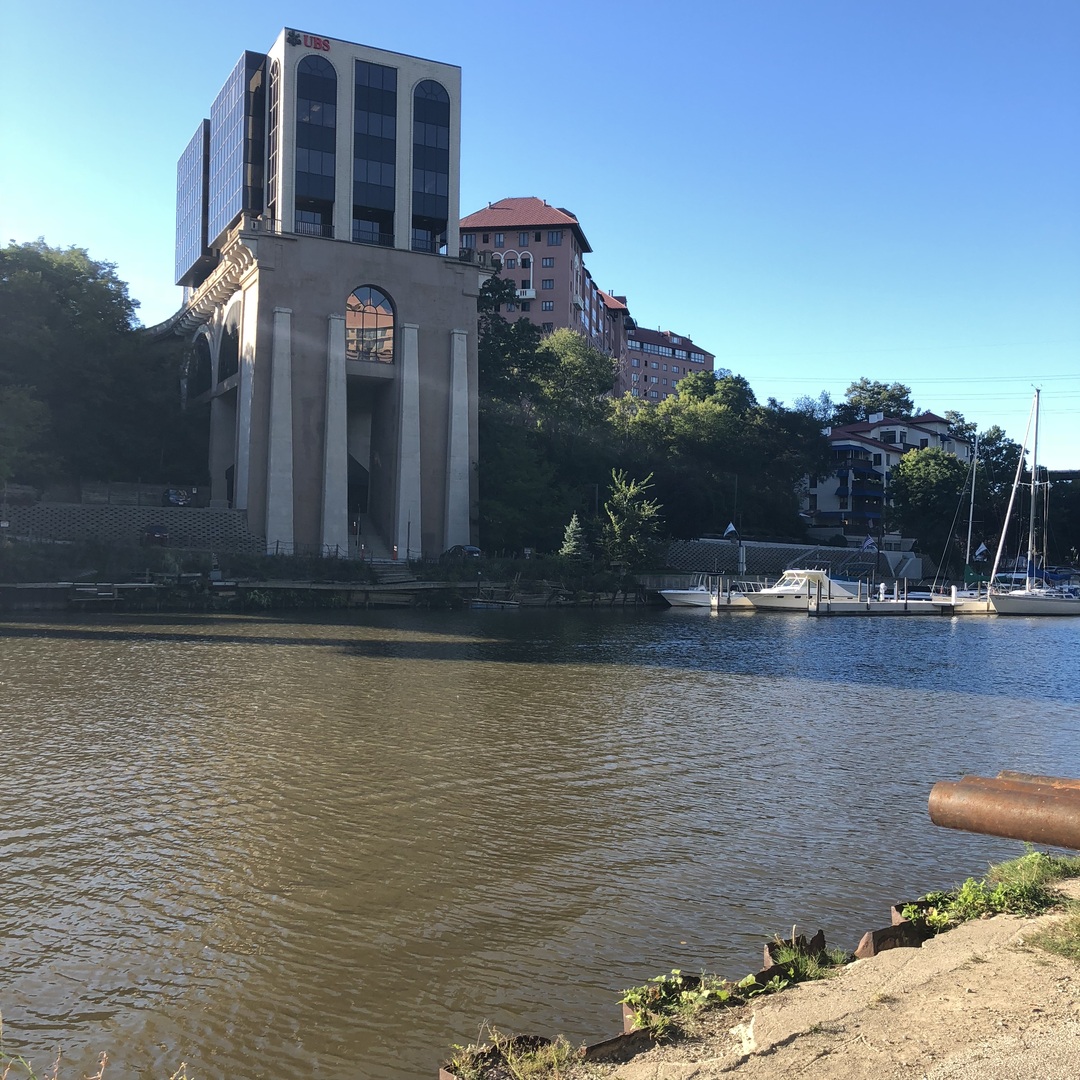
The current bridge was built in 1980 for $4 million. Today, the Bridge Building at 18500 Lake Road, built atop the western foundation, stands on the only remaining section of the 1910 bridge.

Audio

Dedication Speech, 1910 This speech was given at the dedication ceremony for the Detroit Rocky River Bridge by County Commissioner Harry Vail on October 11, 1910. Vail considers the bridge to be a great achievement for the people of Cuyahoga County and he credits this to the strong family life of the population. This speech offers an interesting insight into the style of politics in the early twentieth century. Would a speech like this ever be made today? How has American politics changed since 1910?

Images

1850 Toll Bridge
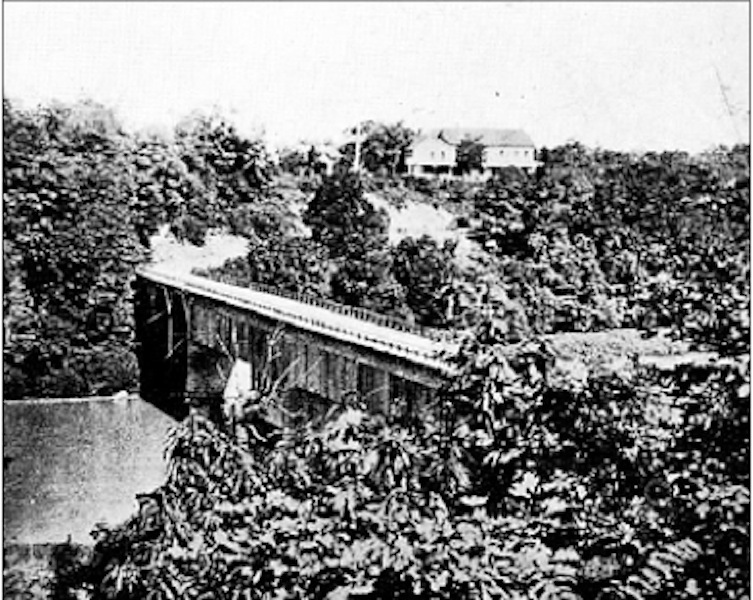
1850 Toll Bridge The 1850 toll bridge was built by the Detroit Plank Road Co. The toll was 7 cents for one horse, 10 cents for a team, and 15 cents for a double team. Source: Lakewood Historical Society
1890 Truss Bridge
1890 Truss Bridge The 1890 Detroit Rocky River Bridge was a truss bridge. Truss bridges are the oldest type of modern bridges and were popular between the 1870s and the 1930s. These bridges were composed of straight elements that could withstand the tension of dynamic loads. They were economical to build due to the efficient use of materials. Source: Lakewood Historical Society
Construction on the 1910 Bridge
Construction on the 1910 Bridge The 1910 Detroit Rocky River Bridge was designed by civil engineer Alfred Felgate with Wilbur Watson serving as the consulting engineer. Construction began in September 1908 and took two years to finish. The $225,000 bridge was dedicated on October 11, 1910. It was an early example of the 2-ribbed, open-spandrel type. Upon completion, the bridge's 280 feet arch briefly held the record as the largest stone arch in the United States. Source: Michael Schwartz Library Special Collections at Cleveland State University Date: 1909
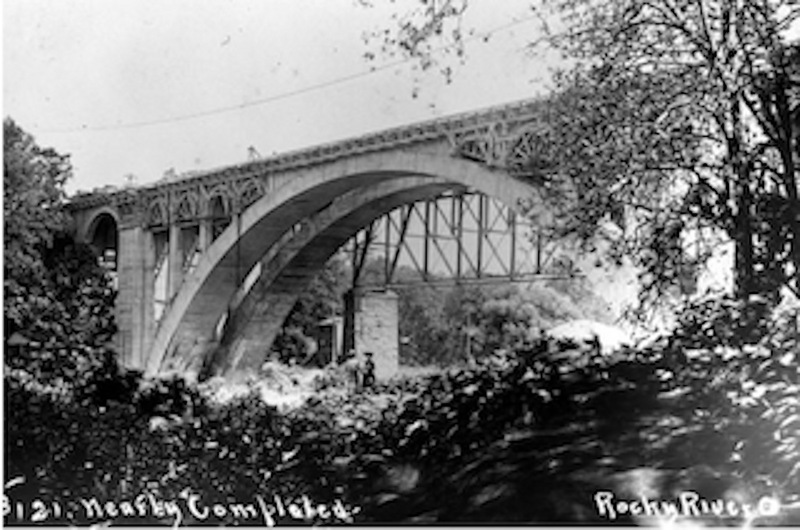
Completed Arch
Completed Arch Looking north from the Rocky River Valley at the Detroit–Rocky River Bridge. The bottom portion of the Rocky River Viaduct can be seen behind the bridge. The 700-foot concrete span bridge was designed by Wilbur Watson and built by the Schillinger Brothers Construction Co. in 1910. Source: Michael Schwartz Library Special Collections at Cleveland State University Date: 1910
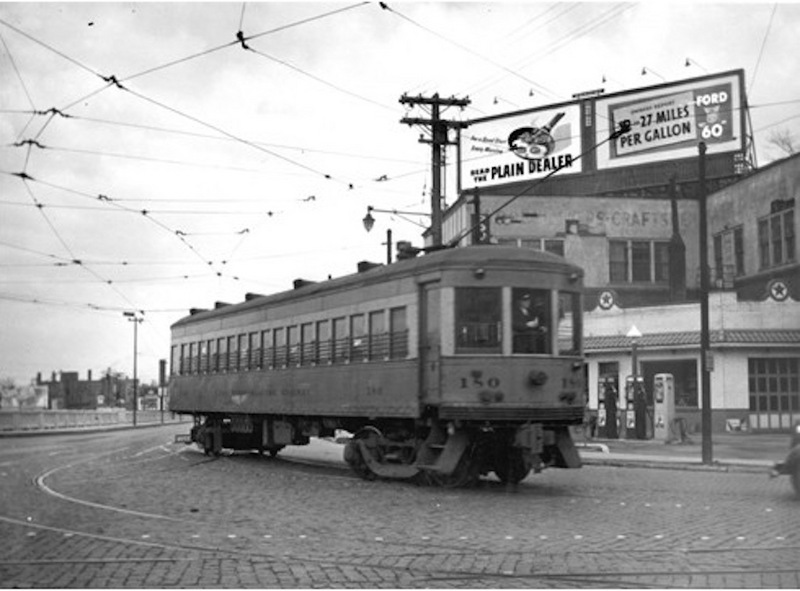
LSE Interurban Car
LSE Interurban Car This streetcar, run by the Lake Shore Electric Interurban Company, just exited the Detroit–Rocky River Bridge (which can be seen in the background on the left). It is turning onto Sloan Avenue in Lakewood. The interurbans necessitated the building of the 1910 bridge. The billboard on the left reads "Read the Plain Dealer." The billboard of the right for Ford Motor Co. reads "Owners Report 22 to 27 Miles Per Gallon." Note the electrical wires overhead. Source: Michael Schwartz Library Special Collections at Cleveland State University Date: 1938
Demolition of 1910 Bridge
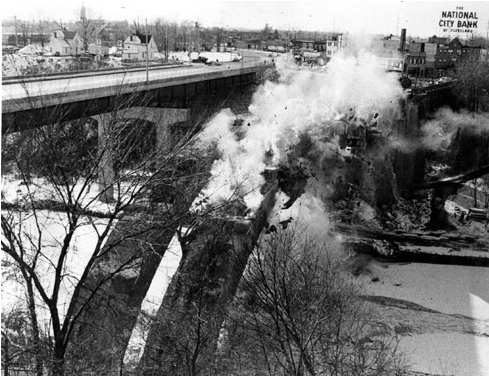
Demolition of 1910 Bridge The 1910 bridge was demolished in 1981 with dynamite. The new bridge is on the left. Source: Michael Schwartz Library Special Collections at Cleveland State University Date: 1981
Bridge Building, viewed from Rocky River Marina
Bridge Building, viewed from Rocky River Marina The Bridge Building at 18500 Lake Road incorporates the western stub of the 1910 Detroit–Rocky River Bridge into its architectural foundation. The building was a collaboration between architect John Rozukalns and engineer Robert A. Hillenbrand of the Seuffert Construction Company. Creator: Erin Bell Date: 2018

Location

Detroit Road, Rocky River, OH | The western "stub" of the bridge remains intact and serves as the foundation of the Bridge Building at 18500 Lake Road.

Metadata

CSU Center for Public History and Digital Humanities, “Detroit–Rocky River Bridge: From Wright's Ferry to the Bridge Building,” Cleveland Historical, accessed April 17, 2026, https://www.clevelandhistorical.org/index.php/items/show/231.