The Fine Arts Building was Cleveland's answer to similar artist-oriented developments in New York and Chicago. Reflecting the vision of two brothers who emigrated from the Russian Empire, this Millionaires' Row mansion–turned–miniature artists' colony mimicked the bohemian spirit of New York's Greenwich Village.
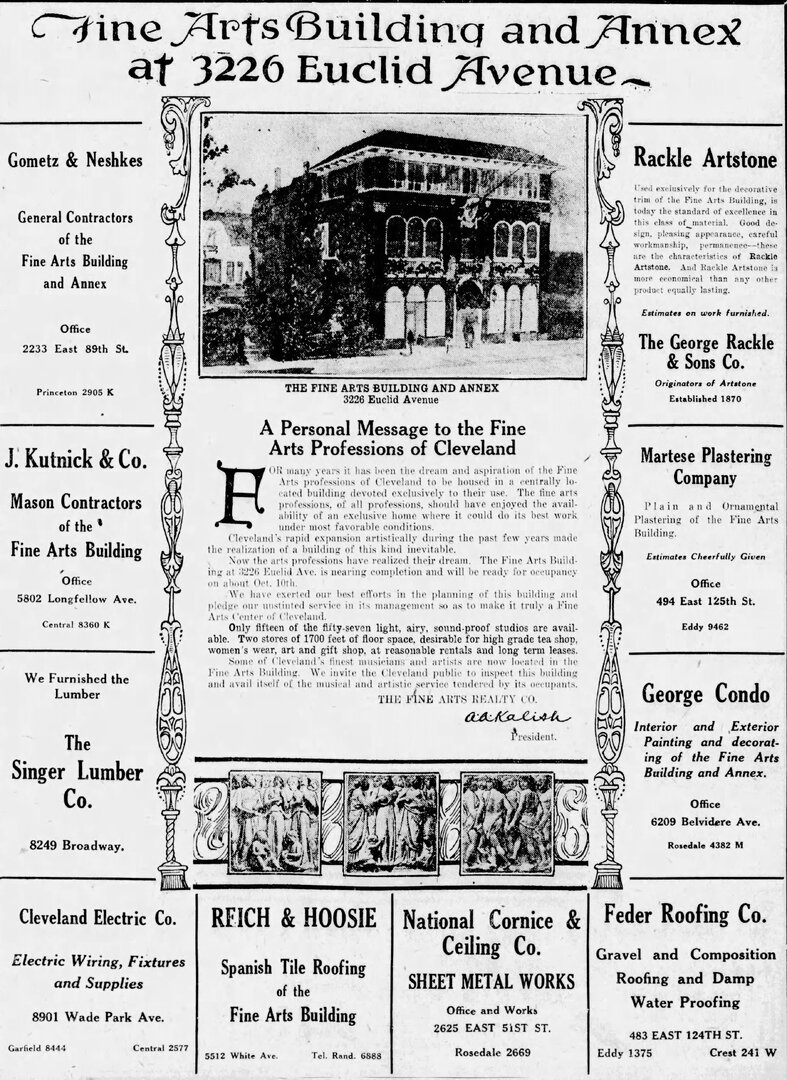
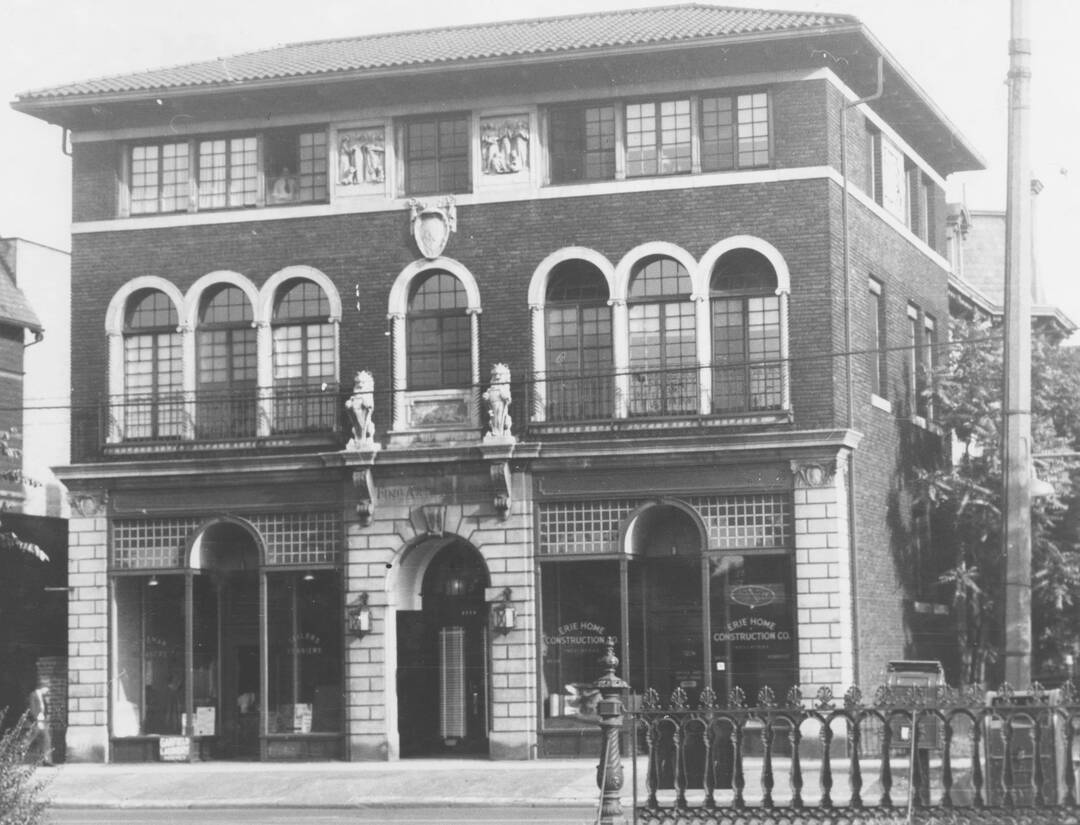
The Fine Arts Building opened in 1921 to great fanfare. Located on Euclid Avenue between East 30th and East 36th Streets in the historical stretch of Millionaires’ Row, the Fine Arts Building was built in an era of great change in Cleveland. By the 1920s, Millionaires’ Row was starting to lose the eponymous millionaires who developed the area, as Euclid Avenue became more focused on commerce.
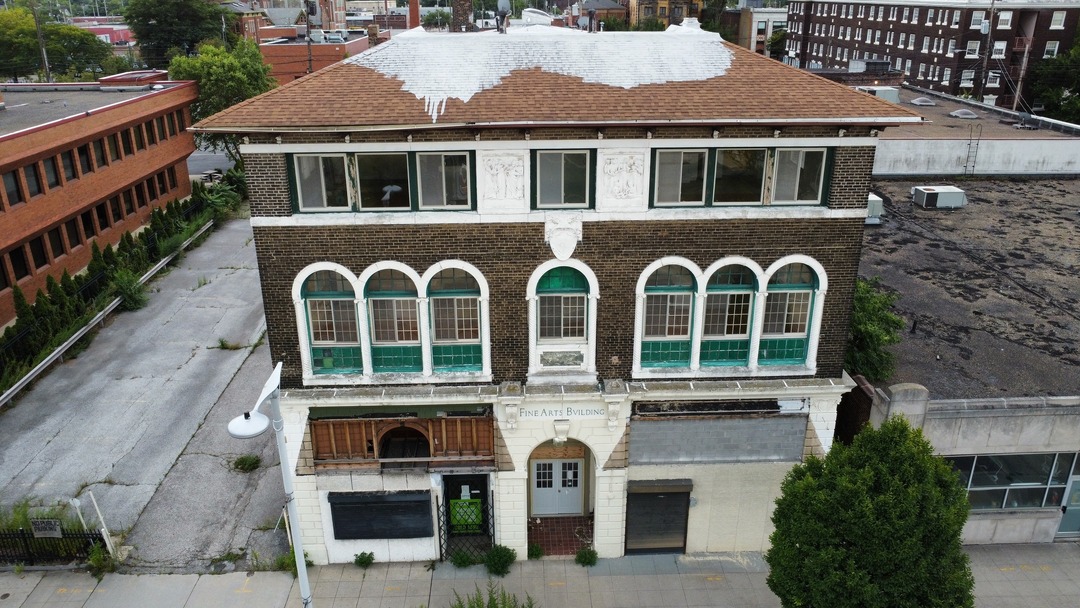
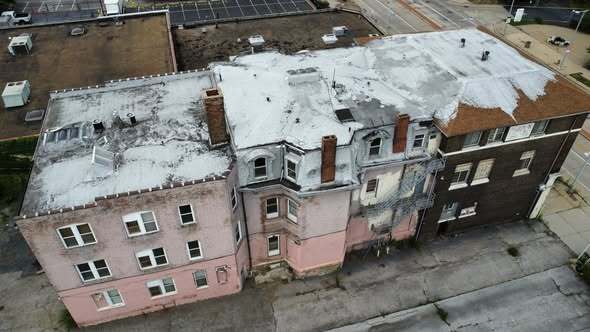
The Fine Arts Building started as the mansion of John Henry Devereux. Originally built in 1873 for Devereux, a U.S. Army general in the Civil War, the mansion remained home to the Devereux family until his widow Antoinette passed away in 1915. As the city changed and Euclid Avenue lost its luster in the eyes of local elites, its old mansions were usually torn down, but the Devereux mansion did not meet that same fate. Instead, six years after Antoinette Devereux's death, it was repurposed as a self-contained arts colony.
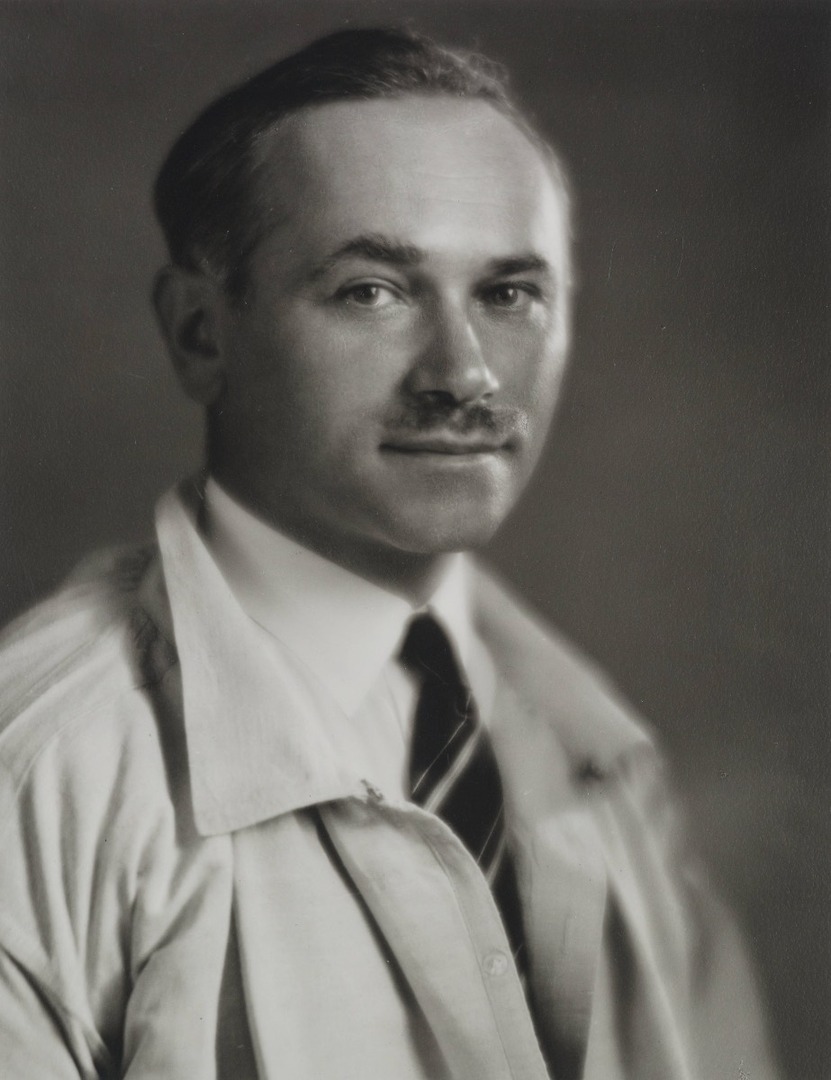
The Fine Arts Building was the brainchild of two Cleveland brothers, A. A. and Max Kalish. A. A. Kalish was a real estate dealer and his brother Max was a renowned artist. The Kalish brothers were born in Minsk in the Russian Empire (present-day Belarus) into an Orthodox Jewish family. Their father immigrated to the U.S. in 1894, and the rest of the family followed four years later. Max, having shown artistic talent early on, later won a scholarship to the Cleveland Institute of Art. After a stint in the Army in World War I, he split his time between Europe and the U.S. until World War II, when he had to return to the U.S. permanently.
The melding of the business and art worlds had its roots in New York City, and the Cleveland Fine Arts Building reflected this. The primary models for the Cleveland Fine Arts Building were the Tenth Street Studio Building in New York City and Chicago’s Fine Arts Building. Both places, as would happen in Cleveland, combined the creation of art and use of a building to showcase and sell the art produced there.
The concept of fine arts buildings began in the mid-19th century in New York City. In the 1850s a building was constructed on 10th Street that ended up housing a wide range of artists, such as Winslow Homer and Frederic Church. It was the first such building in the world. It was from this building that Greenwich Village gained its reputation as a center for artistic and bohemian lifestyles. As in Cleveland 60 years later, the Tenth Street Studio Building was developed by two brothers, in this case, businessman Richard Morris Hunt and artist William Morris Hunt.
The reason that places such as the Fine Arts Building were built was to bring together the world of art and commerce. They provided artists space to work, as well as a place to sell their works. This was especially important in the era before a lot of artists had agents to sell their work for them.
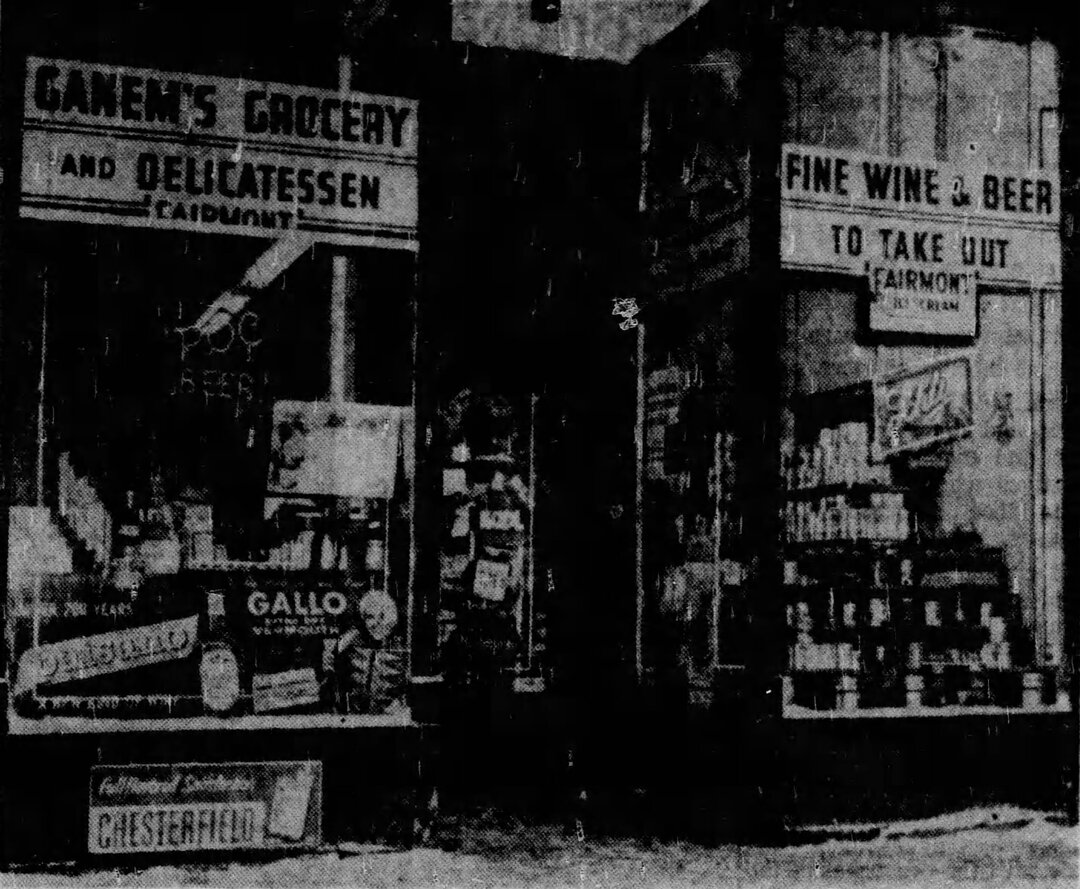
The Cleveland Fine Arts Building lasted for less than fifteen years as an artists' building. After the mid 1930s, it continued as an apartment building. The front of the building hosted various businesses over the years, as well. In the late 1950s there was a family-owned deli, and various other businesses occupied its street-level spaces into the 21st century.
Images