<?xml version="1.0" encoding="UTF-8"?>
<feed xmlns="http://www.w3.org/2005/Atom">
  <title type="text">Cleveland Historical</title>
  <updated>2026-04-17T14:04:10+00:00</updated>
  <generator uri="http://framework.zend.com" version="1.12.20">Zend_Feed_Writer</generator>
  <link rel="alternate" type="text/html" href="https://www.clevelandhistorical.org/"/>
  <link rel="self" type="application/atom+xml" href="https://www.clevelandhistorical.org/items/browse?output=rss2"/>
  <id>https://www.clevelandhistorical.org/</id>
  <author>
    <name>Cleveland Historical</name>
    <uri>https://www.clevelandhistorical.org</uri>
  </author>
  <link rel="hub" href="http://pubsubhubbub.appspot.com/"/>
  <entry>
    <title type="html"><![CDATA[Zverina Log House: A Bit of Historic Czechia on Cleveland&#039;s Southeast Side]]></title>
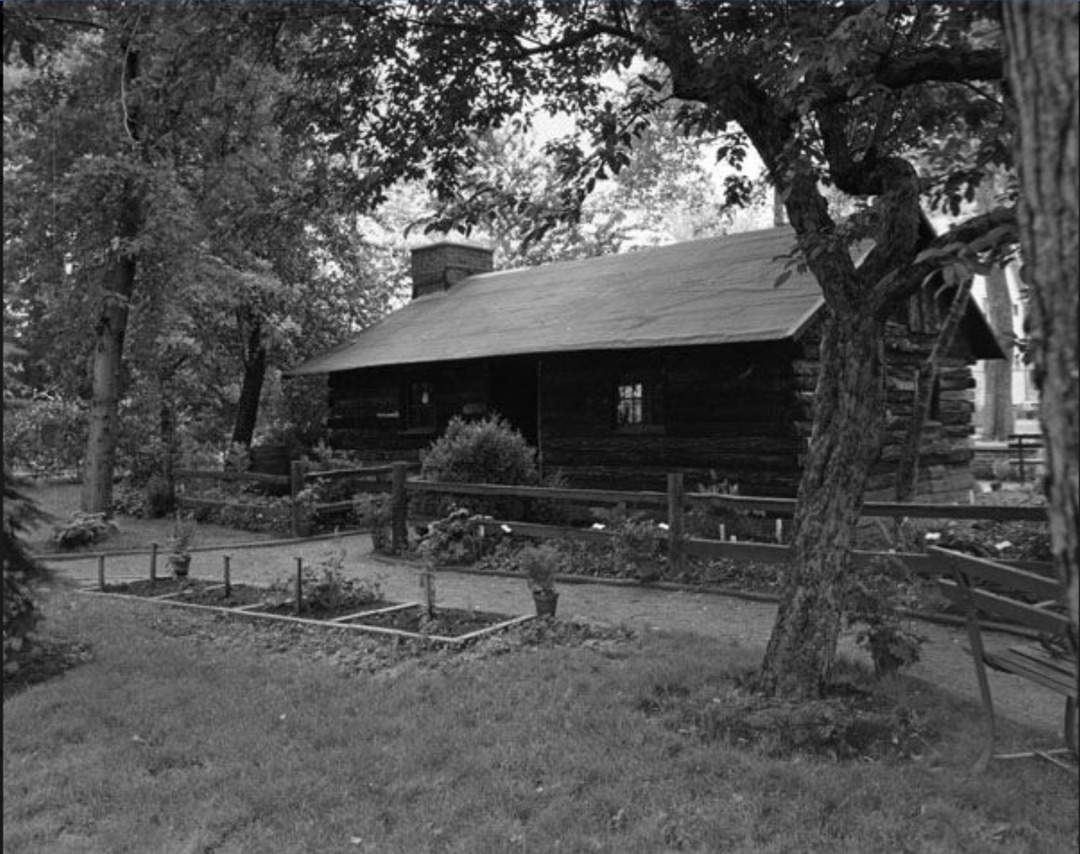
    <summary type="html"><![CDATA[<p><strong><em>Having spent much of his childhood in a rural village in Bohemia, Czech immigrant Anton Zverina Jr. wanted to provide his American children with a glimpse of what life was like in such a village. So, in 1908, in the middle of the apple orchard in the backyard of his house on Miles Avenue, in what is today Cleveland's Union-Miles neighborhood, he built for them a traditional Czech log house to play in.</em></strong></p><img src="https://www.clevelandhistorical.org/files/fullsize/8d51cf25dee19c7141a341b8d0cff3c1.jpg" alt="Zverina Log House" /><br/><p>It's a long journey from the village of Čechtice, in the South Moravian region of the Czech Republic, to Cleveland, Ohio.  However, like thousands of other Czechs who left their homes  in Bohemia for America in the second half of the nineteenth century, eleven-year-old Anton Zverina Jr. made that journey with his parents and two siblings in 1874. The family settled in a neighborhood on the southeast side of Cleveland, near what is today the intersection of Broadway Avenue and East 55th Street.  The neighborhood soon filled with so many Czech immigrants that it became known locally as "Little Bohemia."</p><p>Anton's father  started several businesses in Little Bohemia, including a grocery store.  Soon, young Anton was working for him in that grocery store—but perhaps sometimes, in idle moments, he would dream of what his more rural life  in Čechtice had been like.  His father's grocery store was first located on Dille Street, near Broadway and Forest (East 37th), and then later for several years on Willson (East 55th) near that street's intersection with Broadway and Hamlet Avenues. In 1889, the Zverina family left a more lasting mark on the neighborhood when the grocery store moved into a new three-story red brick commercial building on Broadway Avenue, just north of East 55th Street.  The building, still standing today and known as the Zverina Building, was designed for Anton Zverina Sr. by fellow Czech immigrant Andrew Mitermiler, a prominent Cleveland architect who, among other historic buildings in Cleveland, designed Ceska Sin Sokol Hall  on Clark Avenue  on the city's west side..</p><p>Andrew Mitermiler had a daughter named Rose and, in 1895, six years after the Zverina Building was built, Anton Jr. married Rose.  After marrying, the two moved into an apartment on an upper floor of the building that Rose's father had designed for Anton Jr.'s father.  Here, they started their lives together.  By 1904, they were sharing the apartment with their first four children, who ranged in age from the oldest (Rose), who was six years old, to the youngest (Frances), who was a newborn.</p><p>Like his father, Anton Jr. became a successful businessman in Little Bohemia.  He expanded his father's grocery and real estate businesses, and started several new businesses of his own, including one on Blanche Avenue, near Weckerling (East 53rd) Street, just north of the CC&S railroad tracks.  There, he built several commercial buildings, the chief amongst them a factory in which he manufactured a "coffee enhancement" made from the chicory herb.  </p><p>By 1905, Anton Zverina Jr. had accumulated enough wealth to do what many other Czech immigrants in Cleveland had done once they were financially able to do so.  Anton looked to move his family out of the crowded urban environment of Little Bohemia and into a more rural setting, perhaps somewhere that reminded him of his childhood village.  He found the ideal setting in  Newburgh Township, some four miles southeast of  Little Bohemia. There, he purchased the former  M. S.  Robertson farm which consisted of about five-acres of land that fronted on the south side of Miles Avenue, near what is  today  that street's intersection with MLK Boulevard.  The farm land included a large orchard filled with apple, pear and other fruit trees.</p><p>In 1906, the year after Anton Jr. had purchased the farmland, he, Rose and their children moved into a large new house built for them on the property.  A year or so after they had settled into their new home, Anton undertook to build, in the middle of  the farm's fruit orchard,  a little piece of Bohemia for his children.  By 1908, he had constructed a large single-story log house complete with a fireplace for cooking meat on one end of its interior and a large play area for his children complete with a large U-shaped table with benches on the other end.  In 1909, one year after the log house was completed, the area of Newburgh Township in which Zverina family  now lived and which in 1907 had been incorporated as the Village of Corlett, now was annexed into the City of Cleveland. These municipal events, however, did not seem to deter the Zverina family from enjoying their little bit of Czechia.</p><p>According to daughter Frances Zverina, who grew up to become a Cleveland public school teacher as well as a horticulturalist, Anton and Rose Zverina's children—who  included youngest son Robert, born in 1911—played in the log house to their heart's content.  In addition to being a constant source of entertainment for them, the log house also served as a place for gatherings of the extended  Zverina family, for friends and their families, and for almost anyone else  in the neighborhood who needed a pleasant place to celebrate any important event. According to Frances, the log house even served in 1914 as the site of a clambake at which future Cleveland mayor Harry L. Davis was nominated to become Cleveland's next mayor. Even after Anton Jr.'s death in 1934 , the Zverina family continued to use the log house for special events and occasions, and this continued for almost three more decades until the death of Anton's wife Rose in 1962.</p><p>In 1963, Frances Zverina and her brother Justin, who had inherited the property, parceled off and donated to the Cleveland School Board the log house and about a quarter acre of land upon which it stood, to be used in the School District's gardening program, which had been started in the early twentieth century.  Frances Zverina, in addition to her job as a school teacher in the district, was also a lover of herbs, something passed on to her from her father. In the late 1960s, she successfully persuaded the Cleveland School Board to design and build a special herb garden near the log house that would enable children at nearby Miles Public School to grow, tend to, and learn all about the value of herbs to humans.  </p><p>The new herb garden and log house were a successful addition to Cleveland school's horticulture programs from the time the restoration and garden work was completed in 1970, until the program was terminated during the Cleveland School Board's 1978 financial crisis.  While the formal school program ended, the herb garden and log house were, starting in 1981, voluntarily tended to by Reverend Ralph Fotia, pastor of the nearby Shaffer United Methodist Church, and his staff, for another decade.</p><p>In 1984, while Pastor Fotia was tending to the log house and its gardens, the City of Cleveland, acknowledging the importance of the log house and its herb garden to Cleveland's history, made the log house a local landmark, but in the process erased its Czech identity, designating it simply as the "Miles Garden Log Cabin and Herb Garden."  Moreover, even though it was now a local landmark, this did not seem to help improve the condition of the log house and the surrounding gardens, which severely deteriorated over the years that followed.  In the early twenty-first century, several plans were advanced to repair and restore the building, as well as the herb garden. Only one—a cleanup of the grounds by students from Washington Park community school in 2018, was successfully completed. More recently, a community development organization in the newly designated Union-Miles neighborhood, undertook a review of the condition of the Zverina Log House, which it renamed "The Union-Miles Log House," but to date, no repairs have been done to the log house, nor does it appear that any additional restoration work to the grounds of the log house has been done.</p><p>While time may be running out for the  more than a century-old Zverina Log House, it is hoped that a way can be found by the Cleveland Metropolitan School Board, which still owns the property, with help from Union-Miles neighborhood organizations, to restore the log house and its  grounds not only as a remembrance to Cleveland's historic school garden program, but also to Czech immigrants like Anton Zverina Jr. who built this little piece of Czechia in Cleveland, and who, on a broader scale, played an important role in  the development of Cleveland's southeast side in the nineteenth and twentieth centuries.</p><p><em><strong><a href="https://www.clevelandhistorical.org/items/show/1057">For more (including 15 images) view the original article</a></strong></em></p>]]></summary>
    <published>2025-05-11T12:33:51+00:00</published>
    <updated>2026-03-04T21:32:06+00:00</updated>
    <link rel="alternate" type="text/html" href="https://www.clevelandhistorical.org/items/show/1057"/>
    <id>https://www.clevelandhistorical.org/items/show/1057</id>
    <author>
      <name>Jim Dubelko</name>
    </author>
  </entry>
  <entry>
    <title type="html"><![CDATA[Zitiello Bank]]></title>
    <summary type="html"><![CDATA[<img src="https://www.clevelandhistorical.org/files/fullsize/30f3154f21ec19d1b16f2ededf12532b.jpg" alt="The Zitiello Bank Building" /><br/><p>The Zitiello Bank, located at 6810 Herman Avenue, was the earliest known ethnic bank opened in the Detroit-Shoreway neighborhood.</p><p>The bank was founded by Joseph Zitiello, an immigrant from the Campania region of Italy who came to Cleveland in 1898.  Joseph was just one of several members of the Zitiello family who by 1910 had purchased homes on West 69th Street.  As was customary with Italian immigrants, a number of the Zitiellos were proprietors of small businesses that were operated out of their homes. Joseph ran a butcher shop.  Luigi was a saloon keeper.  Pasquale was the neighborhood grocer.   </p><p>By 1910, Joseph Zitiello had achieved financial success as a butcher and began to engage in private banking.  In 1916, he built the Zitiello Bank building on the corner of West 69th and Herman Avenue.  In 1920, Zitiello, who by this time was known as the "King of the Italian Colony" on the west side of Cleveland, incorporated the Zitiello Bank.  Later, the Zitiello Bank opened a branch office on Fulton Road.  In 1929, while at this branch office, Joseph Zitiello was shot by several assailants who were attempting to rob the bank. Zitiello returned their fire, chasing the would-be robbers from his bank.</p><p>The Zitiello Bank, like many small banks, was forced to close during the Great Depression. Even so, the Zitiello family remained in the neighborhood, contributing both to the community and to their new country.  In 1967, Ronald J. Zitiello, an American soldier and grandchild of one of the original Zitiello immigrants from Italy, was killed in the Vietnam War.  A memorial garden dedicated to his memory is located in the neighborhood.</p><p>More than one hundred years have passed since the first Zitiello immigrants from the Campania region of Italy came to Cleveland and settled on West 69th Street.  Today, a number of descendants of those original immigrants still live on West 69th Street, helping to anchor the ongoing revitalization of this old Cleveland neighborhood. </p><p><em><strong><a href="https://www.clevelandhistorical.org/items/show/450">For more (including 7 images) view the original article</a></strong></em></p>]]></summary>
    <published>2012-05-08T17:24:58+00:00</published>
    <updated>2026-03-04T21:32:00+00:00</updated>
    <link rel="alternate" type="text/html" href="https://www.clevelandhistorical.org/items/show/450"/>
    <id>https://www.clevelandhistorical.org/items/show/450</id>
    <author>
      <name>Jim Dubelko</name>
    </author>
  </entry>
  <entry>
    <title type="html"><![CDATA[Zion United Church of Christ: A Tremont Church with German Roots]]></title>
    <summary type="html"><![CDATA[<img src="https://www.clevelandhistorical.org/files/fullsize/57b63f43aef83e0d006fabd6070e00aa.jpg" alt="Zion UCC Church " /><br/><p>German families began moving into Tremont during the 1860s—one of the first ethnic groups (along with the Irish) to settle in Tremont. Some Germans relocated from older communities on the city's near west side (particularly Ohio City). Others came directly from overseas—driven out by political oppression, religious persecution, economic depression and crop failures. Germans remained the largest group arriving in Cleveland on an annual basis until the mid-1890s. One German congregation—Zion Evangelical Lutheran Church—is credited with introducing the Christmas tree to Cleveland.</p><p>Zion United Church of Christ (UCC) traces its history to 1867, when 40 German families living in Tremont (then known as Lincoln Heights) received permission from the pastor of Ohio City's West Side Church to form a new neighborhood congregation. That same year, The United German Evangelical Protestant Church (in 1927, it dropped "German" from its name and added "Zion") dedicated a new structure at College Avenue and Tremont Street. In 1872, a new facility—a frame building seating 600 people—was erected at Branch and Jennings Avenues. Oil lamps adorned the sidewalls and a small hand pump organ was installed in the balcony. In 1885, the church’s current home was completed on the same site. Services were held exclusively in German until 1916 when one weekly English service was added.</p><p>The new church included seating for more than 1,500 worshippers. Pointed arches over window and door openings are Gothic inspired, as are the open belfry and an octagonal spire atop the squared-off bell tower. The church’s 175-foot steeple is visible for miles—a holy beacon for a neighborhood steeped in ethnic and religious history.</p><p>Zion UCC is not the only church in Tremont founded by German immigrants. Emmanuel Evangelical United Brethren Church built a wooden facility in 1865 and replaced it with a Gothic-themed facility in 1908. That building (2536 West 14th Street) is now Iglesia Pentecostal El Calvario Church. Germans also built Immanuel Evangelical Lutheran Church (2928 Scranton Road) in 1880 and St. Michael the Archangel (3114 Scranton Road) in 1881.</p><p>Zion UCC celebrated its 90th anniversary on May 15, 1957, with almost 600 people attending a special service and a capacity crowd of 400 participating in the anniversary dinner. This may well have been Zion’s apotheosis as a house of worship. The 1970s saw an increase in neighborhood crime and vandalism. Residents fled to the suburbs. Church attendance dwindled. The parsonage was torn down and a parking lot was created. In December, 2000, a windstorm severely damaged the steeple and blew tiles off the roof. Insurance funds covered only repairs to the roof and temporarily patches for the steeple. </p><p>By the 2010s, the congregation numbered only a few dozen people. The high cost of maintaining its large, historic building led the congregation to consider selling it for redevelopment. After a plan for turning the sanctuary into a rock-climbing gym fell through, Zion sold its building to a developer for conversion into the San Sofia Apartments, which opened in 2020. Although it sold the historic pews for scrap and shipped the church bells to Vietnam for reuse in a new church there, the Zion redevelopment conserved some of the property's historic character as possible in the absence of historic preservation tax credits. Unlike most conversions, which tend to follow the move or dissolution of a struggling congregation, Zion continues to hold services in its adjacent former school building, which it leases from the new owners. </p><p><em><strong><a href="https://www.clevelandhistorical.org/items/show/97">For more (including 6 images) view the original article</a></strong></em></p>]]></summary>
    <published>2010-11-23T10:34:29+00:00</published>
    <updated>2026-03-04T21:31:58+00:00</updated>
    <link rel="alternate" type="text/html" href="https://www.clevelandhistorical.org/items/show/97"/>
    <id>https://www.clevelandhistorical.org/items/show/97</id>
    <author>
      <name>Michael Rotman&amp;#32;&amp;amp;&amp;#32;Chris Roy</name>
    </author>
  </entry>
  <entry>
    <title type="html"><![CDATA[Zak Funeral Home]]></title>
    <summary type="html"><![CDATA[<img src="https://www.clevelandhistorical.org/files/fullsize/a24f6261bf6c47bf221b00a18eedb6cd.jpg" alt="Zak Funeral Home 1956" /><br/><p>Funeral homes are necessary to every functioning community, but they are generally not the sexiest and most popular businesses in town.  Successful ones, however, provide more than just rudimentary mortuary services to their neighbors, and are staunch and dependable cornerstones locals know they can rely on in times of need.  The St. Clair-Superior neighborhood has been a close-knit, self-contained community ever since it began to develop in the mid-19th century.  Central European immigrants initially built this area of Cleveland in the image of the small Germanic towns they left behind for the enticing opportunities and freedoms America promised.  They opened businesses offering jobs, goods and services of every description that supplied the growing neighborhood with everything it needed.  There has been a funeral home stationed at 6016 St Clair Avenue since 1871, which has been operated by just two families during that entire period.  To be a successful entity for that length of time takes more than just hanging a shingle and setting up shop.  Because of their devotion to, and belief in their community, the Ziehm, and following them, the Zakrajsek families have operated an integral and well-rooted funeral home that has faithfully served the neighborhood for nearly 150 years.</p><p>The funeral parlor on St Clair between Norwood Avenue and East 60th Street has long sat at the epicenter of Cleveland’s Slovenian community, but it was first owned by Frederick Ziehm, a German immigrant that would head a large, prosperous and industrious family.  Cabinetry and the funeral business seemed to go hand in hand in the 19th century, and Frederick opened the business in 1871 as a cabinetmaker/undertaker.  Eventually an efficient horse-drawn ambulance service and livery was operated from the business as well, and on July 16, 1907, a record-breaking ambulance run was made to Lakewood and back to Glenville Hospital to aid a worker who had fallen 50 feet from a scaffold—covering the 16 miles in a maniacal 76 minutes.  The business continually expanded in the early 20th century as Frederick’s sons opened up similar shops of their own.  All seemed to be capable, well-respected and confident men.  One such son, William, was working out of the shop on St Clair in late January of 1901.  As he left a nearby saloon, he was accosted by a ‘highwayman’ who pressed a gun to his head.  Ziehm calmly shoved the gun aside and proceeded to beat the man bloody saying, “If I had hit the man twice more I would have had to embalm him.”  Instead, he judged the beating punishment enough and sent the man home to his family without bothering the police.  </p><p>In 1890, as the Ziehms established themselves on St Clair, Frank Zakrajsek, another carpenter/undertaker, opened a similar shop only a short walk away at 1105 Norwood Avenue.  Although the neighborhood residents from a range of Central European backgrounds seemed to have mixed well in the area, there were inevitable misunderstandings, and there is even evidence of possible competition between the two strong-willed, neighboring undertakers.  A battle over the body of a young Slovenian painter, Frank Alic, took place in the basement of Zakrajsek’s establishment on November 11, 1907.  The young painter had no relatives in America and was suspiciously well-off when he passed away.  Being Slovenian and a member of St Vitus church, which particularly catered to area Slovenes, it was not unusual that Frank Zakrajsek would rush over and bring the man’s body to his funeral home.  Apparently, arrangements had already been made with Ziehm, however, and an overly-aggressive deputy burst into Zakrajsek’s shop and proceeded to crack heads with “chairs and casket lids” until he was able to throw the unfortunate Alic’s body over his shoulder and carry him out to the waiting Ziehm ambulance.  </p><p>Things have calmed down considerably these days.  In 1932, the current St. Vitus Church was built on East 61st Street and Glass Avenue (now Lausche), and, despite struggling through the hard-times of depression era America, the Zakrajseks decided it would be wise to move the short distance right along with it, and bought the Ziehm property that sat on the opposite side of the block from it.  They rebuilt the structure in 1937 creating the current red-brick Colonial Revival-style building with the four sets of distinctive white double-pillars that has been a familiar landmark in the area ever since.  As the neighborhood evolved and became ever more Americanized, the unwieldly Slovenian name was shortened to Zak in the 1950s to make it easier on non-Slovenian tongues.  The Zak Funeral Home has served the community loyally for four generations through all of the ups and downs that the neighborhood has experienced.  This service was especially evident after the East Ohio Gas explosion in 1944, when desperate families who lost everything in the disaster, suddenly needed funerals for the hundreds of victims.  Funerals are always going to be a sad business, but perhaps the saddest occurred when George Voinovich, at the time running for what would soon be his first term as Cleveland mayor, lost his 9 year old daughter Molly when she was hit and killed by a van while walking back to school in 1979.  The line of mourners stretched nearly to the Hofbrau House on the corner of East 55th Street for the service.              </p><p>The St. Clair-Superior neighborhood has been evolving for well-over a century and a funeral home has been a crucial support for this ever-changing community all along.  What began as a self-contained neighborhood made up primarily of Slovenian and German immigrants who made their way in their new country with hard work and help from their neighbors, has become an even more diverse area.  The Zak Funeral Home prides itself on being a responsible and committed member of the community and plans to continue supplying strong and dependable support for this proud and rebuilding neighborhood.</p><p><em><strong><a href="https://www.clevelandhistorical.org/items/show/725">For more (including 13 images&#32;&amp;&#32;7 audio files) view the original article</a></strong></em></p>]]></summary>
    <published>2015-07-27T14:09:00+00:00</published>
    <updated>2026-03-04T21:32:02+00:00</updated>
    <link rel="alternate" type="text/html" href="https://www.clevelandhistorical.org/items/show/725"/>
    <id>https://www.clevelandhistorical.org/items/show/725</id>
    <author>
      <name>Michael Barkacs</name>
    </author>
  </entry>
  <entry>
    <title type="html"><![CDATA[WSM Produce Arcade]]></title>
    <summary type="html"><![CDATA[<img src="https://www.clevelandhistorical.org/files/fullsize/aa1746663c14b27d55f81e3a2af3be08.jpg" alt="Produce Vendors, 1962" /><br/><p>Some of the names on the stalls in the produce arcade at the West Side Market — Calabrese, DeCaro — have been there for generations, while others, most notably those of Middle Eastern descent, reflect a more recent crop of fruit and vegetable vendors at the market. Since it opened in 1914, the L-shaped structure which borders the main market building on its north and east sides has been the place to find fresh fruits, vegetables, and flowers.  It has also been a place where hard working immigrant families (particularly Italians, early on) could start their own family business to pass on to succeeding generations.</p><p>Joe DeCaro's parents, for example, were Italian immigrants who met in Cleveland and opened a vegetable stand at the West Side Market in 1934. All of Joe's siblings worked at the family stand at one time or another, but Joe took over when his parents passed away, and he will soon be turning the business over to his daughter. Many of these original produce vendors have since left the market, but taking their place in many instances have been some of Cleveland's newest immigrants: Arab-Americans.</p><p>Running a produce stand at the market can be hard work, but the job was made easier after the city completed a series of renovations to the produce arcade in 2001. Most notably, the space was finally enclosed (it had no doors and very rudimentary window coverings previously) and provided with central heating, putting an end to the frigid winters that vendors and market goers once had to endure. New electrical and plumbing connections were also installed. As people continue to flock to the West Side Market, the roughly forty produce vendors there stand poised to carry on with a century-old Cleveland food tradition.</p><p><em><strong><a href="https://www.clevelandhistorical.org/items/show/302">For more (including 7 images, 2 audio files,&#32;&amp;&#32;1 video) view the original article</a></strong></em></p>]]></summary>
    <published>2011-07-27T10:47:44+00:00</published>
    <updated>2026-03-04T21:31:59+00:00</updated>
    <link rel="alternate" type="text/html" href="https://www.clevelandhistorical.org/items/show/302"/>
    <id>https://www.clevelandhistorical.org/items/show/302</id>
    <author>
      <name>CSU Center for Public History and Digital Humanities </name>
    </author>
  </entry>
  <entry>
    <title type="html"><![CDATA[WPA Art at Oxford School]]></title>
    <summary type="html"><![CDATA[<img src="https://www.clevelandhistorical.org/files/fullsize/daacb521145b5a78a42a554846b1748f.jpg" alt="The Pied Piper" /><br/><p>Tucked away in a Cleveland Heights neighborhood is a whimsical trove of 1930s federal art. Thousands of students and hundreds of teachers who walked daily through the halls and library of Oxford Elementary School have passed by these beautiful pieces of art. </p><p>During the Great Depression, President Franklin D. Roosevelt developed a variety of programs to provide work relief for millions of needy Americans. The Works Progress Administration (WPA) Federal Art Project (FAP) put local artists to work creating murals, sculpture and ceramics using the "American Scene" for inspiration.</p><p>Under the direction of the Cleveland Museum of Art and the Cleveland Public Library, the Cleveland FAP employed needy artists adorning schools and public buildings throughout Greater Cleveland. The Cleveland Heights school district requested works pertaining to children's themes and the American Scene during the late 1930s and 1940s. Oxford Elementary received funding for two murals, two hydrocals, and thirty-five ceramics (though only some of the ceramics were completed).</p><p>In 1941, artists LeRoy Flint and Henry Olmer, inspired by the history of Cleveland, created a pair of relief panels for Oxford depicting "Agriculture" and "Industry." They were sculpted in clay, but cast in hydrocal, a type of extra-hard plaster. Cleveland Heights artist Edris Eckhardt guided the work of the Sculpture and Ceramics Division of Cleveland FAP. </p><p>In 1972 the school board approved a $19.5 million bond issue, which included the renovation of Oxford, thereby threatening its large Cinderella and Pied Piper of Hamlin murals. In the 1970s, the beauty and artistic value of Federal Art were just beginning to be recognized and scholars were searching for surviving pieces. Public pressure led to a reconsideration by the coordinating architects for the remodeling program. Oxford PTA president Donalene Poduska, with the help of principal James Evans and experts in American art, worked tirelessly to save the neglected Cinderella mural. At a time when only a fraction of the nation's federal art remains intact, a major project in 2000 restored and stabilized both of the Oxford murals.</p><p><em><strong><a href="https://www.clevelandhistorical.org/items/show/503">For more (including 9 images&#32;&amp;&#32;6 audio files) view the original article</a></strong></em></p>]]></summary>
    <published>2012-06-13T11:43:06+00:00</published>
    <updated>2026-03-04T21:32:00+00:00</updated>
    <link rel="alternate" type="text/html" href="https://www.clevelandhistorical.org/items/show/503"/>
    <id>https://www.clevelandhistorical.org/items/show/503</id>
    <author>
      <name>Mazie Adams</name>
    </author>
  </entry>
  <entry>
    <title type="html"><![CDATA[Woodland Job Training Center: Quality Education and the War on Poverty]]></title>
    <summary type="html"><![CDATA[<img src="https://www.clevelandhistorical.org/files/fullsize/34e1f5b61de902f17e5378c17f23a02e.jpg" alt="General Electric Building, 1927" /><br/><p>For the hard-core unemployed in Cleveland’s Gladstone neighborhood, the Woodland Job Training Center represented a way out; a way out of poverty and unemployment, a way to a better future. When the Center opened in 1968, it was part of Superintendent Paul W. Briggs’s strategy of improving the quality of education in Cleveland. Through collaboration with General Electric Co. and funding from the U.S. Department of Labor, the Woodland Job Training Center provided job training, basic education, counseling services, and even personal hygiene and citizenship classes. In short, the Woodland Job Training Center represented a full-frontal assault on the cycle of poverty. Briggs’s idea for the Center echoed the sentiment of President Johnson and his War on Poverty. It also played into greater development plans for the neighborhood itself.</p><p>Gladstone, which ran from East 37th to East 55th streets between Woodland Avenue and the Nickel Plate Road rail yard, was often described as the “worst slum” in the city. As such, Cleveland designated Gladstone as an area for urban renewal and sought to revitalize the neighborhood without federal funding. In the late 1950s, however, efforts to convert the neighborhood to light industry stalled as the city of Cleveland found the cost of buying and clearing the land too expansive. In 1968, as federal funding rolled in to aid the development process, Mayor Carl Stokes remained committed to turning the vacant land in the Gladstone neighborhood into a viable place for light industry. Given the mandate from President Johnson to combat poverty where it lived, and Briggs’s commitment to quality education, the Gladstone neighborhood represented the perfect place for a job training center.</p><p>The Woodland Job Training Center, located at 4966 Woodland Avenue, connected the unemployed and future workers with job opportunities as they learned. The three-story, 200,000 square foot warehouse—donated by the General Electric Co.—housed classrooms while local companies rented out warehouse and office space. Students were employed part-time by partner companies in the building. The Center offered three different programs. The Job Opportunities in the Business Sector program targeted those who had gone to high school, but were now unemployed. The Work-Study Program for Dropouts paired work opportunities with education to serve those who had dropped out of high school. The Job Training for New Workers program was aimed at at-risk youth—students between 16 and 22 years old and either dropouts or potential dropouts. This program provided training in shops operated by cooperative firms. The diversity of programs offered at the Woodland Job Training Center made the center a resource to combat poverty across the spectrum of the urban community.</p><p>From the very beginning, the Woodland Job Training Center produced results. By November 1968, one hundred students had already passed through the center, received training, and found themselves employed by one of fifteen different companies in Cleveland. By the mid-1980s, the Center boasted that less than six percent of students remained unemployed six months after completion. President Johnson’s War on Poverty, however, had waned. In 1985, despite evidence that the center was successful and nearly self-sustaining, the Cleveland Metropolitan School District announced the closing of the Woodland Job Training Center, along with three other facilities, in a cost saving measure. Instead of spending money on schools and vocational programs, politicians prioritized prisons over job-training programs. Money that might have gone to keep the Woodland Job Training Center open went instead to build new, multi-million dollar prisons. </p><p>Rumors that Cuyahoga Community College might buy the Woodland Job Training Center left many people hopeful for the future. For community members, the idea of losing the job training and employment opportunities would mean dire consequences for those the center served. Without the ability to get skills training and education, the hard-core unemployed of the Gladstone area would be left with no real option but to turn to criminal activity or dependence on the welfare system to survive. On May 29, 1985, however, any thought of saving the center evaporated when a fire broke out in a third-floor broom closet. The fire department estimated damages at $20,000 and determined the cause of the fire to be arson.</p><p>Today, the building at 4966 Woodland Avenue is still owned by Cleveland Metropolitan School District, although students no longer go there. Just down the road sits the Unified Technology Center, part of Cuyahoga Community College’s efforts to provide job training. CMSD offers vocational programs at other high schools around the city, including at Max S. Hayes High School. The idea of combating systemic poverty through a concerted, collaborative effort, however, has disappeared. The mission of Paul Briggs, evidenced by the Woodland Job Training Center, ultimately remains unrealized.</p><p><em><strong><a href="https://www.clevelandhistorical.org/items/show/778">For more (including 9 images) view the original article</a></strong></em></p>]]></summary>
    <published>2016-12-12T10:36:18+00:00</published>
    <updated>2026-03-04T21:32:03+00:00</updated>
    <link rel="alternate" type="text/html" href="https://www.clevelandhistorical.org/items/show/778"/>
    <id>https://www.clevelandhistorical.org/items/show/778</id>
    <author>
      <name>Christopher Morris</name>
    </author>
  </entry>
  <entry>
    <title type="html"><![CDATA[Woodland Cemetery]]></title>
    <summary type="html"><![CDATA[<img src="https://www.clevelandhistorical.org/files/fullsize/766aecf549fdf427cdb4f2da9ddd0722.jpg" alt="Civil War Veterans in 1905" /><br/><p>On June 14, 1853, Cleveland's mayor, city officials, clergy, and a few citizens gathered under a shady grove for the dedication of Woodland Cemetery.  The flat but tree copious 60-acres used for the new burial ground had been purchased in 1851 and developed by Cleveland's city council to take the place of Erie Street Cemetery.  Its name, decided one week before the dedication, originated from a poem about Cleveland by the Scottish poet Thomas Campbell called "Pleasures of Hope." The ground was dug for the cemetery's first burial nine days after its dedication. Since then, Woodland has become the final resting place for everyone from the ordinary citizen to Ohio governors to war veterans.</p><p>Woodland's markers are just as varied as the people buried there, adding to the charm and interest of the cemetery. The gravestones are arranged in a rural cemetery style, using the landscape to determine their placement, and creating a park-like atmosphere. These and other features, such as a fountain, a chapel, and a stone gateway, made Woodland an attractive place for Clevelanders to visit. However, its popularity and location as a stop for Cleveland streetcars had also made it a convenient, but temporary, location for illegalities such as prostitution and cadaver hunting.  </p><p>Two Soldiers' Lots for Civil War soldiers were purchased by the federal government in 1868. These lots do not contain all of the veterans buried in Woodland. Graves belonging to soldiers from every war since 1812, some unmarked, are scattered amongst the graves of civilians.  There is even one Confederate soldier among them. Not surprisingly, Civil War soldiers outnumber the other veterans in the cemetery. Out of the 15,600 Cuyahoga County men who were eligible for service during the Civil War, more than 10,000 served in the military. Three monuments have long stood in the cemetery to honor these men: one for the 23rd Ohio Volunteer Infantry was erected in 1865; one for the 7th Ohio Volunteer Infantry was built in 1872; and one recognizing the Grand Army of the Republic was built in 1909. Future presidents Rutherford B. Hayes and William McKinley were in attendance at the dedication of the latter. In 2012, the cemetery added a fourth Civil War monument to honor the 86 black soldiers who are buried there.  </p><p>Not all of the courageous individuals from that time have monuments or soldier burials at Woodland Cemetery. An example is Sara Lucy Bagby Johnson, a runaway slave who hid in Cleveland. When she was finally apprehended she became one of the last slaves to face charges under the Fugitive Slave Act. A headstone has just recently been given to Johnson, who before had been buried in an unmarked grave. Also buried there is Eliza Simmons Bryant who founded the Cleveland Home for Aged Colored People, and Ohio's first black state senator, John Patterson Green. While visiting and exploring Woodland Cemetery, one can stumble upon these and the graves of other famous politicians, inventors, and Cleveland pioneers.</p><p><em><strong><a href="https://www.clevelandhistorical.org/items/show/327">For more (including 7 images&#32;&amp;&#32;3 audio files) view the original article</a></strong></em></p>]]></summary>
    <published>2011-08-22T19:51:04+00:00</published>
    <updated>2026-03-04T21:31:59+00:00</updated>
    <link rel="alternate" type="text/html" href="https://www.clevelandhistorical.org/items/show/327"/>
    <id>https://www.clevelandhistorical.org/items/show/327</id>
    <author>
      <name>Heidi Fearing</name>
    </author>
  </entry>
  <entry>
    <title type="html"><![CDATA[WMMS: The Rise of &#039;The Buzzard&#039;]]></title>
    <summary type="html"><![CDATA[<img src="https://www.clevelandhistorical.org/files/fullsize/58d92d98bcc1571870b3872f2630a523.jpg" alt="Pride of Cleveland" /><br/><p>Youth culture writer Jane Scott noted, in an article for the <em>Cleveland Plain Dealer</em>, a handwritten sign hung in the broadcast booth at the first WMMS office that read, “Never play three electric tunes in a row. Never play three acoustic tunes in a row. Be real. Be good. Have fun. Be tight!” The sign was penned by Billy Bass, one of the first disc jockeys employed by the station. The article, published in early 1972, provided a glimpse into the mindset driving one of Cleveland’s newest cultural phenomena. WMMS was, at the time, an underground, progressive-rock radio station gaining traction among the city’s youth for its unique catalog and culture-savvy deejays, who were boldly airing music that reflected the period’s anti-war, anti-establishment, and anti-conservative sentiments. The station would continue to grow, and would later be responsible for breaking such acts as David Bowie, Rush, and Bruce Springsteen. Bass, and the rest of the WMMS crew, would revolutionize the radio industry – and mark Cleveland as the “Rock and Roll Capital of the World.”</p><p>Rock and roll, as a genre, was not born in Cleveland. But the genre was forever linked to the city when Cleveland deejay Alan Freed coined the term for the rhythm-and-blues records he was playing on his radio show for WJW-AM. Following his Moondog Coronation Ball in 1952, regarded as the first rock ‘n’ roll concert, the city was flooded with bars and clubs boasting live music, attracting the coming-of-age Baby Boomer population, and creating a prevalent youth culture within the city. In August of 1968, local AM station WHK debuted its first FM sister-station under the name WHK-FM. A few weeks later, the call letters were changed to WMMS. This new station became the first in Cleveland to feature full-time progressive rock programming.</p><p>The crew solidified their format in the early 1970s, officially becoming an album-oriented rock station and challenging the standards of radio broadcasting. They began airing “Coffeebreak Concerts,” mid-afternoon acoustic performances from popular local, national, and international artists, free for all listeners. They played songs that, subliminally or overtly, criticized war or politics. They quickly gained a loyal following of young rockers who, bored of their declining Midwest city and empowered by the student, feminist, and civil rights movements of the previous decade, were finally seeing themselves embodied in public media. The mid-’70s saw the debut of several on-air acts who would become household names in Cleveland, including Matt “the Cat” Lapczynski, later host of the Coffeebreak Concerts, Lawrence “Kid Leo” Travagliante, afternoon-drive host, late-night rocker Betty “Crash” Korvan, and Jeff Kinzbach and Ed Ferenc, cohosts of the “Buzzard Morning Zoo,” also known as “Jeff and Flash.” </p><p>The bizarre, irreverent antics of these deejays became a source of power for WMMS and were reflected in multiple aspects of the station’s programming and persona. The station ran PSAs promoting safe abortion services, much to the dismay of local conservatives. When corporate management insisted that they run more commercials, deejays discreetly fought back by playing humorous sound effects over the ads. Outside of the studio, WMMS staff made appearances at local events such as sponsored concerts and community gatherings, including a rally at nearby Cleveland State University advocating for youth voices and participation in government.</p><p>The station’s mascot itself exemplified their cheeky brand of humor. After a failed run of advertisements featuring the call letters as signifiers of the phrase “Where Music Means Something,” orchestrated by corporate leaders (leading some locals to adopt instead the phrase “Weed Makes Me Smile”), WMMS personnel took the reins and employed an artist to create an official logo. This artist, Jane Tiburski Elliot, drew a logo featuring a large mushroom shading a blissful-eyed alien as he smokes a joint. This, however, obviously did little to negate the claims that WMMS promoted drug use and it was dropped by management in 1974. Again, the station needed something new. As the story goes, program director John Gorman was driving home through the east side of Cleveland one night contemplating his work and its role within the city when he was struck by the first idea for what would become <em>the buzzard</em>. He describes it in his memoir as “A bird of doom for a dying city whose centerpiece was a crumbling building with the name ‘Terminal Tower.’” Gorman employed American Greetings card illustrator David Helton to create what is now one of the most recognizable mascots in rock radio history. With a sly grin, a mane of blond hair, and his common accessories of guitars and mushrooms, the Buzzard became the face not only of WMMS, but of Cleveland. The figure would later be printed on merchandise of all kinds – apparel, keychains, stickers, and so on – and stood as a symbol of the city’s perseverance. </p><p>In the station’s glory days, generally considered to be the mid-’70s through the late 1980s, it enjoyed soaring ratings. Music director and deejay Denny Sanders claims that of the 1.7 million people living in the Cleveland metropolitan area at the time, around 700,000 of them were WMMS listeners. Outside of Northeast Ohio, WMMS gained national recognition. It won the <em>Rolling Stone </em>magazine nationwide readers’ poll for “Best Radio Station” nine years in a row. <em>Wall Street Journal</em> writer Robert Werner noted in a 1979 article that “The primal energy of hard rock and roll apparently captures and abounds here [in Cleveland] more effectively,” largely due to the influence of WMMS. In the 1980s, it was WMMS deejays leading the lobby for the newly-conceived Rock and Roll Hall of Fame to be built in Cleveland, promoting on-air and to any Rock Hall board members that would listen that Cleveland was really <em>the rock and roll capital of the world </em>(a nickname coined years before by deejay Billy Bass), and in the late ’80s, the Rock Hall was constructed on the shores of Lake Erie.</p><p>WMMS, however, saw a period of decline in the 1990s, in both popularity and credibility. Increasing corporate oversight led to format changes and employee turnover as a few of the station’s most recognizable names, including Gorman, Sanders, “Kid Leo,” and “Jeff and Flash” departed. A <em>Cleveland Plain Dealer </em>article published in 1988 exposed an in-office memo addressed to staff from upper-management demanding they fill out hundreds of <em>Rolling Stone </em>poll ballots, leading to local outrage and a loss of national respect. The station is still in operation today, though new management has moved away from much of the station’s classic branding.</p><p>Though WMMS never quite recovered from corporatization or scandal, the <em>legend</em> of WMMS remains. The WMMS of the ’70s and ’80s revolutionized radio. The WMMS of the ’70s and ’80s gave a new, heartfelt nickname to a city once commonly referred to as “the mistake by the lake.” The WMMS of the ’70s and ’80s was progressive, was loud and obnoxious, was obscene, and was one-of-a-kind. But the WMMS of the ’70s and ’80s had to come to an end. “Kid Leo” was quoted in a <em>Cleveland Plain Dealer</em> article in 1989 saying, “We were a family that lived, worked, and played together… The station was like a family dinner table that went on 24 hours a day.” That same article quotes John Gorman: “These kinds of utopias don’t last.” It’s true – WMMS did not, in essence, <em>last</em> – but its influence on the culture of Cleveland is everlasting.</p><p><em><strong><a href="https://www.clevelandhistorical.org/items/show/978">For more (including 8 images&#32;&amp;&#32;4 audio files) view the original article</a></strong></em></p>]]></summary>
    <published>2022-11-21T22:22:02+00:00</published>
    <updated>2026-03-04T21:32:05+00:00</updated>
    <link rel="alternate" type="text/html" href="https://www.clevelandhistorical.org/items/show/978"/>
    <id>https://www.clevelandhistorical.org/items/show/978</id>
    <author>
      <name>Sophia Warner</name>
    </author>
  </entry>
  <entry>
    <title type="html"><![CDATA[Winton Place]]></title>
    <summary type="html"><![CDATA[<img src="https://www.clevelandhistorical.org/files/fullsize/edbcfb4787b346480b538b3d551591ba.jpg" alt="Winton &amp; Shanks" /><br/><p>Alexander Winton was a Scottish immigrant. In 1897, established the Cleveland-based Winton Motor Carriage Co. The company was a success, enabling Winton to build a large estate for himself and his family at the current location of Winton Place at 12700 Lake Avenue in Lakewood. He named the estate Roseneath. Built in 1903, Roseneath boasted 25 rooms, beautiful gardens, and picturesque views of Lake Erie. </p><p>Winton enjoyed a banner year in 1903. Not only did he see his family estate completed. His auto plant located on Berea Road also became the largest in the world that year, after operations had outgrown its previous location on East 45th in 1902. The list of accomplishments attributed to the Winton Motor Carriage Co. is too long to include in its entirety, but some of its most notable accomplishments include: </p><p>(1) Making the first commercial sale of a standard domestic automobile in 1898; (2) producing the first vehicle to have the moniker "automobile" ascribed to it (The term was used first by Charles Shanks, a <em>Plain Dealer</em> reporter who Alexander Winton drove from Cleveland to New York in 1899); (3) producing the first mail truck to successfully serve the United States Postal Service; (4) achieving a speed of 70mph on a newly paved Clifton Boulevard in 1902, an unofficial land speed record at the time; and (5) producing the first automobile which traveled the continental United States coast-to-coast (San Francisco to New York City) in 1903.</p><p>Interestingly enough, Winton was encouraged by one of his engineers to hire a young Henry Ford, but Winton denied him a position. Ford would go on to produce the comparatively inexpensive Model T roadster. Costing around $390, Ford's widely successful Model T was partially responsibly for the demise of Winton's automobile production in 1924, as Winton's least expensive model cost $2,295. Although Winton automobile production ceased in 1924, the Winton Engine Corporation, established in 1912 as the Winton Engine Company, would continue on and eventually be integrated into the General Motors Corporation in 1930. </p><p>The decline of the Winton Motor Carriage Co. depleted Winton's personal fortune significantly, leading him to sell Roseneath and move to a smaller home in Clifton Park. Roseneath itself was destroyed by fire in 1962, laying the groundwork for the construction of Winton Place luxury apartments on the Gold Coast. Completed in 1963, the 30-story Winton Place became the tallest high-rise apartment building between New York and Chicago and the tallest building in the Greater Cleveland area outside downtown. Currently, all that remains of the mansion is a yellow-brick wall bearing an inscription of the name "Roseneath."</p><p><em><strong><a href="https://www.clevelandhistorical.org/items/show/237">For more (including 9 images) view the original article</a></strong></em></p>]]></summary>
    <published>2011-06-28T19:15:25+00:00</published>
    <updated>2026-03-04T21:31:58+00:00</updated>
    <link rel="alternate" type="text/html" href="https://www.clevelandhistorical.org/items/show/237"/>
    <id>https://www.clevelandhistorical.org/items/show/237</id>
    <author>
      <name>Matthew Sisson</name>
    </author>
  </entry>
  <entry>
    <title type="html"><![CDATA[Winton Motor Carriage Co.: Making America&#039;s First Motor City]]></title>
    <summary type="html"><![CDATA[<img src="https://www.clevelandhistorical.org/files/fullsize/cc619c41b59fd844f0a3306f32fbd458.jpg" alt="The First Winton" /><br/><p>When people think of the auto industry, they usually think of Henry Ford and Detroit. What most people don't know is that in the 1890s Cleveland was the automobile capital of America. One reason for this was a Scottish immigrant and bicycle company owner named Alexander Winton. </p><p>The Winton Motor Carriage Company went into business on March 15, 1897. Their first automobiles were built by hand. Each vehicle had fancy painted sides, padded seats, a leather roof, and gas lamps. B.F. Goodrich made the tires for Winton.  By 1897, Winton had already produced two fully operational prototype automobiles. In May of 1897, the 10 horsepower model achieved the astonishing speed of 33.64 mph on a test around a Cleveland horse track. However, people were still skeptical of the new invention. To prove his automobile's durability and usefulness, Alexander Winton had his car undergo an 800-mile endurance run from Cleveland to New York City.</p><p>On March 24, 1898 Robert Allison of Port Carbon, Pennsylvania became one of the first men to buy an American-built automobile when he bought a Winton for around $1,000. Allison had seen an advertisement for the car in Scientific American. Later that year the Winton Motor Carriage Company sold twenty-one more vehicles. One of those customers was James Ward Packard, who would later become the founder of Packard automobile company. It is believed that Packard was not satisfied with his car and complained to Winton. The story goes that Winton challenged him to do better. That same year, Leo Melanowski, Winton's Chief Engineer, invited Henry Ford to come to Cleveland for an interview at the Winton Company. Alexander Winton was not impressed with Henry and decided not to hire him. Henry went back to Detroit to continue working on his second Quadricycle.  These miscues would eventually come back to haunt Winton.</p><p>More than one hundred Winton vehicles were sold in 1898, making the company the largest manufacturer of gas-powered automobiles in the United States.  By 1901, widespread publicity continued to increase interest in the Wintons. That year, news that members of the wealthy Vanderbilt family had purchased Winton automobiles boosted the company's image substantially. It was around this time that Winton built a new factory complex at 10601 Berea Road, on Cleveland's far west side. Later that year, however, a Winton automobile lost a race near Detroit to one of Henry Ford's cars. Winton vowed to come back and defeat Ford. He produced the 1902 Winton Bullet, which set an unofficial land speed record of 70 mph in Cleveland that year. Despite its speed, 'The Bullet' was defeated by another Ford later in  the year.  The company received some positive publicity In 1903, though, when Dr. Horatio Nelson Jackson made the first successful automobile drive across the United States in a Winton. The trip took 64 days, including breakdowns, delays while waiting for parts to arrive, and the time it took hoisting the Winton up and over rocky terrain and mudholes.</p><p>In the 1910s Winton continued to market his expensive, custom-made cars primarily to wealthy consumers. This would eventually lead to the company's downfall, as by the 1920s Winton was unable to compete with the less expensive, mass produced cars like those made on Henry Ford's assembly lines. In 1922, Winton made only 690 cars, and on February 11, 1924, the Winton Motor Car Co. ceased car production.</p><p><em><strong><a href="https://www.clevelandhistorical.org/items/show/267">For more (including 6 images) view the original article</a></strong></em></p>]]></summary>
    <published>2011-07-19T14:52:55+00:00</published>
    <updated>2026-03-04T21:31:59+00:00</updated>
    <link rel="alternate" type="text/html" href="https://www.clevelandhistorical.org/items/show/267"/>
    <id>https://www.clevelandhistorical.org/items/show/267</id>
    <author>
      <name>Matthew Sisson</name>
    </author>
  </entry>
  <entry>
    <title type="html"><![CDATA[Winslow Road Historic District]]></title>
    <summary type="html"><![CDATA[<img src="https://www.clevelandhistorical.org/files/fullsize/8dff3320670e192d70545c8a7d65f8a9.jpg" alt="Winslow Road, 2012" /><br/><p>In the late 1920s, Winslow Road was referred to as "the street of the brides" by the Cleveland Plain Dealer, as it "attracts more newly married couples of social prominence than any other street in Greater Cleveland."  A 1929 article about life on Winslow Road described the weekday routine: a "light brigade of husbands" going to catch the Rapid train at 8, a gathering of women in the market at Kinsman and Lee Roads around 11, and an "influx of wives in their homes at 4:30" just in time to start dinner before their husbands arrived home.  After living on Winslow Road for a couple of years though, most couples moved elsewhere in Shaker Heights. They did this so that they could "take an entire house" and "join the nabob class," while leaving behind the younger "bobs" and their two-family homes on Winslow.  </p><p>Winslow Road is one of the more unique streets in Shaker Heights. It was designated a Historic District in 2007. The first house on Winslow was constructed there in 1924, and nearly 73% of the homes on the street were built by 1929.  In total, the Winslow Road Historic District contains 170 two-family homes, three churches, and a city park.  It is the only street in Shaker Heights that consists entirely of two-family houses.  This was no accident -- the Van Sweringen Company carefully zoned Shaker Heights to control the suburb's development.  Therefore, palatial homes on spacious lots would be able to coexist in Shaker Heights with more tightly packed-in duplexes, though the locations for these different types of lots would be carefully defined.  </p><p>The two-family houses on Winslow Road, like all other houses in Shaker Heights, met high standards of construction and were designed by professional architects in either the English, French, or Colonial style. It is believed that no home on Winslow Road has ever been demolished in the street's nearly 90 years of existence. </p><p>Though all of the street's structures are two-family houses, each home on Winslow Road has only a single front entrance, giving it the appearance of a single-family home.  The street features houses designed by prominent architects such as Charles Schneider (who designed Shaker Heights City Hall and Plymouth Church), the firm of Fox, Duthie, and Foose (designers of a series of "Master Model Homes" on Scottsdale Boulevard), and George Burrows. Burrows designed 43 houses on Winslow Road, the most of any architect. </p><p><em><strong><a href="https://www.clevelandhistorical.org/items/show/429">For more (including 6 images&#32;&amp;&#32;1 audio file) view the original article</a></strong></em></p>]]></summary>
    <published>2012-04-09T11:07:45+00:00</published>
    <updated>2026-03-04T21:32:00+00:00</updated>
    <link rel="alternate" type="text/html" href="https://www.clevelandhistorical.org/items/show/429"/>
    <id>https://www.clevelandhistorical.org/items/show/429</id>
    <author>
      <name>Michael Rotman</name>
    </author>
  </entry>
  <entry>
    <title type="html"><![CDATA[Willoughby Civil War Soldiers&#039; Monument ]]></title>
    <summary type="html"><![CDATA[<img src="https://www.clevelandhistorical.org/files/fullsize/0d46d2c797c5fd6c763d83dc8c7019e0.jpg" alt="Civil War Soldiers&#039; Memorial and Cannon" /><br/><p>Starting in the 1880s, many cities and towns across the country began creating monuments and memorials in order to honor those who gave their lives During the Civil War. Willoughby was one such place. The G.A.R Post #74 of Willoughby, also known as the A.Y. Anston Post, decided to build this monument. This fraternal group of local Union Army Veterans appointed George W. Clement as head of the building committee that would oversee construction. Willoughby Civil War Monument is located in downtown Willoughby, Ohio at the intersection of River Road, Euclid Avenue, and Erie Street. It pays tribute to the 160 Willoughby men who served in the Civil War. </p><p>This monument was created to honor those local Union soldiers who lost their lives fighting for liberty. Therefore, Clement and the building committee took care in the contractor. They held a competition, and in March 1885 they accepted the design of Carabelli & Braggini. Joseph Carabelli was the primary sculptor. The total cost of the monument was billed at $1400. </p><p>The 18-foot-high Willoughby Civil War monument, hewn from Richmond Granite, consists of a three-tiered stage and column that is 12 feet tall and topped by a statue of a 6-foot-tall soldier standing at "parade-rest." Inscribed on the second tier are the four names of famous battles: Perryville, Chickamauga, Wilderness, and Antietam. Each battle has its own side of the square base. These battles are significant for the city because each of these battles featured soldiers from Willoughby. Etched on the third level are the individual names of all 160 Willoughby Civil War soldiers. They are listed alphabetically around each side of the monument. Extending from the third base is a shaft that is four feet high. The United States' coat of arms is carved into the north side of this pillar, meanwhile, on the west side, the artillery emblems of cannon and balls. Additionally, the south side of the pole includes a set of crossed anchors and crossed sabers, and finally, on the east side there is a representation of Fort Fisher. The Union soldier stands on top of the column. </p><p>The Willoughby Civil War Monument was dedicated on July 4, 1885, but the final addition to the monument was not made until July 4, 1901, when a 125-foot flagpole was raised. The dedication ceremony consisted of about six to eight thousand people. The most important addition came fifteen years later when the town's surviving Civil War veterans dedicated a ten-inch Columbiad cannon as an additional memorial to the monument area. The cannon has an interesting story. It was not a replica, but instead had great significance. The cannon came from Baltimore's Fort McHenry, which ties Willoughby and its role in the Civil War with the pivotal role that Fort McHenry played in another war, the War of 1812.</p><p><em><strong><a href="https://www.clevelandhistorical.org/items/show/597">For more (including 5 images) view the original article</a></strong></em></p>]]></summary>
    <published>2013-03-05T18:20:16+00:00</published>
    <updated>2026-03-04T21:32:01+00:00</updated>
    <link rel="alternate" type="text/html" href="https://www.clevelandhistorical.org/items/show/597"/>
    <id>https://www.clevelandhistorical.org/items/show/597</id>
    <author>
      <name>Doug Barber&amp;#32;&amp;amp;&amp;#32;John Horan</name>
    </author>
  </entry>
  <entry>
    <title type="html"><![CDATA[Willie Pierson: A Builder of the Black Metropolis]]></title>
    <summary type="html"><![CDATA[<p><strong><em>At a 1947 testimonial dinner at the Phillis Wheatley Association to honor African American businessman Willie Pierson, John O. Holly, the president of Cleveland’s Future Outlook League, said, “If we had a few more Willie Piersons, this community would be almost self-sustaining.” Indeed, by investing in a number of businesses in the 1930s and ’40s with an eye toward creating opportunities in the city’s Black community, Pierson had become one of Cleveland’s most influential Black leaders of his time.</em></strong></p><img src="https://www.clevelandhistorical.org/files/fullsize/eb5d09b1f8ee1b136b28bedca3f07bed.jpg" alt="Willie Pierson House" /><br/><p>Willie Pierson was born in Guthrie, Oklahoma Territory, in 1898. After serving in World War I, he migrated to Cleveland’s Cedar-Central neighborhood, where he operated a pool room. Over the ensuing years, he garnered a reputation as a “numbers racketeer” and, in the process, amassed considerable wealth. At a time when African Americans struggled to get access to credit, engaging in lotteries and other forms of gambling was a common way to circumvent systemic exclusion. But like his better-known contemporary Benny Mason who operated the famed <a href="https://clevelandhistorical.org/items/show/967">Mason’s Farm</a> club in Solon, Pierson would not simply grow wealthy but also use his wealth to invest in Black community advancement.</p><p>Pierson’s first noteworthy business venture followed the repeal of Prohibition. In 1934 he and Rodger Price, who would become his partner in numerous business ventures, opened the <a href="https://greenbookcleveland.org/locations/log-cabin/">Log Cabin Grill</a> at 2290 East 55th Street. The Log Cabin, styled in the manner of a “swanky hunting lodge,” became one of the most popular establishments in the heart of what many called Cleveland’s Harlem. Along with the <a href="https://clevelandhistorical.org/items/show/636">Majestic Hotel</a> across the street, the Log Cabin appeared in the <em>Negro Motorists’ Green Book</em> and attracted visiting celebrities such as Duke Ellington and Joe Louis. </p><p>With the exception of the Log Cabin, Pierson and Price poured their money into ventures that helped fellow African American entrepreneurs succeed in pursuing their own ambitions. In placing hiring power in African Americans' hands, they went beyond the Future Outlook League's call, "Don't Buy Where You Can't Work." In 1936, the men invested in the dream of Robert H. (Bob) Shauter to own his own drugstore. Shauter, a graduate of the Western Reserve University School of Pharmacy, had worked as a soda clerk in white-owned pharmacies but now had the opportunity to use his degree in his own drugstore, <a href="https://greenbookcleveland.org/locations/shauter-drugs/">Shauter Drugs</a>, at 9208 Cedar Avenue. When he was denied the opportunity in the early 1940s to open another pharmacy in the Reserve Building at Woodland and East 55th, Shauter turned to <em>Call & Post</em> publisher <a href="https://clevelandhistorical.org/items/show/686">W. O. Walker</a> for help. Walker decided to buy the Reserve Building to create a space where Black businesses and professional offices would not be sealed out on account of race. But Walker needed investors, and few in the Black community had significant capital. Two exceptions were Pierson and Mason, who joined him in forming the Woodland-55th Corporation, which purchased the Reserve Building and the Leiden Drug Co. inside it in 1943, in turn enabling Shauter to expand his business, which became Cleveland’s first Black-owned drugstore chain. </p><p>Indeed, Pierson situated himself as a facilitator of pioneering businesses. His financial support solved the problem of Black bowling leagues’ difficulty in gaining access to lanes in white-owned alleys. Piggybacking on Elmer Reed’s founding of the National Bowling Association, an umbrella for Black leagues, in 1939, Pierson and Price helped Reed start a ten-lane venue called <a href="https://greenbookcleveland.org/locations/united-recreation/">United Recreation</a> at 8217 Cedar Avenue in 1941. United Recreation was reputedly the first Black-owned bowling alley in the United States. Another pioneering African American business that Pierson supported was Sears Brothers Jewelry and Watchmaking School, which had been denied a renewal of its lease in the Prospect Fourth Building in downtown. Pierson and his associates welcomed John and Burl Sears in the Reserve Building in 1945, aiding what was likely the nation’s largest Black watchmaking school.</p><p>As he invested in Black enterprises, Pierson enjoyed growing prosperity. After years of living in a tiny tenement near Cedar and East 36th, he bought a sizable home in 1939 at 2304 East 89th Street and became a generous supporter of nearby Karamu House, an interracial arts-focused settlement. He also burnished his reputation as a sportsman by owning thoroughbred horses stabled at Thistledown. By 1943, Pierson purchased a tile-roofed brick mansion at the fork of East Boulevard and East 98th Street in the Glenville neighborhood. In doing so, he was in the vanguard of the emergence of East Boulevard as the most prestigious residential address in what African Americans came to call the “Gold Coast.” Just as discriminatory lending practices led some African Americans like Pierson and Mason to turn to illicit numbers activities to generate capital, they also sealed off suburbs from Black homeownership, making places like the “Gold Coast” the closest attainable equivalent.</p><p>Not every venture Pierson took on enjoyed success. Another wartime investment that might have been his greatest triumph ended up being his biggest failure. Around the same time that he moved to East Boulevard, Pierson committed $100,000 to start what was billed as the nation’s first Black-owned and -operated factory. The idea originated not in Cleveland but in Toledo, where Black attorney Orlando J. Smith had recently failed to advance a vision for such a factory. Undeterred, Smith convinced Pierson, Price, Mason, and another investor to start the American Enterprises garment factory, which he would manage. On December 30, 1943, the factory opened in a building at 1250 Ontario Street, two blocks north of Public Square. With 210 power machines, the plant employed 129 workers, most of them African Americans, and enjoyed a federal war work contract to supply Army coats and other clothing. Despite its promise, the enterprise soon faltered. Even though it had added a significant number of major orders from the private sector, the factory began to struggle to obtain supplies and also suffered from Smith's managerial inexperience and what the owners complained was government officials' “Jim-Crow” refusal to extend loans. By January 1945, the factory was shuttered and the firm in bankruptcy.</p><p>After the war, Pierson tailored his longtime advocacy for mentoring and bringing Black entrepreneurs into co-owned business enterprises to the pressing need to create jobs for returning Black servicemen. He argued in 1946 that African Americans with the means should pool their resources, saying, “We’ll never control the business life in our own communities until we buy the buildings in which it is housed.” In 1947 he and Price helped Wendell Bishop, long a porter in the downtown Thom McAn Shoe Co. store, open his own shoe shop in the Reserve Building, a venture jointly owned by Bishop, Pierson, Price, Mason, W. O. Walker, and Frances Shauter (Bob Shauter’s widow). Echoing other Pierson beneficiaries, Bishop Shoes became the city’s first Black-owned shoe retailer. As Pierson told the audience at the testimonial dinner in his honor that same year, “If I had two million dollars I’d solve the economic problems of the Negro in Cleveland with the simple theory that wealth is not the cash you have in the bank but the money you put to work.” </p><p>Had Pierson remained in Cleveland and lived longer, he might have been overjoyed to see African Americans succeed in moving into once-exclusionary suburbs but saddened to see how white disinvestment and limited amassing of Black capital combined to hollow out the Cedar-Central neighborhood where he had helped build the pulsing heart of Cleveland’s Black Metropolis. But Pierson moved to Victorville, California, in 1951 after buying an interest in Murray's Dude Ranch (an important <em>Green Book</em> site along Route 66), and he died in 1963. One year after his death, former Log Cabin hostess Ella Mae Ellis bought the business, but it only lasted for seven more years. In 1965, Elmer Reed closed United Recreation after a drop in the popularity of bowling and a failure to get his insurance policy renewed. In 1966, the Woodland-55th Corporation sold the Reserve Building—for twenty-three years the city’s largest Black commercial and office building but now struggling—for a gas station. Likewise, Shauter Drugs' one remaining store closed in the early 1970s. </p><p>Although today there is no physical trace of Willie Pierson’s business empire, the houses where he lived as he rose toward the zenith of his entrepreneurial and philanthropic activity are still standing. Today the long line of grand homes on East Boulevard is, to many passersby, merely an attractive backdrop to the Cleveland Cultural Gardens, but the street’s houses also embody the legacy of the World War II years, when influential African Americans like Willie Pierson were pioneers of the emerging “Gold Coast.”</p><p><em><strong><a href="https://www.clevelandhistorical.org/items/show/1009">For more (including 8 images) view the original article</a></strong></em></p>]]></summary>
    <published>2023-12-08T23:28:54+00:00</published>
    <updated>2026-03-04T21:32:05+00:00</updated>
    <link rel="alternate" type="text/html" href="https://www.clevelandhistorical.org/items/show/1009"/>
    <id>https://www.clevelandhistorical.org/items/show/1009</id>
    <author>
      <name>J. Mark Souther</name>
    </author>
  </entry>
  <entry>
    <title type="html"><![CDATA[William O. Walker: Race Over Politics]]></title>
    <summary type="html"><![CDATA[<img src="https://www.clevelandhistorical.org/files/fullsize/66ca533d23be9c30b4e4e04c59e67202.jpg" alt="Walker with Call and Post" /><br/><p>In 2008, Barack Obama was elected President of the United States, making him the first African American to hold the office. President Obama was a Democratic candidate, which is not surprising. Because of the Democratic policies of the New Deal and Great Society, Civil Rights legislation of the 1960s, and the overwhelming number of Civil Rights leaders who were Democrats, the Democratic Party cemented itself as being the party representing the best interests of the black community. Yet, there was one Civil Rights leader in Cleveland who did not fit the mold. William O. Walker was the editor of the Call and Post, one of the nation’s most prominent African American newspapers, and he was a staunch Republican. Yet Walker was first and foremost a Civil Rights leader who would work with anyone, regardless of political affiliation, to advance the African American community.
Born in Selma, Alabama, in 1896, Walker was raised in a community where the Republican Party enjoyed heavy support from African Americans who still saw it as the Party of Lincoln. Many Republican politicians also appointed African Americans to federal positions in the South, including postmasters and custom agents, which only furthered Republican support in the African American community. As a result, Walker became a firm supporter of the Republican Party.
In 1932, Walker came to Cleveland to manage the Call and Post. In just four years, he managed to take the fledgling newspaper with a weekly circulation of 1,000 or less and turn it into a must-read source for Civil Rights information. Already an established journalist, Walker understood the power of the press for the creation of community activism. In the 1930s Walker was a founding member of the Future Outlook League, an organization that was devoted to fight for increased jobs for African Americans in Cleveland. The Future Outlook League successfully led pickets against some of Cleveland's most prominent businesses, including the Cleveland Trust Co., Ohio Bell Telephone Co., and F. W. Woolworth. Walker used the Call and Post to inform, encourage, and support these protests, while showing the success of such actions in creating jobs for African Americans. Similarly, in 1968, Walker used the Call and Post as the mouthpiece for Operation Black Unity’s boycott of the McDonald’s Corporation for not giving franchises to African Americans.
Walker also used the Call and Post to create a sense of pride in the black community. In his weekly editorial, "Down the Long Road," Walker advocated for an increase of African American businesses, a cry for African Americans to pay attention to the bigger political picture, and most importantly, that race does not have to be a handicap. "Down the Long Road" also tried to put agency back into the hands of the black community. Yet in these articles, there is also evidence of his Republican beliefs. Emphasis on self-help and business as the true drivers of improvement have always been a pillar of the Republican ideology, and Walker advocated for them throughout his career.
Although he held Republican views, Walker remained critical of both political parties. For example, he was critical of both President Eisenhower and President Reagan for not appointing African Americans to their cabinets. He also argued that the Republican Party was taking increasingly larger steps to isolate themselves from African Americans, which he saw as detrimental both to the Republican Party and the black community. As his career continued, Walker started working more closely with Democrats, including Carl Stokes, the first African American mayor of a major U.S. City, to advance the black community.
Walker was also an important political figure, serving as the first African American member of an Ohio Governor’s Cabinet during the Rhodes administration. Walker also received a nomination from President Reagan for chairman of the U.S. Commission on Civil Rights in 1981. Walker died at his desk in the Call and Post headquarters at the age of 85.
In his Cleveland Press eulogy, Walker is quoted: "If it's ever a choice between friendship and race, I'll always support my race." The quote perfectly encapsulates everything that he believed in and worked for. Walker was, first and foremost, an African American man who worked tirelessly for the advancement of his race, and would work with anyone, regardless of party affiliation, to achieve his goals.</p><p><em><strong><a href="https://www.clevelandhistorical.org/items/show/686">For more (including 6 images) view the original article</a></strong></em></p>]]></summary>
    <published>2014-12-12T11:22:22+00:00</published>
    <updated>2026-03-04T21:32:02+00:00</updated>
    <link rel="alternate" type="text/html" href="https://www.clevelandhistorical.org/items/show/686"/>
    <id>https://www.clevelandhistorical.org/items/show/686</id>
    <author>
      <name>Joseph Skonce</name>
    </author>
  </entry>
  <entry>
    <title type="html"><![CDATA[William Kewish Home]]></title>
    <summary type="html"><![CDATA[<img src="https://www.clevelandhistorical.org/files/fullsize/4e146a12ffcd8e0082d2245d71700a42.jpg" alt="William Kewish Century Home." /><br/><p>The oldest homes in Shaker Heights were not built by Oris and Mantis Van Sweringen.  They were built instead by migrants and immigrants who came to Warrensville Township in the first half of the nineteenth century to farm.  They arrived in large numbers decades before the Van Sweringen brothers created Shaker Heights out of a part of Warrensville Township in the early twentieth century. </p><p>Many of the immigrants who came to Warrensville Township in the first half of the nineteenth century were from the Isle of Man, an island located in the Irish Sea between the British Isles and Ireland.   They were known as Manx.  In the 1850 U.S. census, 179 residents of Warrensville township identified themselves as immigrants from the Isle of Man, thus accounting for more than 12 percent of the township population in that year.</p><p>William and Jane Kewish, who built the Kewish home located at 19620 Chagrin Boulevard just west of Warrensville Center Road, were two of the hundreds of Manx immigrants who settled in Warrensville Township in the first half of the nineteenth century.  They immigrated to America in 1834 and by the time of the 1840 U.S. census they were residing in Warrensville Township.   In 1844, William, who had indicated in the 1840 census that he was employed in "navigation of the ocean" rather than agriculture, purchased 67 acres of farm land along what is now Chagrin Boulevard.  By 1847, he had built the house at 19620 Chagrin Boulevard.  Unfortunately, just two years later, in 1849, William died and the responsibility for farming the land he had purchased fell upon his widow Jane and the couple's sons, William and John.  Jane and her sons received help from William Caine, a brother or other close relative of Jane Kewish, and also himself a Manx immigrant.  With the help they received from their Caine relatives, Jane Kewish and her sons managed to successfully farm the land and the land remained in the Kewish family for almost an additional four decades before it was finally sold in 1887.</p><p>John Kehres purchased the Kewish home in 1887 and it remained in his family for several decades.  During this time, the Kewish home was reputed to have served as the toll station for the Kinsman toll road.  Kinsman Road  was in the nineteenth century a major market road which ran all the way from Cleveland to the Pennsylvania border at Kinsman, Ohio.  (That portion of the road passing through what eventually became Shaker Heights was renamed Chagrin Boulevard in the twentieth century.)  In 1874, Warrensville's farmers formed a company for the purpose of constructing a plank road on the portion of Kinsman Road which extended from the Cleveland city limits to one mile past the Warrensville Town center, and to charge users of the road a toll in order to recover their building and maintenance expenses.  This plank toll road remained in operation until about 1899.  </p><p>During these years, the Kehres family  became very influential in the affairs of Warrensville Township and later in East View, a small village carved out of township territory in 1905.   Several members of the Kehres family became local government officials, and one member, W. F. Kehres, served as both Warrensville Township postmaster and as the first mayor of East View.</p><p>The William Kewish Home was designated a Shaker Heights landmark in 1976.</p><p><em><strong><a href="https://www.clevelandhistorical.org/items/show/345">For more (including 8 images) view the original article</a></strong></em></p>]]></summary>
    <published>2011-11-06T06:36:06+00:00</published>
    <updated>2026-03-04T21:31:59+00:00</updated>
    <link rel="alternate" type="text/html" href="https://www.clevelandhistorical.org/items/show/345"/>
    <id>https://www.clevelandhistorical.org/items/show/345</id>
    <author>
      <name>Jim Dubelko</name>
    </author>
  </entry>
  <entry>
    <title type="html"><![CDATA[William E. Telling: Dairyman and Businessman]]></title>
    <summary type="html"><![CDATA[<p><strong><em>Reflecting on his career as a dairyman, William E. Telling summed up his experience with the words, "just work and work and work some more; do the work of two and draw the pay of one.” This reflects his rise from selling farm produce and milk door-to-door on the way to becoming the head of Cleveland’s largest dairy enterprise.</em></strong></p><img src="https://www.clevelandhistorical.org/files/fullsize/6b10ded085350e52dc1dcb7bd4dbdf58.jpg" alt="Cartoon Rendition of William E. Telling" /><br/><p>William E. Telling was born on October 30, 1869, to William and Mary Telling on their farm in South Euclid, Ohio. He was one of ten children in the family. His industrious nature and enthusiasm first emerged during his childhood as he began selling strawberries from the family farm door to door in Cleveland. He soon added milk from his father’s dairy cows for his customers. By age 17, Telling secured a job at nearby Bluestone quarries as a derrick operator. He continued to save money; by age 19 he moved on to conducting horse-drawn trolleys on Euclid Avenue. There, Telling described his experience as “a course in business college” as he conversed daily with businessmen on their way downtown. Within four years he saved money to buy rights to a milk delivery route in Cleveland and began his journey in the dairy business. He organized his customers to leave milk orders and improved his delivery efficiency. </p><p>By December 1895 he enlisted his brothers to incorporate the Telling Brothers Company, which sold milk and ice cream from a store/shop on Willson Avenue (later East 55th Street) in Cleveland. Meanwhile, the Belle Vernon Farms Dairy Co. formed next door to Telling Bros. at 957 Willson Avenue in 1897. Soon after, the Telling Brothers joined their neighbor and expanded into larger quarters on Cedar Avenue. During this time, Telling was first to pasteurize, develop, and distribute (via home delivery) glass bottled milk, which revolutionized the industry with standards of cleanliness and purity. From farm to factory to home, the milk was chilled and processed using the highest standards of quality and cleanliness. By 1916, Telling bought his partners’ interests and incorporated the Telling-Belle Vernon Dairy Company. In 1928 the firm became a division of the National Dairy Products Company using the Sealtest brand name to indicate testing specifications of the highest quality. Throughout this corporate journey, William Telling retained his status of president of the company and was a very successful businessman, amassing a $17 million fortune from investments in dairy operations, acquisitions, and mergers throughout Ohio, West Virginia, and western Pennsylvania. He also developed the SMA Corporation (makers of the first prepared milk for infant food), was a Director of the Standard Oil Trust Company, a real estate investor, owner of a semi-professional baseball team, and founder of the Lyndhurst Lumber Company. Telling held memberships in the Mid Day Club, the Cleveland Athletic Club, Acacia Country Club, Westwood Trapshooting Club, and the Ohio Horticultural Club.</p><p>In 1928, Telling began work on his new home on the family farm at 4645 Mayfield Road in South Euclid. The 26-room, 20,000-square-foot mansion was designed by John Sherwood Kelly in the style of English Tudor and French Normandy. It was completed in 1929 for a cost of $700,000. The interior includes an abundance of marble, hand-carved wood door panels, and hand-hewn beams and rafters. Telling enjoyed the greenhouse, aviary for exotic birds, a mushroom cellar, and a conservatory for tropical plants. The house was the first air-cooled residence in the area. The Depression followed soon. Telling lost much of his fortune in the stock market crash in 1929 but he managed to live comfortably, albeit conservatively, until his death in 1938. </p><p>The property was liquidated following Telling’s death and sold for $49,000 in a sheriff’s sale in 1945. The buyer then sold the property to the Cuyahoga County Public Library system for $82,000 in 1952. The home served as the South Euclid library branch from 1954 to 2013 and was placed on the National Register of Historic Places in 1974. After the county library system announced plans to build a new South Euclid facility in 2012, the local community and county supported the sale of the mansion to Richard Barone, a local investor with an interest in American porcelain art. Barone completed the purchase of the Telling Mansion, undertook a historically sensitive renovation, and reopened the former library as the Museum of American Porcelain Art in 2019.</p><p><em><strong><a href="https://www.clevelandhistorical.org/items/show/1027">For more (including 19 images) view the original article</a></strong></em></p>]]></summary>
    <published>2024-06-05T01:56:19+00:00</published>
    <updated>2026-03-04T21:32:05+00:00</updated>
    <link rel="alternate" type="text/html" href="https://www.clevelandhistorical.org/items/show/1027"/>
    <id>https://www.clevelandhistorical.org/items/show/1027</id>
    <author>
      <name>Jim Lanese</name>
    </author>
  </entry>
  <entry>
    <title type="html"><![CDATA[William Burton House: The Historic West Side House That Changed as Its Owners Changed]]></title>
    <summary type="html"><![CDATA[<img src="https://www.clevelandhistorical.org/files/fullsize/b38fba8d148bdfb0401d252c156d4eab.jpg" alt="The Burton House" /><br/><p>In his book "How Buildings Learn: What Happens After They're Built," Stewart Brand explores the relationship between people and the structures they create.  Referring to Winston Churchill's statement that "We shape our buildings, and afterwards our buildings shape us," Brand writes that Churchill almost got it right.    More accurately, says Brand, "First we shape our buildings, then they shape us, then we shape them again--ad infinitum.  Function reforms form, perpetually."</p><p>The Burton House at 2678 West 41st Street illustrates Brand's point almost perfectly.  Built in 1839 by William Burton, a ship captain from Vermont and early Ohio City pioneer, it is one of the oldest, if not the oldest, homes in Cleveland's Clark-Fulton neighborhood. In the 175 years of its existence, it has changed from elitist country home to middle-class neighborhood home to working-class residence in a struggling community and, now, to abandoned home in a neighborhood that is perhaps on its way to rebirth.  And along the way, the house has shaped the lives of all of the people who have owned and lived in it, just as they have shaped and reshaped it.</p><p>Originally located on thirty acres of land just south of Walworth Run in what was at the time Brooklyn Township, the house was once referred to by Burton's mother-in-law as his "Ohio City cottage."  While it is a small house by mansion standards, it was clearly designed for upper class living.  When first occupied, it had a large parlor and dining room on the first floor with nearby servant's quarters which had easy access to those two rooms, as well as to the pantry and small servant's kitchen.  On the second floor were the family bedrooms.  The house was nestled among vineyards and apple, peach and other fruit trees.  </p><p>Change came to the house in 1854 when Burton sold most of his thirty acres of land to Hiram Stone, a local land developer.  Stone incorporated the house into a large residential subdivision that he was building and named the county road upon which the house sat "Burton Street" for William Burton.  Stone's subdivision would soon become the newest addition to Cleveland's south side.  </p><p>In 1861, English immigrant George Howlett bought the Burton House which now sat on an approximately one-half acre parcel of land, but still had almost 130 feet of frontage on Burton (today, West 41st) Street.  Howlett saw the neighborhood changing as German and Bohemian immigrants moved in and as industry sprung up along the Walworth Run.  He responded by changing the house.  He removed the house's south wing and subdivided the land upon which the house sat into five lots and an alley, leaving the now less grand-looking Burton House sitting on a thirty-three foot wide strip of land sandwiched between and dwarfed by two newer houses that were built closer to the street.  He also relocated and enlarged what was now a family kitchen, built a cellar, and added a  storage shed and lean to to the back of the house.  When, after almost four decades of ownership,  the Howlett family sold the Burton House in 1899, it no longer was that original elitist country home.  It had become, like its most recent owner, middle class.</p><p>The process of owners changing the Burton house, and the Burton house changing owners, continued into and through the next century.  In the early twentieth century, the home was first owned by a family who added an indoor bathroom—that new century convenience, and removed the shed and lean to,  presumably to make room on the property for another new century convenience, the automobile.</p><p>The twentieth century also brought a wave of new immigrants to Cleveland and to the Clark-Fulton neighborhood. Along the Fulton Road corridor, an Italian community grew, which, in 1915, founded St. Rocco parish.  In 1944, the Burton House was acquired by an Italian family who owned and lived in it for most of the remainder of the century. As Cleveland experienced decline in the second half of the century, so did the Clark-Fulton neighborhood, and so did the Burton House. Now located in a working class neighborhood, the house again changed with its new owners.  Another bathroom was added. The servant's quarters became family bedrooms.  The pass-through from the pantry to dining room was plastered over.  Upstairs bedrooms were rented out to boarders to help make ends meet.       </p><p>With help from Cleveland's Department of Community Development in the 1980s, the Burton House was maintained in livable condition until it was sold in 1997. After that, it rapidly deteriorated. Its beautiful exterior French doors were removed and sold.  So was the chandelier which once adorned the dining room. The late Cleveland Municipal Court Judge Ray Pianka spent countless hours working with Clark-Fulton neighborhood community leaders in a never-give-up effort to save the house.  While regrettably he did not live to see it happen, the William Burton House was eventually rescued, renovated and restored in 2021. In less than two decades, this historic house will celebrate its 200th anniversary on West 41st Street.</p><p><em><strong><a href="https://www.clevelandhistorical.org/items/show/660">For more (including 14 images) view the original article</a></strong></em></p>]]></summary>
    <published>2014-05-31T13:44:20+00:00</published>
    <updated>2026-03-04T21:32:02+00:00</updated>
    <link rel="alternate" type="text/html" href="https://www.clevelandhistorical.org/items/show/660"/>
    <id>https://www.clevelandhistorical.org/items/show/660</id>
    <author>
      <name>Jim Dubelko</name>
    </author>
  </entry>
  <entry>
    <title type="html"><![CDATA[Wilkins School of Cosmetology : Haircare and Hospitality ]]></title>
    <summary type="html"><![CDATA[<img src="https://www.clevelandhistorical.org/files/fullsize/b19c6174e4e70b1c644560859fcfb17a.jpg" alt="Wilkins School of Cosmetology Postcard" /><br/><p>In the early 20th century, many African Americans sought refuge in northern cities from the tyranny and violence of the Jim Crow South. For those participating in this Great Migration, a city such as Cleveland seemed a logical choice, with the promise of economic and social benefits, not least a growing African American population to provide a sense of community. In the midst of this influx, African Americans became increasingly channeled into the crowded Cedar-Central neighborhood. Churches, music halls, and even beauty parlors in the community all played a signal role in providing places where black newcomers could come together. The Wilkins School of Cosmetology was one such place that reflected the mixture of entrepreneurship and social service that helped make Cedar-Central a vital community. </p><p>The school's founder Edith Wilkins, the eldest of twelve children, was born in 1893 in a white-washed cabin of the farm of her grandparents in Plumville, Arkansas. After graduating from the Poro College of Cosmetology in St. Louis, she moved to Cleveland with her husband George, a South Carolina-born fireman for White Sewing Machine Co., and two daughters in 1918. After waiting tables at Halle Bros. department store, Wilkins soon established a career as a beautician when she opened her first salon at 3812 Scovill Avenue. </p><p>On the advice of friends, Wilkins became a cosmetology educator when she took over an existing beauty school located on the main floor of the <a href="https://clevelandhistorical.org/items/show/19">Phillis Wheatley</a> building on Cedar Avenue at East 46th Street. The Phillis Wheatley Association provided support and a safe place to live for young, unmarried African American women newly arrived from the South. Although this location seemed to be a fitting spot for the parlor, the business's soaring popularity necessitated an expansion that simply was not possible in the Phillis Wheatley building. Wilkins ultimately purchased her own house on East 46th just north of Cedar Avenue in early 1936. Following renovation, it officially opened as the Wilkins School of Cosmetology. </p><p>Throughout the 1930s and 1940s the Wilkins School of Cosmetology grew further. Wilkins educated students from not only the U.S., but also Canada, Cuba, Africa, and the Caribbean. The school also provided African Americans, especially women, a space in their community where they could connect and grow together. Beauty parlors served as important social spaces for both women and men in the African American community. They were safe spaces, away from the hostilities sometimes faced in the white world around them, which explains why the Wilkins School was regularly featured in the <em>Negro Motorists' Green Book</em>. Moreover, the school gave black women a sense of empowerment while teaching them skills to become financially independent. Wilkins often allowed new students to study tuition-free and in many cases would even cover their room and board until they could pay their own way. Reflective of the school's communitarian nature, Edith Wilkins hosted many social and professional groups at the school such as the Jewelites Social Club, the Venus Club, the Economical Art Club, and the Business and Professional Women's Club. During the depression and war decades the school maintained continuous enrollment. Many of its graduates either found work in other salons, came back to work for the school, or in some instances pursued higher education. </p><p>By the 1950s and 1960s the Civil Rights movement gained steam in Cleveland. Wilkins and the School of Cosmetology, from the beginning, had supported other African American business endeavors in Cleveland. These included not only other salons and beauty parlors, but also the <em>Cleveland Call and Post</em> newspaper, and the Eliza Bryant Home, formerly known as <a href="https://clevelandhistorical.org/items/show/859">The Cleveland Home for Aged Colored People</a>. Wilkins also was able to get the school into the national and even international spotlight through her political work striving for the rights of African Americans and women. As a representative of the Cleveland Council of Negro Women, Wilkins had the opportunity to travel to many countries, including to Belgium to attend the World Brotherhood of Christians and Jews. Wilkins is also considered one of the founding members of the Ohio Association of Beauticians. </p><p>After turning over administration of the school to her daughter Lucille Francis in 1974, Wilkins remained active in the school and in the community. Her daughter continued to run the school in the same way as her mother before her. She maintained its reputation of being a modern, technologically advanced institution while also keeping its programs widely publicized in the press. During her tenure, the graduating classes reached record numbers, and the institution celebrated its thirty-fifth commencement exercise. Lucille, like her mother also had a strong sense of what the School of Cosmetology meant to the community, and frequently asked public figures in the African American community to come and give lectures, as well as to speak at commencement exercises. </p><p>After Edith Wilkins's passing in 1988, the School of Cosmetology started to lose its popularity. Newspaper articles and advertisements slowly decreased, but the School still lived on through the memorialization of Wilkins. She is memorialized at the Eliza Bryant Home hall of fame, as well as the St. James A.M.E. Church in honor of her service to the church's Women’s Day. Although it is unclear when the building at 2112 East 46th Street was demolished, records indicate that the land on which it stood was given to the Lane Metro Christian Methodist Episcopal Church in 1997, with the lot remaining empty today.</p><p><em><strong><a href="https://www.clevelandhistorical.org/items/show/868">For more (including 10 images) view the original article</a></strong></em></p>]]></summary>
    <published>2019-05-01T02:49:09+00:00</published>
    <updated>2026-03-04T21:31:58+00:00</updated>
    <link rel="alternate" type="text/html" href="https://www.clevelandhistorical.org/items/show/868"/>
    <id>https://www.clevelandhistorical.org/items/show/868</id>
    <author>
      <name>Rebekah Knaggs </name>
    </author>
  </entry>
  <entry>
    <title type="html"><![CDATA[White City Park: Entertainment, Amusement, and Leisure on the Lake Erie Shore]]></title>
    <summary type="html"><![CDATA[<p><strong><em>White City was noted for its amusements, attractions, and recreational activities as businessmen and politicians commanded its fate for more than a century in a growing and prospering city.</em></strong></p><img src="https://www.clevelandhistorical.org/files/fullsize/9b21074194c03a9d4834bf53f1d1400f.jpg" alt="Aerial View of White City" /><br/><p>During the 1970s the area that now occupies the western edge of Cleveland’s Easterly Wastewater Treatment Plant was still known as White City Park. The tract of land bordered by Bratenahl Village to the west and the city sewer authority property to the east existed as a public park in various incarnations since 1900. Lake Shore Boulevard bounded its entrance to the south at East 140th Street in Collinwood Village (later annexed by Cleveland). The park's lakeshore was attractive to swimmers, fishermen, and boaters for the rest of the 20th century.  White City Park has shared several names and faces over the past century.</p><p>The 1.5-mile lakefront area to the east of Bratenahl Village was originally known as Manhattan Beach and is still informally named that today. The “White City” space noted above was first cited in the Cleveland Plain Dealer in June 1900 as Manhattan Beach Park in announcements of fraternal organization and secret society gatherings. The park also hosted baseball, bowling, a dance hall, entertainment, and a bathing beach. Its entertainment value to the Collinwood Village neighborhood was evident with the newspaper announcements and stories of daily activities and events at the park from 1900 to 1904. One socio-political dispute played out in the park and among its nearby neighbors. The Beal Law provided local options concerning alcohol sales and consumption. The dispute between the ‘wets’ and the ‘drys’ in the Collinwood community carried on for years. Undercover detectives were dispatched to the area in and around Manhattan Beach Park to ensnare alcohol salesmen for the Collinwood Mayor’s court. Repeated polling switched the wet-dry rules three times between 1902 and 1908 prior to Collinwood’s annexation into Cleveland in 1910, but stories abounded about the behavior in the neighborhood. Edward C. Boyce purchased Manhattan Beach Park early in 1905 with the intent to further develop it into an amusement park. </p><p>In the golden era of Cleveland’s amusement parks, White City Amusement Park was one of many built to compete with the most successful of them all, Euclid Beach Park, about a mile east on the lake, and was even served by the same streetcars. The two parks became common destinations for a day’s outing for the few seasons that White City Park and Euclid Beach Park were neighbors. White City Park shared a common design with the famous New York-based Coney Island. Ed Boyce, an owner of Coney Island’s Dreamland Park, adopted its concepts to build White City Park. The general idea was to bring in attractions, entertainers, and celebrities to draw people to the park. The Park was built in eleven weeks and featured a boardwalk, Shoot the Chutes, the Bostock Animal Show, Bump-the-Bumps, a scenic railway, and a midway which featured Drs. Couney and Stewart’s infant incubator hospital. About 20 premature babies, referred by Cleveland area physicians, were under care and on display as the best and most promising hope for infant survival. The first ‘resident’ arrived in June 1905 in time for the Park’s opening. The hospital gained local notoriety with full capacity and subsequent reunion celebrations in years to come.</p><p>Cleveland, however, suffered from a lack of star power and the Dreamland concept was less than successful. Unlike Euclid Beach, White City Park charged an admission fee, which hurt its business. After a fire burned down over half of the park in 1906 and a windstorm caused severe damage in 1907, the owners had been through enough. White City Park was closed in 1908 after only four years in operation. In 1909, new owners reopened it as Cleveland Beach Park to host local gatherings, much like Manhattan Beach Park did earlier in the decade. Between 1909 and 1911, investors and managers combined to rename attractions at White City. The Cleveland Trust Co. foreclosed on the property, a sheriff’s sale ensued, and M. F. Bramley bought White City land and Luna Park with the intention to manage several amusement parks in the region. He remodeled the property once more as Bay Park [Amusement Co.] in 1911, just barely long enough to be noted on some local maps. The company ceased operations within two months, spelling the end of amusement park activity.</p><p>The next several years saw White City revert to ‘city park’ mode with accommodations for picnic and game grounds and beach access. Much of the news concerning the area was devoted to the development of the adjacent sewage treatment plant serving Cleveland’s east side. Later in the decade, the grounds were devoted to stables and drill and practice by National Guard troops training for threatening World War I border duty. </p><p>Through the ensuing decades, the city of Cleveland maintained the park for swimming, fishing, and boating under the auspices of the White City Yacht Club and the Northeast Yacht Club despite occasionally dangerous water quality conditions created by the neighboring sewage treatment facility’s deficiencies. The constants which remain today through the evolving story of Collinwood’s northwestern shore, then and 100 years hence, are White City Park and the Manhattan Beach neighborhood.</p><p><em><strong><a href="https://www.clevelandhistorical.org/items/show/262">For more (including 15 images) view the original article</a></strong></em></p>]]></summary>
    <published>2011-07-17T16:14:48+00:00</published>
    <updated>2026-03-04T21:31:59+00:00</updated>
    <link rel="alternate" type="text/html" href="https://www.clevelandhistorical.org/items/show/262"/>
    <id>https://www.clevelandhistorical.org/items/show/262</id>
    <author>
      <name>Jim Lanese</name>
    </author>
  </entry>
  <entry>
    <title type="html"><![CDATA[Whiskey Island: (It&#039;s Actually a Peninsula)]]></title>
    <summary type="html"><![CDATA[<img src="https://www.clevelandhistorical.org/files/fullsize/whiskeyisland-me-park_f8a491812d.jpg" alt="Wendy Park" /><br/><p>Back when Native Americans made camp along Lake Erie, Whiskey Island was a spit of high land rising out of the marshes surrounding the original mouth of the Cuyahoga River. Lorenzo Carter,  Cleveland's first permanent white settler, chose this location as the site of his family farm.  </p><p>Activity on Whiskey Island really picked up with the rechanneling of the Cuyahoga River in 1827. Undertaken due to the increased river traffic caused by the opening of the Ohio & Erie Canal, the  straighter, man-made mouth entered Lake Erie at Whiskey Island's eastern end. The new configuration partially dried out the marshes surrounding Whiskey Island, making it somewhat more amenable to development.</p><p>Land developers soon purchased Whiskey Island from Carter's descendants and laid out a street grid on the land. Most Clevelanders still considered the area too marshy and unhealthy to consider settling there. Irish immigrants, however, who did much of the labor on both the canal and the rechanneling project, soon took up residence on Whiskey Island. The area quickly developed into a rough and tumble immigrant neighborhood, filled with saloons and slum housing. It was around this time that Whiskey Island received its name, thanks to the presence of a distillery. </p><p>Docks and manufacturing plants arrived on Whiskey Island around the same time as the Irish. By the 1850s, railroads—quickly making the canal obsolete—also began running their way across the land. By the late nineteenth century, many of the Irish inhabitants had risen in wealth and status and moved to more attractive neighborhoods. As the Irish moved away and Cleveland's industrial might grew, Whiskey Island became nearly exclusively an industrial area.  </p><p>The Cleveland and Pittsburgh ore docks on Whiskey Island, which linked up with the Pennsylvania Railroad tracks running across it, featured a number of Hulett ore unloaders, named for their Cleveland-based inventor George Hulett. These 100-foot-tall behemoths had buckets that could scoop out 17 tons of ore from a lake freighter's hull in a single go. The hundreds of millions of tons of iron ore, coal, and limestone unloaded on Whiskey Island fed Cleveland's bustling industries for decades.</p><p>Today, the Huletts have been dismantled, replaced by self-unloading ships. The railroad tracks, ore docks, and a salt mine remain on Whiskey Island, but Cleveland's postwar deindustrialization has lessened their activity. Out of this unhappy development, though, has come something positive, as Clevelanders have reinvented Whiskey Island once again, turning its eastern end into an area for lakefront recreation. Wendy Park and the Whiskey Island Marina  are yet another chapter in the story of the ever-changing Whiskey Island. </p><p><em><strong><a href="https://www.clevelandhistorical.org/items/show/68">For more (including 7 images&#32;&amp;&#32;1 video) view the original article</a></strong></em></p>]]></summary>
    <published>2010-09-22T14:46:49+00:00</published>
    <updated>2026-03-04T21:31:58+00:00</updated>
    <link rel="alternate" type="text/html" href="https://www.clevelandhistorical.org/items/show/68"/>
    <id>https://www.clevelandhistorical.org/items/show/68</id>
    <author>
      <name>Michael Rotman</name>
    </author>
  </entry>
  <entry>
    <title type="html"><![CDATA[Where in the World is Walworth Run?: Bridged, Culverted, Sewered and Today Largely Forgotten]]></title>
    <summary type="html"><![CDATA[<img src="https://www.clevelandhistorical.org/files/fullsize/67080c6cc40724b4a410bdb04d67e1d5.jpg" alt="Industry and Nature Appearing in Harmony" /><br/><p>For a long time, it was part of the most prominent geographical feature of the west side of Cleveland. A pleasant little winding brook, the Walworth Run had its headwaters near what is today the intersection of Clark Avenue and West 65th Street. It flowed from there northeasterly to the Cuyahoga River, a distance of about three miles. The valley through which it passed was wide, with hillsides that became so steep as they neared the Cuyahoga River, that they formed a natural boundary between what came to be known as the west and south sides of town. </p><p>Walworth Run was reputedly named after pioneer settler Judge John Walworth, who lived in Cleveland for just six years before his untimely death in 1812. When Walworth died, the Run was still that pleasant little brook. But two decades later that began to change. The Ohio & Erie Canal was built. Industry began to come to Cleveland. And with industry came thousands of migrants and immigrants. And then, sometimes in concert, other times at odds, local government, industry, and new residents threatened, endangered and finally ended the existence of Walworth Run.</p><p>Culverts and bridges built over it by the city on occasion collapsed, or were washed away in storms, spilling stones, iron, and other materials into it. Slaughterhouses, breweries and oil refineries, which located along the Run near the Big Four railroad tracks, used it as an open sewer for their industrial waste. Residents did much the same, dumping down the hillsides and into the Run everything from table scraps to ashes to tin cans to broken glass. To alleviate flooding in the <a href="https://clevelandhistorical.org/items/show/646">Isle of Cuba</a>, the west side Czech community located just south of the Run, the City built storm sewers that channeled rain water into it. Eventually, the Walworth Run became so swollen and polluted that, by the early 1870s, nearby residents, whose lands had by this time been annexed to the City of Cleveland, were clamoring for City Hall to do something about it.</p><p>George Howlett, a professional painter and immigrant from England, was one of those residents. He knew the Walworth Run well. In 1850, when he was just 25 year old, he and his wife Sarah moved from Cleveland, crossing the Cuyahoga River to become residents of what was then still Brooklyn Township. In 1861, he purchased the old <a href="https://clevelandhistorical.org/items/show/660">William Burton House</a> at 221 Burton Street (today, 2678 West 41st Street). The Greek Revival styled house sat (and still does today) less than a half mile south of Walworth Run. George regularly took walks along the Run, enjoying its beauty and country-like feel. As much as anyone else, he was an eyewitness to the transformation of the picturesque brook into a foul-smelling, litter-clogged dank body of water. </p><p>In August 1873, after the area had been annexed to Cleveland, a group of residents met with the City Board of Health. In this era, the science of bacteriology was still in its infancy and many still believed that the odors from such a polluted waterway could cause fatal diseases if inhaled. When the Board appeared to be unresponsive to their fears and complaints, they marched over to Becker Hall at the corner of Columbus (West 25th) Street and Queen Avenue to organize. The radicals wanted to press the city to evict all slaughterhouses from the Run. George Howlett, who had been elected secretary, convinced them to instead petition the City to abate the nuisance by enclosing the entire Walworth Run—all nearly three miles of it, in an underground sewer. </p><p>For the two decades that followed, Cleveland City officials deliberated, delayed and sometimes battled in court with residents and other interested parties, over just how to construct such a sewer and, just as importantly, how to pay for it. While George Howlett, who died in 1892, never lived to see it, the matter was finally resolved in 1897 when the City commenced construction of the Walworth Run Sewer. It was an engineering marvel and then the largest sewer project ever undertaken by the City of Cleveland. The diameter of the pipe in much of the sewer was more than 16 feet—large enough for a locomotive to pass through it. It was designed to separate sewage from storm water, sending the former into an interceptor pipe that emptied into Lake Erie, while the latter was transported along a separate chamber into the Cuyahoga River. Completed in 1903, the project eliminated the Walworth Run as a geographical feature of the west side of Cleveland, replacing it with a sewer and atop that a street that bore the Run's name. </p><p>Today, more than 100 years later, the Walworth Run Sewer is still here. It is an integral part of the Northeast Ohio Regional Sewer District sewer system for the west side of Cleveland. Some of Walworth Avenue too still remains, although parts have been vacated and other parts have been renamed Train Avenue. But that pleasant little winding brook called Walworth Run that once flowed northeasterly into the Cuyahoga River separating Cleveland's west and south sides? It has been gone for so long that most Clevelanders have forgotten that it ever even existed.</p><p><em><strong><a href="https://www.clevelandhistorical.org/items/show/659">For more (including 12 images) view the original article</a></strong></em></p>]]></summary>
    <published>2014-05-17T11:35:30+00:00</published>
    <updated>2026-03-04T21:32:02+00:00</updated>
    <link rel="alternate" type="text/html" href="https://www.clevelandhistorical.org/items/show/659"/>
    <id>https://www.clevelandhistorical.org/items/show/659</id>
    <author>
      <name>Jim Dubelko</name>
    </author>
  </entry>
  <entry>
    <title type="html"><![CDATA[Wheeling and Lake Erie Railway Depot]]></title>
    <summary type="html"><![CDATA[<img src="https://www.clevelandhistorical.org/files/fullsize/9a1b7e6fc48cad9fb55dabd6457eb774.jpg" alt="Connotton Valley Railroad Train" /><br/><p>Did you know that Abraham Lincoln visited Bedford, Ohio, via train? In February of 1861, the president-elect journeyed through Bedford on the Cleveland and Pittsburgh Railroad (C&P) while on his way from Springfield, Illinois, his hometown, to Washington for his inauguration. The train carried Lincoln, his wife, and their three sons. As the train passed by the C&P depot, he waved from the platform of the train to welcoming residents. A few years later, in 1865, Lincoln made his way to his hometown from the Capitol, but this time he did not get out and wave. His funeral train made the 1,700-mile voyage back to Springfield, stopping in major cities like Baltimore and Cleveland for Americans to pay their respects to the fallen president.</p><p>The railroad industry brought many individuals to Bedford, including Abraham Lincoln, James A. Garfield, William McKinley, Warren G. Harding, and Herbert Hoover; these men and their families rode the C&P, which stopped in Bedford on the way to the developing city of Cleveland. Trains and railroads became an important industry, fueling the economic growth of many small suburbs, like Bedford, which is located about 12 miles southeast of Cleveland. </p><p>The Wheeling and Lake Erie Depot is the last standing historic railroad depot in Bedford. The Connotton Valley Railroad Company (bought by the Wheeling and Lake Erie Railway Company in 1899) built the depot in 1882 when it decided to expand its tracks through Bedford’s Public Square. The depot’s location in the Public Square, next to the 1874 Town Hall building was significant as it was at the center of the town’s economic activities. Throughout the years, this depot has fueled economic activity and development in Bedford.</p><p>The town began to adopt the role of a suburb during the time of “railroadization,” which was only reinforced with the 1882 opening of the Connotton Valley Railroad (CV) Depot. Trains and interurban streetcars, like the Akron, Bedford, and Cleveland (AB&C), created a direct route to Cleveland and areas of southern Ohio. Frequent schedules for passenger trains between Bedford and Cleveland were used to entice city dwellers to the suburbs. The Plain Dealer carried an advertisement for Bedford, claiming it to be the “most beautifully situated of all Cleveland’s suburbs—the healthiest town in Ohio to make a home—only twelve miles from the [Cleveland] Public Square, with the best of railroad facilities.” In addition to passengers, the railroads brought freight, including coal, to the town. The construction and subsequent use of this depot, as well as the C&P Depot, brought developers and new industries, like the Franklin Oil and Gas Co., to the developing area.</p><p>The depot is a characteristic late 19th century small town train station, transporting passengers and freight. Before being donated to the city, the depot had been used as storage space and offices from the train depot’s last use as a stop for passenger trains in July 16, 1938, to its donation in 1986. It furthermore embodies the evolution of railway companies. Built by the Connotton Valley Railroad, the Wheeling and Lake Erie Railway Company (WL&E), chartered to the Nickel Plate Road from December 1949 to 1964, and then served the Norfolk and Western Railway following yet another merger. In 1982, the Norfolk and Western became the Norfolk Southern Railway. The original lines of the WL&E were sold in June 1990 to a new railroad, which adopted the original name (WL&E)  and still runs today.</p><p>The Norfolk Southern Railway Company, which owned the depot after many mergers, donated the building, 104 years old at that time, to the city in 1986. The City of Bedford, along with the help of the Bedford Historical Society and many of Bedford’s residents, began the restoration of the railway depot in 1986, completing it in 1989. The historical society intended it to be an annex of the museum, displaying railroad mementos from years of the depot’s use. For this project, the historical society and city relied on $85,000 in state grants, including the State of Ohio’s historic preservation grant, $12,000 in federal funding, and donations. Unlike other historic preservation sites, this railway depot was not restored to its original 1882 style, but to the 1920s era passenger station. Bedford’s Wheeling and Lake Erie Railway Depot has been on the National Register of Historic Places since 2004. Work has been continually done on the square since the 1980s to preserve the city’s history with the intention of furthering memories of the city’s past and creating a central cultural feature in Bedford.</p><p><em><strong><a href="https://www.clevelandhistorical.org/items/show/820">For more (including 17 images) view the original article</a></strong></em></p>]]></summary>
    <published>2017-11-27T13:10:45+00:00</published>
    <updated>2026-03-04T21:32:03+00:00</updated>
    <link rel="alternate" type="text/html" href="https://www.clevelandhistorical.org/items/show/820"/>
    <id>https://www.clevelandhistorical.org/items/show/820</id>
    <author>
      <name>Jenna Langa</name>
    </author>
  </entry>
  <entry>
    <title type="html"><![CDATA[Western Reserve Historical Society]]></title>
    <summary type="html"><![CDATA[<img src="https://www.clevelandhistorical.org/files/fullsize/lg_heckewelder-original-map-neohio_6d549c38b2.jpg" alt="Map of Northeast Ohio, ca. 1770s" /><br/><p>Founded in 1867, Western Reserve Historical Society is the oldest cultural institution in Northeast Ohio, the region's largest American history research center, and one of the leading genealogical research centers in the nation. Additionally, WRHS operates Hale Farm and Village in Bath, Ohio, Shandy Hall in Geneva, Loghurst in Canfield, and Holsey Gates House in Bedford. </p><p>The historical society collects, preserves, and presents the history of the Western Reserve, including Cleveland. WRHS's main campus in University Circle, known as the Cleveland History Center, houses the Crawford Auto-Aviation Museum, the Halle Costume Wing, the Hay-McKinney Mansion, Euclid Beach Carousel, and the WRHS Library.  </p><p>Originally located in the Society for Savings Bank building on Public Square, the historical society moved to Euclid Avenue and East 107th Street in 1892. In the late 1930s WRHS moved into the two mansions in University Circle where it still resides.</p><p><em><strong><a href="https://www.clevelandhistorical.org/items/show/32">For more (including 8 images&#32;&amp;&#32;3 audio files) view the original article</a></strong></em></p>]]></summary>
    <published>2010-09-17T16:51:49+00:00</published>
    <updated>2026-03-04T21:31:57+00:00</updated>
    <link rel="alternate" type="text/html" href="https://www.clevelandhistorical.org/items/show/32"/>
    <id>https://www.clevelandhistorical.org/items/show/32</id>
    <author>
      <name>CSU Center for Public History and Digital Humanities</name>
    </author>
  </entry>
</feed>