<?xml version="1.0" encoding="UTF-8"?>
<feed xmlns="http://www.w3.org/2005/Atom">
  <title type="text">Cleveland Historical</title>
  <updated>2026-04-17T12:45:53+00:00</updated>
  <generator uri="http://framework.zend.com" version="1.12.20">Zend_Feed_Writer</generator>
  <link rel="alternate" type="text/html" href="https://www.clevelandhistorical.org/"/>
  <link rel="self" type="application/atom+xml" href="https://www.clevelandhistorical.org/items/browse?output=rss2"/>
  <id>https://www.clevelandhistorical.org/</id>
  <author>
    <name>Cleveland Historical</name>
    <uri>https://www.clevelandhistorical.org</uri>
  </author>
  <link rel="hub" href="http://pubsubhubbub.appspot.com/"/>
  <entry>
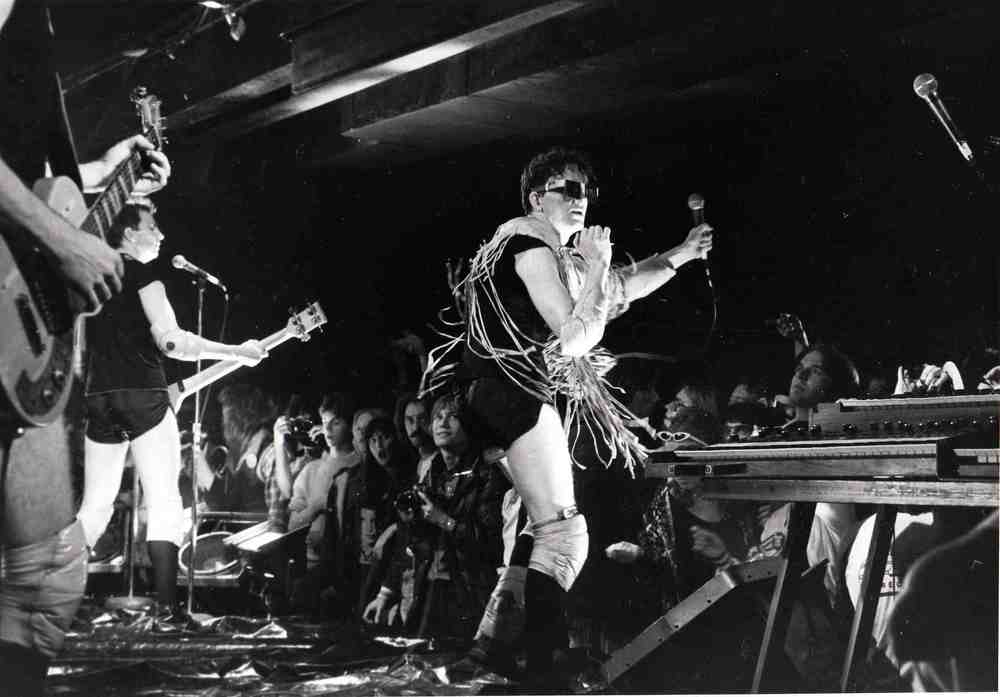
    <title type="html"><![CDATA[The Cleveland Agora: From College Dance Hall to Rock &amp; Roll Proving Ground]]></title>
    <summary type="html"><![CDATA[<p><strong><em>In 1967, an article in the Case student newspaper decried that Cleveland area college students had “no place to go” to socialize off-campus. One local music fan and entrepreneur stepped in and changed everything, putting Cleveland on the map as an international rock and roll destination.</em></strong></p><img src="https://www.clevelandhistorical.org/files/fullsize/adced2e64e0976ef952d9b6d55c12ef5.jpg" alt="Devo onstage at the Agora, ca. 1978" /><br/><p>After a stint distributing records for jukeboxes, Hank LoConti opened the original Agora club on February 27, 1966, at 2175 Cornell Road, in the former Ripa Hall, which had been home to an Italian hometown society for immigrants from Ripalimosani, Italy. With its location in Little Italy just across the railroad tracks from Case Institute of Technology and Western Reserve University, the original Agora was a simple venue intended primarily for students. The Agora grew steadily from the start, opening the nation's first in-house recording studio in 1968 and producing many live albums. As LoConti later reflected, from there the Agora “grew to the magnitudes no one had ever dreamed.” </p><p>As word spread and crowds began to swell, some residents in famously-protective Little Italy decided the Agora – with its raucous fans and loud music – didn’t fit with their vision for the neighborhood. A large group of locals formed one night to publicly voice their disdain for the college students’ unwelcome invasion. Moved by the group’s grievances but also pleased with the Agora’s rising success, LoConti arranged for a second lease at 1724 East 24th Street near Payne Avenue, opening a new club in July 1967, likely intending to reduce crowds on Cornell Road. For the next 18 months, LoConti operated two Agoras, nicknaming the original "Agora Alpha" and the new club "Agora Beta." Agora Beta would become the stuff of legend.</p><p>Throughout the 1970s, the Agora’s reputation grew as it began to host increasingly prominent acts and even expanded for a time into a chain with clubs in a dozen other cities. Deanna R. Adams’s book *Rock 'n' Roll and the Cleveland Connection* compares the Agora to other famous venues of the era, describing it as Cleveland’s counterpart to San Francisco’s Avalon Ballroom and New York’s Bottom Line. The Agora’s floor plan allowed fans to experience live performances up close, fostering an electric atmosphere that artists and audiences loved. Artists like Bruce Springsteen, Meat Loaf, Alice Cooper, Roxy Music, Southside Johnny, and more came back to Cleveland time and again to play the Agora.</p><p><a href="https://clevelandhistorical.org/items/show/978">WMMS</a>, Cleveland's leading rock radio station – and a national cultural force in its own right – also played a crucial role in the Agora's success. Disk jockeys like Kid Leo championed emerging rock acts and used their platforms to create buzz around upcoming shows at the Agora. WMMS’s Buzzard brand became synonymous with Cleveland’s rock identity, frequently broadcasting live performances from the Agora, and giving the club a regional and even national audience. Meanwhile, "Onstage at the Agora" became an internationally syndicated television show years before MTV brought rock music to the living room. At the Agora, attendees experienced a sense of community that went beyond entertainment, reinforcing Cleveland’s image as a “music town.”</p><p>As Cleveland underwent economic challenges and transformations in the 1980s, so too did the Agora. A fire broke out at the Agora in 1984 and forced the location to close. Due to a dispute with the property’s landlord, Cleveland State University, LoConti eventually opened the Agora in its present – omega? – form at East 55th and Euclid Avenue, formerly WHK Auditorium. Despite the apparent setback, the Agora, along with WMMS, continued to build its reputation as a proving ground for up and coming acts and bring a sense of cultural relevance to the city. Where once young Clevelanders had bemoaned having “no place to go,” the city now had rock and roll bragging rights.</p><p>The Agora’s legacy was ultimately recognized in the early 2000s, as Cleveland began to understand the importance of preserving its musical heritage. By this time, the Agora had solidified its reputation as a historical landmark, a status that attracted both financial support and media attention. The Agora was claimed to be “one of the hottest places to catch rock shows of every style and persuasion.” Seating an impressive 2,700 people in its theater and ballroom, the Agora was as welcoming as it was entertaining. The City of Cleveland acknowledged the Agora’s role in shaping Cleveland’s identity through renewal projects and official landmark status, recognizing it as more than just a concert hall but as a space where generations of Clevelanders have gathered to celebrate music and community. This support from the City of Cleveland, coupled with Cleveland’s broader efforts to promote its cultural assets, has allowed the Agora to continue evolving while honoring its roots.</p><p><em><strong><a href="https://www.clevelandhistorical.org/items/show/1">For more (including 6 images, 1 audio file,&#32;&amp;&#32;3 videos) view the original article</a></strong></em></p>]]></summary>
    <published>2010-05-26T16:03:12+00:00</published>
    <updated>2026-04-04T22:10:15+00:00</updated>
    <link rel="alternate" type="text/html" href="https://www.clevelandhistorical.org/items/show/1"/>
    <id>https://www.clevelandhistorical.org/items/show/1</id>
    <author>
      <name>Alex Wicker</name>
    </author>
  </entry>
  <entry>
    <title type="html"><![CDATA[Leo&#039;s Casino: Cleveland&#039;s Motown Outpost]]></title>
    <summary type="html"><![CDATA[<img src="https://www.clevelandhistorical.org/files/fullsize/a70964832d3eacfe9272536cc9d27a18.jpg" alt="Gladys Knight &amp; The Pips" /><br/><p>In 1963, business partners Leo Frank and Jules Berger opened Leo's Casino in the lounge of the old Quad Hall Hotel at 7500 Euclid Avenue. The club could host 700 people and regularly booked the top jazz and R&B acts of its era. The Supremes, Marvin Gaye, John Coltrane, Ray Charles and The Temptations all performed at Leo's Casino, as did comedians Richard Pryor and Flip Wilson. Otis Redding played his final concert there on December 9, 1967, dying in a plane crash in Wisconsin the following afternoon.</p><p>Co-owner Leo Frank opened his first club - Leo's - in 1952 at East 49th Street and Central Avenue. Leo's attracted the nation's leading jazz and R&B acts, but burned down in 1962, leading to the opening of Leo's Casino the following year. The new club, which quickly established itself as a key stop for touring Motown artists, was one of the most racially integrated nightlife spots in Cleveland. In July 1966 The Supremes played to a packed house of blacks and whites at Leo's not long after the Hough Uprising broke out mere blocks away from the club. </p><p>Eventually, bigger venues offering bigger paydays began to lure the most popular performers away from Leo's Casino. Continued population decline and disinvestment in Cleveland's east side after the Hough Uprising further hurt the club's fortunes. Leo's Casino closed in 1972 and was later torn down.  In 1999, the Rock and Roll Hall of Fame named it a historic landmark, placing a plaque on the site where Leo's Casino once stood.</p><p><em><strong><a href="https://www.clevelandhistorical.org/items/show/5">For more (including 10 images&#32;&amp;&#32;5 audio files) view the original article</a></strong></em></p>]]></summary>
    <published>2010-09-09T21:06:55+00:00</published>
    <updated>2026-03-04T21:31:57+00:00</updated>
    <link rel="alternate" type="text/html" href="https://www.clevelandhistorical.org/items/show/5"/>
    <id>https://www.clevelandhistorical.org/items/show/5</id>
    <author>
      <name>CSU Center for Public History and Digital Humanities</name>
    </author>
  </entry>
  <entry>
    <title type="html"><![CDATA[Cleveland Play House: From East Side Farmhouse to Playhouse Square Fixture]]></title>
    <summary type="html"><![CDATA[<img src="https://www.clevelandhistorical.org/files/fullsize/b70a8cf58c3341e6b706f8fcc508e316.jpg" alt="CPH and CSU Join in the Allen Theatre" /><br/><p>The story of the Cleveland Play House begins in 1915 with a series of meetings held at the home of essayist Charles Brooks. Charles and his wife Minerva Brooks met each week with eight of their friends to discuss theatre and the arts. Eventually, the well-to-do couple decided to form the Cleveland Play House, a professional theatre company that would offer performances of a more substantive nature than the vaudeville and burlesque acts popular at the time. With Brooks as president, the company held its first show in May 1916 in an old farmhouse on land owned by industrialist Francis Drury, who lived across the street in <a href="https://clevelandhistorical.org/items/show/822">his mansion</a> at 8615 Euclid Avenue. </p><p>As attendance grew, the farmhouse became inadequate. In 1917 the Play House spent nearly $9,000 to purchase and renovate a Lutheran Church at East 73rd Street and Cedar Avenue that could seat 160 people. Audiences soon became too big for this space, too, and in 1926 the company moved back to the Drury estate. This time, Drury donated his land to the Play House and in place of the old farmhouse were two new interconnected theaters: the 522-seat Drury Theatre and the 160-seat Brooks Theatre. In 1949 the Play House also added a third theater in a converted Christian Science church on Euclid Avenue and East 77th Street. The Play House's continued success led to the 1983 opening of a new complex on East 86th Street at Carnegie Avenue. The complex, which comprised a former Sears store and a new building designed by renowned architect Philip Johnson, included the 550-seat Bolton Theater. </p><p>In 2009, after selling its East 86th Street complex to the Cleveland Clinic, Cleveland Play House announced it planned to move downtown. The move came just one year after the Great Lakes Theater Festival left its Lakewood home to take up residence in the Hanna Theatre. Cleveland Play House partnered with Cleveland State University to create a state-of-the-art complex for shared use in the revamped historic Allen Theatre.</p><p><em><strong><a href="https://www.clevelandhistorical.org/items/show/6">For more (including 11 images&#32;&amp;&#32;6 audio files) view the original article</a></strong></em></p>]]></summary>
    <published>2010-09-12T20:56:42+00:00</published>
    <updated>2026-03-04T21:31:57+00:00</updated>
    <link rel="alternate" type="text/html" href="https://www.clevelandhistorical.org/items/show/6"/>
    <id>https://www.clevelandhistorical.org/items/show/6</id>
    <author>
      <name>CSU Center for Public History and Digital Humanities</name>
    </author>
  </entry>
  <entry>
    <title type="html"><![CDATA[The Hough Uprisings of 1966]]></title>
    <summary type="html"><![CDATA[<img src="https://www.clevelandhistorical.org/files/fullsize/ee7e77597e5e9b6dddbfd1d3a557dd5d.jpg" alt="National Guard Outside Seventy Niners’ Café" /><br/><p>On July 5, 1966, Mayor Ralph S. Locher unveiled an eight-point peace program meant to alleviate racial tensions in Cleveland. Prepared by Locher’s administration, businessmen, politicians, community activists, and religious leaders, the pact forged a symbolic peace between the city government and Cleveland’s African American community in response to an eruption of violence in the Hough and Glenville neighborhoods. For four nights beginning June 23rd, bands of youths roamed the East Side. Rocks, bottles and fire bombs were thrown from moving vehicles, a handful of pedestrians were assaulted, and vandals targeted businesses near Superior Avenue and East 79th Street. Upwards of 200 policemen patrolled the area. A helicopter loomed overhead, directing police battalions towards congregating youths. Showcasing recently acquired white helmets, riot sticks and tear gas guns, the uniformed squads evoked imagery reminiscent of civil rights unrest in the American South. While some community members considered it a “violent demonstration,” others attributed the outbreak to teenagers blindly striking against society. In reality, racial inequality and the economic disparities endemic in segregated neighborhoods lay at the root of the violence. As reported by Cleveland’s African American newspaper, the <em>Call and Post</em>, the local government was “dealing with dynamite, and ”…a crash program of reform” was necessary to avoid further racial violence.”</p><p>In large part, the unrest grew from distrust of Cleveland’s government, particularly the police force. Longstanding racial tensions with neighboring white communities set the stage; two white men fired a gun from their vehicle into a group of African American boys that had been throwing rocks at passing cars. A ten-year-old child was hit in the groin and admitted to the hospital. Rumors quickly spread that attending police officers refused to take descriptions of the young witness’s assailants. A crowd gathered and began pelting the police with rocks. The ensuing peace pact recommended a full investigation of the shooting, impartial handling by police of all persons involved in the disorder, full integration of the police force, the holding of a mass community meeting, the creation of a committee to investigate the needs of inner-city areas, an investigation into incendiary race hate literature recently circulated on the East Side by white supremacists, and the employment of specially trained police officers in the affected neighborhoods until tensions abated. The efforts proved ineffective in quelling the unrest. By month’s end, Cleveland joined a growing number of U.S. cities that became grounds for violent social uprisings during the 1960s.</p><p>During the week-long uprising, four African Americans died and an incalculable amount of property damage was incurred due to widespread fires and looting. This second revolt, also a response to the inequalities faced by the Black community living on Cleveland’s east side, became known as the Hough Riots. Similar incidents had become increasingly common – and feared – in northern cities. Civil disorder in the form of “race riots” had become a costly bargaining unit for marginalized communities abandoned by governing institutions. Each of these aging industrial centers had previously been remolded in the face of segregation and suburbanization.</p><p>Hough first developed as a product of suburbanization. The area took its name from Oliver and Eliza Hough, who settled there in 1799. Before the Civil War, the area was primarily farmland. Hough became an exclusive community following incorporation into the City of Cleveland in 1873, and housed some of the city’s most prominent residents and private schools. Spanning about two square miles, the Hough neighborhood was bordered by Euclid and Superior avenues and East 55th and 105th streets. As Cleveland industrialized and expanded outward through World War I, wealthy residents of Hough increasingly moved further east to newer suburbs. Many homes were split into apartments, and Hough became densely populated with white working and middle class residents by mid century.</p><p>Much of Cleveland’s African American community concentrated in the Cedar-Central neighborhood to the south of Hough during this time. Previously displaced by downtown housing clearance projects meant to guide business district growth in the early 20th century, the Black community was upended again in the 1940s as city officials pursued highway development and so-called urban renewal in Cedar-Central. Restrictive banking and real estate practices, in combination with segregated public housing placement, steered displaced African Americans towards the Hough and Glenville neighborhoods. With an influx of Black migrants from the South during the Second Great Migration, Hough transitioned from a white to a Black community by 1960. White residents left en masse, moving to Cleveland’s west side and newly developed suburbs. These neighborhoods forged their identities in contrast to emerging communities of color, and systemically excluded African Americans. Even as whites fled Hough, the neighborhood’s population peaked at over 83,000 in 1957 before dropping to about 72,000 in 1966. At the time of the uprisings, 90% of Cleveland’s Black community lived in Black neighborhoods on the city’s east side. Cleveland had become one of the nation’s most segregated cities. As Black residents crowded into Hough, the proximity to available jobs diminished with a concurrent exodus of industry to the suburbs, leaving African Americans in mostly low-paying, unskilled jobs. Inadequate schools and the resistance of local trade unions to integrate only exacerbated the impact of high Black unemployment.</p><p>The influx of new residents moving into Hough taxed available resources. Schools were overcrowded, garbage amassed on side streets and open lots, and the community lacked recreation spaces. Virtually no new homes had been built in Hough since World War II. To accommodate the growing population, aging residences were further broken into units. The city did little to enforce existing housing codes that governed occupancy and living standards. Vacant homes deteriorated, becoming hazards to the community and breeding grounds for vermin. Even as Hough’s physical condition declined, residents were regularly charged high rents due to the limited housing options available to the Black community in Cleveland and the refusal of suburbs to accept Black residents.</p><p>City officials publicly recognized the deteriorating state of Hough, but did little more than offer well-intentioned proposals and plans. The University - Euclid urban renewal project was one of two major redevelopment plans unveiled in 1960. The scope of this massive project included much of the Hough neighborhood. In a move away from the “slum clearance” approach to urban development, the plan emphasized housing rehabilitation and the development of recreation spaces. The project rolled out with fanfare, but soon faced delays and funding setbacks. </p><p>Despite resource inventories and grand promises, only a handful of scattered rehabilitation efforts in Hough came to fruition by 1966. While delays were often tied to federal and local oversight of the massive endeavor, completed work was typically over budget and behind schedule. The city administration appeared to be diverting its resources towards the Erieview renewal area in downtown rather than aiding struggling east side neighborhoods. Speculation also grew that the local authorities were allowing Hough to become blighted in order to lower the cost of acquiring land for a proposed Heights Freeway project. Marred by general disorganization and administrative mismanagement, the federal government eventually froze funding for Cleveland urban renewal projects. Vacant lots littered with dirt and rubbish quickly became the most common evidence of renewal efforts in Hough.</p><p>While city officials did little to stem the impact of suburbanization and segregation on Hough, the administration’s law enforcement branch physically embodied and actively reinforced discriminatory policies and practices that promoted social inequality. A longstanding tradition of hostile relations existed between Black residents and the police. Charges of police brutality and a dual system of law enforcement persisted throughout the 1950s and 1960s, but were dismissed by a predominantly white city administration. An independent report in 1965 found that only 175 of the force’s 2,100 employees were Black. Only two held rank above patrolman, and few were assigned duty to west side neighborhoods.</p><p>Cleveland’s segregated police department was racially unrepresentative of the community it served, and offered no recourse for civilian grievances to be heard. While many residents of Hough advocated for a stronger, integrated police presence in order to deter crime, complaints regularly surfaced concerning the department’s use of excessive force and practice of turning a blind eye toward racial violence against the Black community. Throughout the 1960s, instances of violence perpetrated by African Americans against white victims resulted in public outrage and swift arrests, often with little evidence. In cases of racially motivated attacks against persons of color, police often blamed the victims for inciting violence. In the years leading to the unrest in Hough, Locher’s administration refused to meet with community groups concerning mounting claims of physical and verbal abuse against Cleveland’s Black community. As racial tensions grew, Cleveland’s police department became a symbol of the city administration's alignment with white interests. Beginning on July 18, 1966, and lasting approximately one week, residents clashed with police as discontent over living conditions and systemic racial injustice surfaced in Hough.</p><p>Sparked by a minor racially charged dispute at a neighborhood bar at East 79th Street and Hough Avenue, the July uprising in Hough brought widespread looting, arson and destruction. While impacting the entire community, primary targets were white-owned stores, abandoned buildings, and residences owned by absentee landlords. As symbols of civic authority, police officers and firemen were met with violence; no white civilians were attacked. Conversely, an African American was fatally shot by a patrol of white vigilantes while driving to work. Three additional Black residents of Hough were also killed by unknown assailants during the week.</p><p>Outbreaks of violence diminished in severity beginning July 22nd. Local ministers, civic leaders and community activists met the following morning in an effort to establish peace and address the problems that incited the tragic events. Mayor Locher refused to attend, but was presented with the underlying causes of the uprising on July 25th in City Council by Hough area councilman M. Morris Jackson.</p><p><blockquote>(I)t was not without warning. The warnings were in the broken promises of urban renewal, Mr. Mayor. The warnings were seen in the continued existence of rat-infested buildings that should have been renewed long ago. The warnings, Mr. Mayor, were in the inadequate recreation facilities, insufficient city services, lack of employment, and the failure to integrate the police force. These were the seeds of discontent that exploded last Monday night…where do we go from here, Mr. Mayor?</blockquote>
</p><p>A special session of the Cuyahoga County Grand Jury convened that same day to explore the causes of the riot. Headed by former Cleveland Press editor Louis B. Seltzer, an all-white jury of non-Hough residents presided. Following a bus tour of Hough and interviews with residents, law enforcement, civic leaders and government officials, the fifteen-member committee released their conclusion in a report on August 2, 1966. They determined that the uprising was instigated by a small, organized group of extremist agitators with communist leanings. The police force was exonerated of all wrong-doing and abuses, and stricter sentences for crimes committed during riots were recommended. While acknowledging Hough residents faced social and economic inequalities in their daily life, the committee did not considered these to be causes of unrest. Instead, the jury asserted that radicals had exploited these conditions to provoke teenagers into rioting. The report not only dismissed the possibility that Hough residents had agency in their decision to participate in or support the uprising, but exonerated the city government from culpability in creating conditions that fostered civil disorder. Exemplifying their misreading of the situation, the committee concluded that the “Negro community may be moving too fast for the total community to bear”; Cleveland was not ready to accept African Americans as equal members of society.</p><p>The report, lauded by Mayor Locher, sparked outrage in Cleveland’s Black community. Its findings were quickly refuted by both federal and community sponsored investigations into the unrest. No evidence was found to corroborate the jury’s findings that Communist agitators were responsible for inciting or propelling violence. Instead, a citizen committee organized by the Urban League of Cleveland determined that the city’s disregard of social conditions in Hough “led to frustration and desperation that…finally burst forth in a destructive way.” The committee documented numerous examples of the police exacerbating unrest through use of derogatory slurs and excessive force. These different readings of the uprising in Hough were an ominous predictor of a long and difficult road ahead for efforts to rebuild the neighborhood.</p><p>Despite an influx of federal funds for rehabilitation, the economic and physical condition of Hough did not dramatically improve in the wake of the 1966 uprisings. Social unrest, accompanied by widespread looting and arson, would revisit the area during the summer of 1968 following a shootout between police and Black nationalists. The population of Hough rapidly declined as more suburbs slowly began to open up to Black residency. Even as overcrowding subsided, the inability of local government to address issues of segregation, racial discrimination, economic and social inequality, neighborhood deterioration, and poor police-community relations continued to impact Cleveland’s communities of color. Institutionalized policies and practices that reinforced the underlying causes of the 1966 Hough uprisings had been inscribed into the landscape, and would continue to guide the trajectory of Cleveland’s development over the proceeding decades.</p><p><em><strong><a href="https://www.clevelandhistorical.org/items/show/7">For more (including 18 images, 3 audio files,&#32;&amp;&#32;2 videos) view the original article</a></strong></em></p>]]></summary>
    <published>2010-09-12T21:16:44+00:00</published>
    <updated>2026-03-04T21:31:57+00:00</updated>
    <link rel="alternate" type="text/html" href="https://www.clevelandhistorical.org/items/show/7"/>
    <id>https://www.clevelandhistorical.org/items/show/7</id>
    <author>
      <name>Richard Raponi</name>
    </author>
  </entry>
  <entry>
    <title type="html"><![CDATA[Cleveland Clinic]]></title>
    <summary type="html"><![CDATA[<img src="https://www.clevelandhistorical.org/files/fullsize/lg_clinic-art-deco-1920_54abe48524.jpg" alt="Clinic Building, ca. 1920s" /><br/><p>Four Cleveland physicians <a href="https://clevelandhistorical.org/items/show/603">founded</a> the Cleveland Clinic Foundation in February 1921, creating an institution dedicated not only to medical care, but also to research, innovation, and physician education. Three of the four founders had served together in a U.S. Army medical unit in France during World War I. The <a href="https://clevelandhistorical.org/items/show/573">Cleveland Clinic X-ray fire</a> of 1929 – a basement fire caused by combustible nitrocellulose film that left 123 dead – was a tragedy that temporarily set back the hospital's progress. After World War II, however, the Cleveland Clinic rose to become one of the nation's leading medical centers.</p><p>During the 1940s and 1950s, Clinic researchers pioneered dialysis and kidney treatment and were the first to identify carpal tunnel syndrome and isolate the neurotransmitter serotonin. The Cleveland Clinic also emerged as a national leader in cardiac procedures. Clinic physicians performed the first coronary angiography in 1958 and continued to make significant advances in heart surgery techniques in the proceeding decades. The Clinic's main campus, located along Euclid Avenue in Cleveland's Fairfax neighborhood, has undergone tremendous growth since the 1970s. As adjacent land has been purchased and numerous new facilities constructed in a process of expansion, it is no great surprise that the Cleveland Clinic has become one of the city's largest private employers.</p><p><em><strong><a href="https://www.clevelandhistorical.org/items/show/8">For more (including 8 images&#32;&amp;&#32;2 audio files) view the original article</a></strong></em></p>]]></summary>
    <published>2010-09-12T21:30:35+00:00</published>
    <updated>2026-03-04T21:31:57+00:00</updated>
    <link rel="alternate" type="text/html" href="https://www.clevelandhistorical.org/items/show/8"/>
    <id>https://www.clevelandhistorical.org/items/show/8</id>
    <author>
      <name>CSU Center for Public History and Digital Humanities</name>
    </author>
  </entry>
  <entry>
    <title type="html"><![CDATA[Masonic Temple]]></title>
    <summary type="html"><![CDATA[<img src="https://www.clevelandhistorical.org/files/fullsize/3effdac1a637390133850fbe8eb1084a.jpg" alt="Masonic Temple Asylum" /><br/><p>The Masonic Temple and Performing Arts Center, built by the Scottish Rite Masons in 1919, was a testament to Cleveland's rich architectural and cultural heritage. Located at 3615 Euclid Avenue, the temple's opulent design featured marble staircases, elaborate meeting rooms, and a 2,000-seat auditorium. Though initially envisioned as part of a larger high-rise office building, the additional plans were never realized. Despite this, the temple became a cornerstone of Cleveland's arts and culture scene. For twelve years, it served as the home of the Cleveland Orchestra before Severance Hall's opening in 1931, and its fine acoustics ensured its continued use for many of the orchestra's recordings. Over the decades, the building also housed the Cleveland Masonic Library and Museum and renowned arts organizations such as Dancing Wheels, <a href="https://clevelandhistorical.org/items/show/1038">The Singing Angels</a>, and Red (an Orchestra). </p><p>Among these, the Dancing Wheels Company distinguished itself as a groundbreaking professional dance organization that celebrated inclusivity and artistic innovation. Founded in 1980 by Mary Verdi-Fletcher, one of the first professional wheelchair dancers, the company became an international leader in inclusive arts. Dancing Wheels blended artistry and advocacy, challenging societal perceptions of disability while showcasing the richness of diversity through performance. With a repertoire ranging from classical ballet to contemporary works, the company collaborated with esteemed choreographers to create dynamic, thought-provoking productions. Beyond performances, Dancing Wheels also prioritized education and outreach, offering workshops and programs that inspired people of all abilities to engage with the arts. Their residency at the Masonic Temple until 2018 underscored Cleveland's commitment to fostering a vibrant, progressive cultural landscape. </p><p>The Singing Angels, founded in 1964 by William C. Boehm, further exemplified the Masonic Temple's role as a hub for artistic excellence. This internationally acclaimed youth chorus inspired audiences through a diverse musical repertoire and an unwavering dedication to creative growth. The Masonic Temple served as an essential rehearsal space for the ensemble, providing a setting steeped in architectural grandeur and cultural significance. This inspiring environment nurtured the young performers' musical talents and fostered a sense of community within the group. The years spent rehearsing at the temple greatly influenced the ensemble's artistic development, solidifying their reputation as ambassadors of music and peace while strengthening their role in Cleveland's cultural legacy. </p><p>Similarly, Red (an Orchestra), founded in 2001, left an indelible mark on Cleveland's arts scene through its innovative approach to classical music. Renowned for reimagining traditional works and championing contemporary compositions, the orchestra delivered immersive, transformative performances that captivated audiences. Central to Red's mission was the use of unconventional venues that enriched the listening experience, and the Masonic Temple Auditorium stood out as a prime location. Its striking architecture, historical resonance, and exceptional acoustics provided the perfect backdrop for the orchestra's groundbreaking concerts. Unfortunately, financial challenges led to Red's sudden disbandment in 2008, but the ensemble's legacy continued to inspire. </p><p>In 2017, a new chapter began for the Masonic Temple when TempleLive, also known as Temple CLE, acquired the property. Facing declining membership and high maintenance costs, the Masonic organization sold the building, allowing for its transformation into a multipurpose venue. TempleLive embraced the challenge of preserving the historic charm of the structure while adapting it for modern use, hosting concerts, weddings, and other significant events. This revitalization successfully breathed new life into the storied building, continuing its legacy as a cultural and architectural landmark.</p><p><em><strong><a href="https://www.clevelandhistorical.org/items/show/9">For more (including 9 images&#32;&amp;&#32;3 audio files) view the original article</a></strong></em></p>]]></summary>
    <published>2010-09-13T22:10:09+00:00</published>
    <updated>2026-03-04T21:31:57+00:00</updated>
    <link rel="alternate" type="text/html" href="https://www.clevelandhistorical.org/items/show/9"/>
    <id>https://www.clevelandhistorical.org/items/show/9</id>
    <author>
      <name>Dawn Culp</name>
    </author>
  </entry>
  <entry>
    <title type="html"><![CDATA[Millionaires&#039; Row: Cleveland&#039;s Famous Euclid Avenue]]></title>
    <summary type="html"><![CDATA[<img src="https://www.clevelandhistorical.org/files/fullsize/61c8a95456b063e749010ae7b72f4f97.jpg" alt="Sylvester T. Everett House" /><br/><p>Euclid Avenue's "Millionaires' Row" was home to some of the nation's most powerful and influential industrialists, including John D. Rockefeller. Around the turn of the twentieth century, Baedeker's Travel Guide dubbed Euclid Avenue the "Showplace of America" for its beautiful elm-lined sidewalks and ornate mansions situated amid lavish gardens. The concentration of wealth was unparalleled, with accounts at the time comparing it to the Avenue des Champs-Élysées in Paris.</p><p>Rufus Dunham was the first to invest in the stretch of Euclid Avenue, purchasing 140 acres of land to open a farm and tavern to service stagecoaches passing through Cleveland. Dunham faced problems, however, as the city did little maintenance and the road would often flood. As other wealthy elites began moving into the area, the city developed a drainage system to prevent flooding and made the area more desirable.</p><p>The residents of Millionaires’ Row did not just build homes in Cleveland, but often donated money to charitable organizations and funded the construction of other establishments. Some of these investments went toward the construction of churches, universities, medical schools, the art museum, orchestra, and the historical society. The best-known Euclid Avenue resident was John D. Rockefeller, who started Standard Oil Company. Other notable businessmen who called Euclid Avenue home were Amasa Stone, Marcus Hanna, and Samuel Mather. </p><p>In 1910, Cleveland was the sixth largest city in the country. With the increase in population and new developments encroaching, Euclid Avenue experienced a drastic rise in taxes and land costs. These rises were just the first step in the downfall of Millionaires’ Row.</p><p>Millionaires' Row gradually shifted eastward as commercialization claimed some of the older homes near downtown. By the 1920s, a suburban exodus to "the Heights" east of the city illustrated that the very prosperity created by the denizens of Euclid Avenue ultimately displaced their grand homes. A number of the luxurious homes were demolished in the 1920s and 1930s to make way for commercial buildings and parking lots. In the 1950s, more homes were destroyed to make way for the <a href="https://clevelandhistorical.org/items/show/939">Innerbelt Freeway</a>. Today, only a handful of homes still exist, giving us just a glimpse of the splendor that once was considered the wealthiest address in the nation.</p><p><em><strong><a href="https://www.clevelandhistorical.org/items/show/10">For more (including 9 images&#32;&amp;&#32;2 audio files) view the original article</a></strong></em></p>]]></summary>
    <published>2010-09-13T22:44:21+00:00</published>
    <updated>2026-03-04T21:31:57+00:00</updated>
    <link rel="alternate" type="text/html" href="https://www.clevelandhistorical.org/items/show/10"/>
    <id>https://www.clevelandhistorical.org/items/show/10</id>
    <author>
      <name>Danielle Rose</name>
    </author>
  </entry>
  <entry>
    <title type="html"><![CDATA[Outhwaite Homes ]]></title>
    <summary type="html"><![CDATA[<img src="https://www.clevelandhistorical.org/files/fullsize/3149e3d4ac73dd9efcca00d3b91821bc.jpg" alt="Carl and Louis Stokes, ca. 1930s" /><br/><p>The Outhwaite Homes Estates, along with the Cedar Apartments and Lakeview Terrace, were the first three public housing projects to be completed in Cleveland. The three projects were also among the first in the nation to receive approval and funding from the federal government's newly created Public Works Administration in 1935.  </p><p>Outhwaite's brick Art Deco buildings, grouped around grassy courtyards, originally contained 557 units. Expansion occurred only a few years after Outhwaite's 1937 opening as demand for public housing in Cleveland continued. The need for new housing was particularly great within the African American community, whose growing numbers were leading to overpopulation in the Cedar-Central neighborhood, the city's Black enclave. Initially, African Americans seeking public housing could only live at the Outhwaite Homes – in Cedar-Central – as officials sought to keep each housing project racially homogeneous.  </p><p>In 1938, brothers Louis and Carl Stokes, who went on to noted political careers, moved to the Outhwaite Homes with their mother, Louise. Louis Stokes was a U.S. Congressional Representative for nearly three decades and his brother Carl became the first African American mayor of Cleveland in 1967. Both brothers credited their time at Outhwaite with having a role in their success.</p><p><em><strong><a href="https://www.clevelandhistorical.org/items/show/11">For more (including 7 images, 3 audio files,&#32;&amp;&#32;1 video) view the original article</a></strong></em></p>]]></summary>
    <published>2010-09-14T08:21:20+00:00</published>
    <updated>2026-03-04T21:31:57+00:00</updated>
    <link rel="alternate" type="text/html" href="https://www.clevelandhistorical.org/items/show/11"/>
    <id>https://www.clevelandhistorical.org/items/show/11</id>
    <author>
      <name>CSU Center for Public History and Digital Humanities</name>
    </author>
  </entry>
  <entry>
    <title type="html"><![CDATA[Regional Transit Authority]]></title>
    <summary type="html"><![CDATA[<img src="https://www.clevelandhistorical.org/files/fullsize/lg_busses-streetcars-euclid-1948_52986edeca.jpg" alt="Buses and Streetcars, 1948" /><br/><p>Cleveland, like many American cities, experienced its heyday of streetcar transit lines in the early decades of the twentieth century. Many Clevelanders still fondly recall their trips downtown aboard the creaking, groaning streetcars that plied the city's major thoroughfares. While streetcars formed the backbone of public transit in the first half of the century, in the second half, buses and rapid trains became common. The Greater Cleveland Regional Transit Authority formed in 1975 through the merger of the Cleveland Transit System and the Shaker Heights Rapid Transit and also assumed control over several suburban bus systems. RTA spearheaded the federally funded Euclid Corridor Transportation Project, the culmination of decades of attempts to introduce a high-speed transit line on Euclid Avenue.</p><p><em><strong><a href="https://www.clevelandhistorical.org/items/show/12">For more (including 8 images) view the original article</a></strong></em></p>]]></summary>
    <published>2010-09-14T08:42:46+00:00</published>
    <updated>2026-03-04T21:31:57+00:00</updated>
    <link rel="alternate" type="text/html" href="https://www.clevelandhistorical.org/items/show/12"/>
    <id>https://www.clevelandhistorical.org/items/show/12</id>
    <author>
      <name>CSU Center for Public History and Digital Humanities</name>
    </author>
  </entry>
  <entry>
    <title type="html"><![CDATA[Rose Iron Works: The Nation&#039;s Oldest Decorative Metalwork Company]]></title>
    <summary type="html"><![CDATA[<img src="https://www.clevelandhistorical.org/files/fullsize/lg_rose-paul-feher-art-deco-screen-cma-3521996_f248b68887.jpg" alt="Art Deco Screen (1930)" /><br/><p>The Rose Iron Works, opened in 1904 on Cleveland's east side. The oldest continually-operating decorative metalwork company in the United States, it was founded by Martin Rose, a Hungarian immigrant who worked in Budapest and Vienna before moving to Cleveland. </p><p>Rose provided craft metalwork that adorned many of Cleveland's notable dwellings and buildings during the height of the city's growth. The works included fanciful dividing screens at Halle's as well as the decorative iron gates that guarded many of the Millionaires' Row estates on Euclid Avenue. Informed by European ornamental Beaux-Arts architecture, Rose worked in the tradition of other craft ironworkers such as Samuel Yellin.</p><p>Even as the market for ornamental ironwork began to decline as a result of changing styles and the Depression, Rose Iron Works thrived. During the 1930s, the Rose Iron Works produced some of the most notable Art Deco ironwork in the nation, including styling recognized internationally for their uniquely American characteristics.  </p><p>The company turned to the production of industrial products during World War II (an activity that now dominates its business) but it never forsook the craft and metalworking traditions of nineteenth-century Europe. </p><p><em><strong><a href="https://www.clevelandhistorical.org/items/show/13">For more (including 9 images, 3 audio files,&#32;&amp;&#32;3 videos) view the original article</a></strong></em></p>]]></summary>
    <published>2010-09-14T15:17:51+00:00</published>
    <updated>2026-04-04T22:10:23+00:00</updated>
    <link rel="alternate" type="text/html" href="https://www.clevelandhistorical.org/items/show/13"/>
    <id>https://www.clevelandhistorical.org/items/show/13</id>
    <author>
      <name>Emma Yanoshik-Wing, James Calder,&amp;#32;&amp;amp;&amp;#32;Mark Tebeau</name>
    </author>
  </entry>
  <entry>
    <title type="html"><![CDATA[Dunham Tavern: Cleveland&#039;s Oldest Surviving Structure]]></title>
    <summary type="html"><![CDATA[<img src="https://www.clevelandhistorical.org/files/fullsize/lg_dunham-pc-60-90_50d7a11df9.jpg" alt="Postcard, ca. 1960" /><br/><p>Established in 1824, Dunham Tavern was originally the home of the Massachusetts-born couple Rufus and Jane Pratt Dunham. The Dunhams came to the Cleveland area in 1819 after acquiring farmland. They lived in a log cabin until the main home was built in 1824. The house was solid and well built, but not ostentatious. It consisted of two rooms downstairs and upstairs around a central hall with a one-story wing at the rear. The exterior of the house was clad with clapboard and decorated with delicate details. Simple moldings highlighted the clean lines. It was designed in a modest, American style, but built well enough to last nearly 200 years.  A separate structure housed the tenants. Since its completion the house has undergone many updates and renovations. According to the Plain Dealer "by the 1840s when the Dunhams added a tap room and sleeping quarters for stagecoach drivers along the Buffalo-Cleveland Road, bold columns, large dentils and heavier Greek Revival moldings were preferred to the more refined federal detailing of the original house." </p><p>In these early days the tavern became a political center and place where young people would go to enjoy themselves. Whig-party political meetings were often held in the tavern as well as turkey shoots and other leisure-time activities. As the city grew up around the small country house in the latter half of the nineteenth century, the Dunhams struggled to keep up with the rapid changes occurring. In 1857 the tavern ceased accepting travelers and was sold. It became a single-family home. A string of owners took care of the property during this half of the century. </p><p>After the Great Depression hit the city in 1929 the city's priorities changed. Most of the beautiful homes on Euclid Avenue were torn down. The modest Dunham Tavern remained. This was mostly likely because of one man, the Cleveland landscape architect Donald Gray who purchased the home in 1932. Gray was very well known as a designer as well as a Cleveland activist. He restored much of the original architecture from the nineteenth century and replanted the Tavern's orchard. For a time in the 1930s the tavern served as a studio for WPA artists and printmakers. When Gray felt he could no longer maintain the century-old home he established a non-profit that could, the Society of Collectors. Dunham Tavern escaped the wrecking ball that was mid-century Cleveland because of their effort and mission that was to maintain the building and collect period furniture and home items to complement the house.</p><p>The organization opened Dunham Tavern to the public as a museum in 1941. They held a semi-annual "Trinkets and Treasures" antique fair that supported the mounting bills for the historic home.  At this time there was a rise of popularity in restoring older American buildings. Looking to national examples like Colonial Williamsburg, older homes (the closer to Revolutionary era the better) became treasures and valuable structures. Today Dunham Tavern remains amidst factories and warehouses on one of the busiest streets in Cleveland. In recent years the museum tore down a 1920s textile factory which stood next to the tavern as part of an effort to return green space to the area, much like it was when the tavern was first built. </p><p><em><strong><a href="https://www.clevelandhistorical.org/items/show/14">For more (including 8 images&#32;&amp;&#32;1 audio file) view the original article</a></strong></em></p>]]></summary>
    <published>2010-09-14T15:28:21+00:00</published>
    <updated>2026-03-04T21:31:57+00:00</updated>
    <link rel="alternate" type="text/html" href="https://www.clevelandhistorical.org/items/show/14"/>
    <id>https://www.clevelandhistorical.org/items/show/14</id>
    <author>
      <name>CSU Center for Public History and Digital Humanities</name>
    </author>
  </entry>
  <entry>
    <title type="html"><![CDATA[League Park: A &quot;Neighborhood&quot; Home for Cleveland Sports ]]></title>
    <summary type="html"><![CDATA[<img src="https://www.clevelandhistorical.org/files/fullsize/lg_boy-sneaking-a-peek_db121825b5.jpg" alt="Sneaking a Peek " /><br/><p>The construction of the massive, 70,000-seat Cleveland Municipal Stadium in the 1930s spelled the beginning of the end for a much older stadium— League Park. This ballpark was constructed in 1891 east of downtown in Cleveland's Hough neighborhood at Dunham Street (East 66th) between Linwood and Lexington Avenues. Lexington Avenue trolley-line operator Frank Robison shoehorned the ballpark into the residential neighborhood, conveniently generating revenues from fares and game tickets. Its tight quarters and restrictive right-field fence to fit the property gave rise to “pinball” baseball, leaving outfielders never knowing where the ball would ricochet. Close-by homes featured signs advertising local businesses for home-run promotions. Despite renovations in 1910 that replaced the original wood with concrete and steel, expanding capacity to over 20,000, League Park was deemed to be too small and antiquated for professional baseball after Municipal Stadium opened. </p><p>League Park began its run as the home of the Cleveland Spiders who became the Indians in what was the site of the 1920 World Series, in which the Indians beat the Brooklyn Dodgers for their first championship. From 1916 to 1927, as a perquisite of owning the team, Jim Dunn changed the name to Dunn Field, but thereafter the name reverted to League Park. Negro League baseball teams also thrived at League Park from the mid-1930s, culminating with the <a href="https://clevelandhistorical.org/items/show/867">Cleveland Buckeyes</a> winning the the Negro American League World Series in 1945. The Indians played their last game at League Park in 1946, but for ten years prior to that they had been playing weekend and holiday games at the bigger stadium on the lakefront. During its heyday, the Park hosted MLB’s best—manager Tris Speaker, hitter Ty Cobb, slugger Babe Ruth, Lou Gehrig, infamous shoeless Joe Jackson, shortstop Ray Chapman, and champion Bob Feller, among others. Joe DiMaggio finalized his 56-game hitting streak at the Park in 1941; the streak ended the next day at Muny Stadium. The Indians initially achieved success after departing League Park, but the team's fortunes soon declined. The last thirty years or so of the Indians' tenure at Municipal Stadium were marked by losing seasons and tens of thousands of empty seats until their move to Jacobs Field in the mid-1990s and re-emergence of winning ways.</p><p>Though usually remembered for baseball, League Park also hosted a wider variety of sporting events. In the second and third decades of the 20th century, boxing drew crowds in the mild weather months to see Clevelander <a href="https://clevelandhistorical.org/items/show/288">Johnny Kilbane</a> defend his titles at the Park. Local high school football first appeared at the Park in 1896 when Central High met University School in a championship contest. More games were hosted over the years, including several Thanksgiving Day games between Cathedral Latin and St. Ignatius. College football also came calling to the facility between 1920 and 1949. The Big Four League of Western Reserve, Case Tech, John Carroll, and Baldwin Wallace used League Park regularly, hosting visiting teams from Ohio State, Ohio U., and others. The 1945 NFL champion <a href="https://clevelandhistorical.org/items/show/781">Cleveland Rams</a>, the last of a series of Cleveland professional football teams predating the Browns, also called League Park home between 1916 and 1950. Much of the stadium was demolished in 1952, when the site became a public park. However, a few remnants, including the baseball diamond itself, still stand today. </p><p>In 2002 the last of the grandstand structure was demolished. Cleveland city councilwoman Fannie Lewis mobilized local interest in capturing and preserving memories of the glory days of the stadium, and in revitalizing the surrounding neighborhood. Osborn Engineering, the firm that managed the 1910 refurbishment, provided design work for a renewed League Park recreation area. The Baseball Heritage Museum has been located at League Park since 2014. The Museum is dedicated to preserving the artifacts and stories of baseball’s past with a special focus on diversity in the sport; the stories of challenge and triumph intrinsic in the stories of the Negro Leagues and other underserved demographics in the sport. “General programming, youth educational offerings, community outreach and other initiatives are driven by the rich repository of life lessons in these stories. The Museum is also a driver of Cleveland’s sense of place, by continuously working to become a center of neighborhood life and a destination location for baseball and history lovers from across the city and across the country.”</p><p><em><strong><a href="https://www.clevelandhistorical.org/items/show/16">For more (including 13 images, 3 audio files,&#32;&amp;&#32;1 video) view the original article</a></strong></em></p>]]></summary>
    <published>2010-09-14T20:50:40+00:00</published>
    <updated>2026-03-04T21:31:57+00:00</updated>
    <link rel="alternate" type="text/html" href="https://www.clevelandhistorical.org/items/show/16"/>
    <id>https://www.clevelandhistorical.org/items/show/16</id>
    <author>
      <name>Michael Rotman&amp;#32;&amp;amp;&amp;#32;Jim Lanese</name>
    </author>
  </entry>
  <entry>
    <title type="html"><![CDATA[Pierre&#039;s Ice Cream]]></title>
    <summary type="html"><![CDATA[<img src="https://www.clevelandhistorical.org/files/fullsize/pierres1_67b2cf661b.jpg" alt="New Headquarters" /><br/><p>Founded by Alexander "Pierre" Basset, Pierre's Ice Cream opened in 1932 on East 82nd Street and Euclid Avenue. At first, Pierre's sold just three flavors of ice cream: French Vanilla, Swiss Chocolate, and Strawberry. The growing company moved to East 60th Street and Hough Avenue in 1960 and shared its ice cream manufacturing facility with the Royal Ice Cream Company, owned by Sol Roth. </p><p>Shortly after the move, Royal Ice Cream bought Pierre's Ice Cream, keeping the Pierre's name and its original recipes. In 1967, Pierre's/Royal acquired Harwill's Ice Cream Company on East 65th Street between Euclid and Carnegie Avenues, where Pierre's remains today, making ice cream and other frozen treats in a state-of-the-art facility that opened in 1995.</p><p><em><strong><a href="https://www.clevelandhistorical.org/items/show/17">For more (including 5 images&#32;&amp;&#32;4 audio files) view the original article</a></strong></em></p>]]></summary>
    <published>2010-09-14T21:08:23+00:00</published>
    <updated>2026-03-04T21:31:57+00:00</updated>
    <link rel="alternate" type="text/html" href="https://www.clevelandhistorical.org/items/show/17"/>
    <id>https://www.clevelandhistorical.org/items/show/17</id>
    <author>
      <name>Gail Greenberg&amp;#32;&amp;amp;&amp;#32;Diane Rolfe</name>
    </author>
  </entry>
  <entry>
    <title type="html"><![CDATA[Frank Sterle&#039;s Slovenian Country House: Authentic Slovenian Food and Entertainment]]></title>
    <summary type="html"><![CDATA[<img src="https://www.clevelandhistorical.org/files/fullsize/sterle2_3d32bc5ce8.jpg" alt="Exterior, 2008" /><br/><p>Frank Sterle, an immigrant from Ljubljana, Slovenia, founded his Slovenian Country House in 1954. With a small building on East 55th Street, a few picnic tables, and only one waitress - who had to memorize the small menu since none had been printed - Sterle managed to create a successful and lasting business. As the restaurant became well-known throughout Cleveland for its world-class polka performances, Sterle decided to add onto the building until it looked much like the alpine mountain lodge that Sterle lived in when he was a young child. The building had a pitched tongue and groove ceiling. A deer head hung over the entrance, and its walls were adorned with murals of Slovenia, giving the restaurant an atmosphere that was distinct in Cleveland.</p><p>After Frank's death in 1986, the restaurant was taken over by Mike Longo and Margot Glinski; immigrants from Italy and Germany, respectively. Despite the change in ownership, the restaurant continued to serve traditional Slovenian dishes and had weekly polka performances and dancing. Favorite menu items included wiener schnitzel, chicken paprikash, stuffed cabbage, klobase and sauerkraut. Among the notable artists who performed at Sterle's were Joey Miskulin, Johnnie Vadnal, “Waltz King” Lou Trebar, and "King of Polka" Frankie Yankovic. </p><p>In 2012, Rick Semersky bought the building and promised that he would use Sterle’s Country House “as a catalyst to revive the neighborhood.” Semersky kept using the building as a restaurant until he could no longer keep up with changing times and was failing to fill the large restaurant nightly. In 2016, Semersky opened Goldhorn Brewery next to Sterle’s Country House. The following year, he stopped serving lunch and dinner and converted the restaurant into a special events center. Although Goldhorn Brewery stayed open and was profitable, Sterle’s Country House closed for good in 2020. On November 22, 2022, a fire broke out in the vacant building, leading to the collapse of large sections of its roof and walls. The remainder of the building was demolished the following spring.</p><p><em><strong><a href="https://www.clevelandhistorical.org/items/show/18">For more (including 8 images&#32;&amp;&#32;3 audio files) view the original article</a></strong></em></p>]]></summary>
    <published>2010-09-14T21:22:44+00:00</published>
    <updated>2026-03-04T21:31:57+00:00</updated>
    <link rel="alternate" type="text/html" href="https://www.clevelandhistorical.org/items/show/18"/>
    <id>https://www.clevelandhistorical.org/items/show/18</id>
    <author>
      <name>Amanda Ahrens, Brian Berger, Andrew Glasier,&amp;#32;&amp;amp;&amp;#32;Silvia Sheppard</name>
    </author>
  </entry>
  <entry>
    <title type="html"><![CDATA[Phillis Wheatley Association: Social Services in Action]]></title>
    <summary type="html"><![CDATA[<img src="https://www.clevelandhistorical.org/files/fullsize/philliswheatleyassociation2_8d4549595f.jpg" alt="Children at Phillis Wheatley" /><br/><p>Cleveland’s Phillis Wheatley Association is known for providing a plethora of social services throughout Cleveland. When Jane Edna Hunter opened the Phillis Wheatley in 1911, it was known as a “home for working girls” regardless of their race or nationality. The seed for a home for young African American women was planted long before 1911. When Jane Edna Hunter was a child in South Carolina, she realized the obstacles facing many young African American women. After college, she determined that she could provide more opportunities in the North for African American women than she could in the South. Hunter eventually was able to make her dream come true when she purchased a home at 2265 East 40th Street. She decided to name the home Phillis Wheatley after an enslaved woman who became the first African American poetess.</p><p>The Phillis Wheatley started out with accommodations for fifteen temporary boarders, a kitchen, laundry facilities, and a place to entertain visitors. Hunter quickly learned that there was more community interest for lodging, which led the organization to take over the 72 rooms that comprised the Winona Apartments, thus doubling its ability to accommodate long-term residents and tripling its space for transient residents in light of the Great Migration of 1917. The Phillis Wheatley then took control of the nearby Annex building following a fundraising venture to have more meeting spaces for residents and community members. In 1925, Miss Hunter raised $550,000 to fund the current nine-story Phillis Wheatley building located at 4450 Cedar Avenue. Completed two years later, the new building provided safe and affordable housing in 135 dormitories on its top six floors for young African American women living and working in Cleveland.</p><p>Gradually, the Phillis Wheatley Association shifted its role, aiming its uplift efforts at not just young women, but rather the broader African American community. Its range of accommodations and services explains why it became a perennial listing in the Negro Motorists' Green Book. The Phillis Wheatley opened the Josephine Kohler Nursery School in the 1930s, which cared for preschoolers aged three to five, as well as school aged children aged six through ten. The association also opened the Sutphen School of Music, which taught children how to sing and play musical instruments. In addition, Camp Mueller gave urban children the opportunity to enjoy nature, to gain a greater sense of self-worth, to learn to work with others, and most importantly to have fun during two weeklong camp sessions. </p><p>In addition to children’s programs, the Phillis Wheatley Association also served adults. The Ford House provided a variety of afternoon and evening classes for men and women when it opened in the 1950s: tailoring, dressmaking, upholstering, catering, and millinery. The Ford House also provided adult education courses that were customized to an individual’s unique educational needs and provided social activities, such as bridge games. The Phillis Wheatley wanted to give its community skills that could help people gain employment and, in many cases, helped people find employment. </p><p>By the late 1960s, demand for housing in Cleveland for young African American women was decreasing and more women were leaving the Phillis Wheatley. On October 31, 1970, the top six residence floors of the headquarters building closed, while community activities and services of the first three floors continued. The Phillis Wheatley did not stay closed to housing for long. Instead of accommodating young African American women who moved to Cleveland, the Phillis Wheatley saw that there was an increased demand in housing for the elderly. As a result, the Phillis Wheatley reopened its doors as a subsidized housing facility for the elderly in 1972 with the assistance of a HUD 221-D3 grant. Staying true to the organization’s aim of providing social programs, the elderly residents were provided recreational activities and hot meals. The Phillis Wheatley hosts the Swinging Seniors program, which give seniors a nutritious meal while they play games, such as bingo, cards, or dominos on Mondays, Wednesdays, and Fridays. As of 2022, the Phillis Wheatley continues to house those 62 years of age and older who need affordable housing and provides social programs to the Greater Cleveland area. </p><p><em><strong><a href="https://www.clevelandhistorical.org/items/show/19">For more (including 6 images, 6 audio files,&#32;&amp;&#32;1 video) view the original article</a></strong></em></p>]]></summary>
    <published>2010-09-14T21:41:59+00:00</published>
    <updated>2026-03-04T21:31:57+00:00</updated>
    <link rel="alternate" type="text/html" href="https://www.clevelandhistorical.org/items/show/19"/>
    <id>https://www.clevelandhistorical.org/items/show/19</id>
    <author>
      <name>Sarah White</name>
    </author>
  </entry>
  <entry>
    <title type="html"><![CDATA[Cleveland Electric Illuminating Co.: &quot;Convenience-Cleanliness-Brightness-Luxury&quot;]]></title>
    <summary type="html"><![CDATA[<img src="https://www.clevelandhistorical.org/files/fullsize/da9d9b33fcf9bd94db235ca97999c0a4.jpg" alt="Charles F. Brush" /><br/><p>The firm founded in 1892 as the Cleveland General Electric Co. by Charles F. Brush became the Cleveland Electric Illuminating Company (C.E.I.)  just two years later and established its headquarters offices in the Cuyahoga Building on Public Square. C.E.I.'s stint in the Cuyahoga Building was short-lived, however. The company transferred its headquarters into the 75 Building, on the northwest corner of Public Square in 1914. C.E.I. outgrew its facilities at 75 Public Square as the demand for electrical power rose, and in 1956 broke ground to construct its own Illuminating Building right next door at 55 Public Square. C.E.I. signed a fifteen-year, $408,000 lease to occupy the first five floors of the Illuminating Building. Despite occupying all fourteen floors of the old 75 Building, the Illuminating Building offered 17% more space on those initial five floors alone. The monumental 1958 move included some 800 dolly-loads of office equipment and an additional 500 desks. Nevertheless, the move was completed in less than eighteen hours as workers never stepped foot outdoors thanks to existing pedestrian tunnels connecting one building to the other.</p><p>At the turn of the twentieth century, C.E.I. ran advertisements offering to wire homes with electricity for a price of $38.50, touting the benefits of domestic electricity, "Convenience-Cleanliness-Brightness-Luxury."   Eventually, the company became famous for its 1940s-1960s ad campaign, which promoted Cleveland as "the best location in the nation." This ad campaign aimed to attract major industries to Cleveland, and promoted C.E.I.'s contribution to the overall welfare of Northeast Ohio by emphasizing its own role in expanding business, industry, job opportunities, and improving the overall quality of life.</p><p>A massive workforce strike erupted in the midst of the "best location in the nation" ad campaign. On April 24, 1957 the members of Utility Workers Local 270 voted a resounding 1,754-63 in favor to strike against C.E.I.   Workers demanded that C.E.I. do away with its right to make job changes and transfers without informing the union, as well as re-negotiate wages to obtain a "substantial" increase. The strike ended on May 7 after a grueling fifteen-hour negotiation. The fifteen-day strike became the longest of its kind in C.E.I.'s prominent history, which had only witnessed a single six-hour strike in 1945. Resolutions involved a new two-year contract with a general wage increase of five percent, or the equivalent of ten to fifteen cents per hour.</p><p>During the 1960s, C.E.I. became pressured to respond to the increasing demand for nuclear power, and began to invest in nuclear power plants in collaboration with Toledo Edison in 1970.  The decade of the 1970s witnessed the widespread energy crisis, which drove up the price of coal dramatically. Likewise, domestic energy costs for consumers skyrocketed, and C.E.I. lost a considerable amount of customers. In order to stay afloat, C.E.I. merged with Toledo Edison in 1986 to form Centerior Energy. A little over a decade later in 1997, Centerior Energy combined with Ohio Edison and Penn Power to form FirstEnergy, which controls the electric system for northern Ohio and western Pennsylvania.</p><p><em><strong><a href="https://www.clevelandhistorical.org/items/show/20">For more (including 10 images&#32;&amp;&#32;1 audio file) view the original article</a></strong></em></p>]]></summary>
    <published>2010-09-15T14:44:34+00:00</published>
    <updated>2026-03-04T21:31:57+00:00</updated>
    <link rel="alternate" type="text/html" href="https://www.clevelandhistorical.org/items/show/20"/>
    <id>https://www.clevelandhistorical.org/items/show/20</id>
    <author>
      <name>Matthew Sisson</name>
    </author>
  </entry>
  <entry>
    <title type="html"><![CDATA[Terminal Tower: Cleveland&#039;s Signature Skyscraper]]></title>
    <summary type="html"><![CDATA[<img src="https://www.clevelandhistorical.org/files/fullsize/1dc25e5ec5be8090d9d137bf06dfe245.jpg" alt="West Approach to Cleveland Union Terminal" /><br/><p>Although today the first sign of downtown that a motorist is sure to spot from any direction is the Key Tower, prior to its completion in the early 1990s the first sight was the Terminal Tower. Despite its eclipse by a later, taller skyscraper, the 52-story, 708-foot-tall Terminal Tower was an instant icon and has arguably remained Cleveland’s most potent symbol. The Terminal Tower, at least as a plan, didn’t start as a tower at all, but instead as a railway station known as the Cleveland Union Terminal. In the early 20th century, as Cleveland grew as an industrial powerhouse, many Northeast Ohioans used railway lines to get to their destinations. Ohio had one of the most extensive interurban networks, with over 2,000 miles of track. However, it was not commuter railways but rather intercity passenger trains that led to the creation of the Terminal. Steam locomotives produced excessive amounts of pollutants when converging downtown, hampering Cleveland’s goal of becoming a modern, attractive city. In the interest of smoke abatement, the Union Terminal project would rely on switching trains to electric engines at outlying rail yards before passing through the city, including its central rail terminal.
The only problem was where to place this symbol of Cleveland’s progress. Inspired by Chicago’s Columbian Exposition of 1893, Cleveland Mayor Tom Johnson and the Group Plan Commission began planning a “civic center” that would run from Superior Avenue all the way to the lakefront. This civic center centered on the <a href="https://clevelandhistorical.org/items/show/312">Mall</a> and was Cleveland’s dominant expression of the City Beautiful. But the plan to make a new railway along the lakefront as the grand point of entry to the city came to a halt because of unexpected developments. Enter the <a href="https://clevelandhistorical.org/items/show/66">Van Sweringen brothers</a>, Mantis J. and Oris P., a duo of real estate and railroad tycoons who were keen on connecting their master-planned suburb of Shaker Heights to downtown via a new rapid transit rail line. </p><p>While the Van Sweringens originally planned the Shaker Heights line, their ambition expanded. The brothers realized that for the station for Public Square to succeed, they needed to include railways and facilities next to it. After heated debates that lasted a few years, the Terminal cornerstone was set on March 16, 1927, tilting downtown Cleveland’s center of gravity decidedly back to Public Square and ending the concept of a Mall anchored by an imposing rail station. The project was estimated at around $170 million and the Union Terminal had its grand opening in 1930. Travelers to Cleveland found many shops and services inside the Terminal’s concourses without having to step outside, including the elegant English Oak Room, Fred Harvey Company concessions, Higbee Bros. department store, and the preexisting adjacent <a href="https://clevelandhistorical.org/items/show/465">Hotel Cleveland</a>. The 42nd floor was used as an observation deck, allowing a bird's-eye view of the city. The Terminal’s concept of a multiuse “city within a city” anticipated New York’s Rockefeller Center. The Van Sweringen brothers, never comfortable in the spotlight, did not attend the 1930 dedication, instead spending the day at Roundwood Manor, their country estate in Hunting Valley. </p><p>The Terminal Tower itself was built toward the end of the skyscraper craze of the 1920s. When completed in 1930, it was the tallest tower in the world outside New York City. If the “Vans” wouldn’t toot their own horn, there were plenty of others ready to trumpet the Terminal’s superlative status. Walter Ross, president of the Nickel Plate Railroad, effused that the tower was “the symbol of the city’s progress and the prophecy of its future. … Cleveland may be sixth in the census list of cities, but so far as its Union Station is concerned, if that is any consolation, it may regard itself as on a parity with the leading city.” </p><p>However, the completion of taller buildings in other cities periodically whittled down this superlative: to tallest in North America outside New York after 1953 and tallest between New York and Chicago after 1964. When Key Bank Tower was completed in 1991, the Terminal Tower became the second tallest in Cleveland and second tallest between the Big Apple and the Windy City. Nevertheless, the Tower’s architecture is something to behold, with the upper portion closely resembling New York’s Municipal Building. Both were modeled on ancient Roman types called sepulchral monuments, a favorite classical nod associated with the Beaux-Arts architectural movement of the late 19th and early 20th centuries. Ironically, by the time Cleveland’s iconic tower was built, even the Beaux-Arts style was antiquated as more architects embraced the emerging Art Deco and other modernist modes. </p><p>The choice of an older style of architecture may have reflected a desire to make downtown Cleveland appear more well-established. After all, despite the steady rise of skyscrapers on the skyline since the 1890s, Cleveland’s skyline had fallen further behind a handful of the nation’s other largest cities by the late 1920s. Although it was hardly an original and audacious design apart from its towering height, over the next few decades, the Terminal Tower grew to be a defining status symbol for Cleveland. The self-contained “city within a city” of interconnected buildings—all linked to the same central transit station—made for daily interactions with those who worked there. In 1970, the president of Terminal Management, Homer Guren, mentioned how his employees became “sort of a Tower family.” </p><p>Perhaps unsurprisingly, the Terminal Tower became a symbolic place in many other ways as well. To support the Cleveland Indians, twelve baseballs were dropped from the roof to the ground below. Only two of the balls thrown by third baseman Ken Keltner were caught by catchers Hank Helf and Frankie Pytlak. The Indians’ special treatment didn’t stop there, as the team’s flag flew atop the Tower during home games. In 1980, after Mayor George Voinovich’s election amid Cleveland’s long, painful slide in the 1970s, the Terminal Tower was illuminated from base to crown at night to symbolize the city’s comeback. The building adorned the logo for Yellow Cab taxis for many years, frequently found its way into Harvey Pekar's comic books, and was featured in the background of many television shows and movies, most notably the 2012 hit <i>The Avengers</i>. </p><p>More recently, the Terminal Tower has taken on a modern aesthetic, not just for the look, but to show support for the community. Thanks to the addition of LED lights in 2014, the Tower is lit up every night in a range of different colors: for the Cleveland Cavaliers, wine and gold; for the annual Pride celebration, rainbow; and even colored images like the Leg Lamp from <i>A Christmas Story</i>, which was filmed in Cleveland. During the 2020 Covid-19 pandemic, the Tower staged a special light show to signal hope for the city. The ever-changing colors of these lights keep Clevelanders’ eyes focused on the skyline, helping reinforce the Terminal Tower as an enduring symbol of the city.</p><p><em><strong><a href="https://www.clevelandhistorical.org/items/show/21">For more (including 18 images, 3 audio files,&#32;&amp;&#32;1 video) view the original article</a></strong></em></p>]]></summary>
    <published>2010-09-15T17:35:24+00:00</published>
    <updated>2026-04-04T22:02:14+00:00</updated>
    <link rel="alternate" type="text/html" href="https://www.clevelandhistorical.org/items/show/21"/>
    <id>https://www.clevelandhistorical.org/items/show/21</id>
    <author>
      <name>Katherine Gerchak&amp;#32;&amp;amp;&amp;#32;J. Mark Souther</name>
    </author>
  </entry>
  <entry>
    <title type="html"><![CDATA[Public Square: Two Centuries of Transformation]]></title>
    <summary type="html"><![CDATA[<img src="https://www.clevelandhistorical.org/files/fullsize/1310959b1a93a8e6400ea5b6dfba963f.jpg" alt="Postcard View" /><br/><p>Laid out by Moses Cleaveland's surveying party in 1796 in the tradition of the New England village green, Public Square marked the center of the Connecticut Land Company's plan for Cleveland and, soon, a ceremonial space for the growing city. In 1856, Cleveland's first fountain was constructed on the square. Four years later a statue of Battle of Lake Erie hero Commodore Oliver Hazard Perry was erected in the center of the square, leading City Council to rename Public Square as Monumental Park. In 1865, Clevelanders watched returning Civil War regiments as they mustered on Public Square, and later generations would greet returning veterans from subsequent wars. Public Square also provided a space for viewing the caskets of fallen U.S. Presidents Abraham Lincoln and James A. Garfield in 1865 and 1881, respectively. In perhaps its most notable moment in the 19th century, in 1879, Public Square garnered international attention when inventor Charles F. Brush showcased one of the world's first successful demonstrations of electric streetlights there.</p><p>Adding to the reputation of Monumental Park, a statue of Moses Cleaveland rose on the northwest quadrant in 1888, and on July 4, 1894, the 125-foot-tall <a href="https://clevelandhistorical.org/items/show/332">Soldiers' and Sailors' Monument</a> was dedicated on the square's southeast quadrant in honor of Civil War veterans, at which time Perry's monument was moved, first to Wade Park. Although protests halted an 1895 plan to erect a massive new City Hall across the northern half of Public Square with an arch to permit Ontario Street traffic to pass underneath, in the following year the city marked its centennial with a large arch over Superior Avenue just east of Ontario and a replica of an original log cabin in the northeast quadrant. </p><p>In addition to its symbolic value, Public Square has also been a transit hub since the 19th century, first as a point of arrival for stagecoaches, and later as the hub of streetcar, interurban railway, and bus lines. Traffic patterns around Public Square were a source of much controversy in the 19th century. In the 1850s, supporters of a fully enclosed square erected a fence around its entire perimeter, preventing traffic from entering. Eventually the transit demands of an expanding city won out, and in 1867 roads once again passed through the center of Public Square.  Since that time, Public Square has labored under often-conflicting demands that it serve simultaneously as symbolic space, transit hub, and park. The opening of the Cleveland Union Terminal in 1930 prompted a sprucing up of Public Square, including the removal of a pavilion and a rustic bridge over an artificial stream that had occupied the square's southwest quadrant for decades. In their place was a large open lawn that provided a tidier "front yard" for the tallest building in the world outside New York. In the years that followed, transit use gradually eclipsed whatever parklike qualities the space had held.</p><p>In 1943 a new transit plan called for a new central subway station under Public Square. Ontario Street was to be depressed beneath Superior Avenue, and the Soldiers' and Sailors' Monument was to be relocated elsewhere. A Plain Dealer reporter quipped that the statue's removal "alone is almost worth the cost."  The 1940s and 1950s passed with no action on building a subway system. A 1958 plan proposed by architect Howard B. Cain, whose Park Building offices overlooked Public Square, envisioned closing Ontario, depressing Superior below grade, removing the Soldiers' and Sailors' Monument, and creating a Rockefeller Plaza-influenced sunken plaza with an ice-skating rink. Dubbed International Square, Cain's transformation--no doubt inspired by the expanded world trade that boosters claimed the impending opening of the St. Lawrence Seaway would produce-imagined shops and restaurants representing many nations. The next year, a new downtown master plan revived the idea of a subway under Public Square, this time affecting only its southern half. The plan also called for lowering the level of the northern half of the square, moving the Soldiers' and Sailors' Monument to the northeastern quadrant and building a sunken ice rink in the northwestern quadrant.  Like Cain's plan, this part of the downtown plan languished when county commissioners nixed the subway project. In the wake of the subway defeat, a 1960 plan to close through streets in Public Square and construct a 1,600-car underground garage likewise failed.  </p><p>Yet, the dream of remaking Public Square did not disappear. In the 1970s, urban planner Lawrence Halprin brought his imaginative renewal ideas to Cleveland. Halprin recommended turning Euclid Avenue into a pedestrian mall and remaking Public Square into a more parklike space. Iris Vail, wife of Plain Dealer publisher Thomas Vail, and other Garden Club of Cleveland women held a "Beautification Ball" in the Arcade in 1975 to raise $100,000 to finance a specific blueprint for the square. They hired Don M. Hisaka of Cleveland and Sasaki Associates of Massachusetts to design the new Public Square but then decided they did not like his minimalist, modernistic vision for the space. Instead, they spearheaded a more traditional parklike redo of the northeastern quadrant as a demonstration. Over the ensuing decade, Public Square was remade quadrant by quadrant as city, county, state, and federal funds, along with Cleveland Foundation and Garden Club monies--in all $12 million, augmented the original $100,000 raised by the Garden Club.  </p><p>Opened with laser-show fanfare just in time for Cleveland's sesquicentennial in 1986, the revamped Public Square sported parklike spaces and, in the southwest quadrant, a brick and granite terraced plaza with an artificial waterfall. In maintaining Superior and Ontario as through streets, the 1980s Public Square remake fell well short of decades of visions for reuniting the four isolated quadrants. In 2002 the New York-based Project for Public Spaces visited Cleveland and urged reunification of the square, calling it one of the world's most dysfunctional public spaces. Mayor Frank Jackson's appointed Group Plan Commission, a blue-ribbon committee inspired by Daniel Burnham's famed "Group Plan" of a century before, set out to make both the Mall and Public Square reach their potential as appealing destinations for locals and visitors. The commission approved a plan by James Corner, known for his innovative High Line project, which transformed an abandoned elevated railroad in New York City into a linear park. With the announcement of Cleveland's selection to host the 2016 Republican National Convention, civic leaders rallied to raise the $32 million needed make the long-awaited reunification of Public Square a reality.</p><p><em><strong><a href="https://www.clevelandhistorical.org/items/show/22">For more (including 17 images&#32;&amp;&#32;3 audio files) view the original article</a></strong></em></p>]]></summary>
    <published>2010-09-16T09:12:46+00:00</published>
    <updated>2026-03-04T21:31:57+00:00</updated>
    <link rel="alternate" type="text/html" href="https://www.clevelandhistorical.org/items/show/22"/>
    <id>https://www.clevelandhistorical.org/items/show/22</id>
    <author>
      <name>J. Mark Souther</name>
    </author>
  </entry>
  <entry>
    <title type="html"><![CDATA[Downtown Department Stores: Cleveland’s Fifth Avenue ]]></title>
    <summary type="html"><![CDATA[<img src="https://www.clevelandhistorical.org/files/fullsize/6fc45be15e0da3d22ad453d4587f44aa.jpg" alt="Santa Above Higbee&#039;s Entrance" /><br/><p>Clevelanders of a certain age remember Euclid Avenue as a home for Cleveland’s department stores, but these stores were not always on Euclid Avenue. In the 1830s, most dry goods merchants conducted business east of the Flats on River Road in their warehouses, which functioned as storage spaces, showrooms, and offices. In the 1840s, the warehouse district expanded pushing retailers out to Superior along Ontario, Water (W. 9th), Seneca (W. 3rd), and Bank (W. 6th). Along Superior and its side streets, merchants constructed a commercial block specifically for retailers. Retailers were looking for inexpensive quarters to rent either in new office building’s ground floors or basements.</p><p>By the 1860s and 1870s, industrial enterprises displaced businesses that operated warehouses, pushing the wholesale district into areas that were currently retailer occupied. Rising rents and a lack of room to expand induced many retailers to seek new locations, leading to the emergence of new retail outlets on Euclid Avenue by the late 1870s. When the streetcar lines were built around Public Square in the 1880s, Euclid Avenue stores became even more popular. Massive, multi-level stores (consisting of various "departments") began to appear on lower Euclid Avenue around the turn of the twentieth century.</p><p>At the peak of Cleveland department stores’ popularity, Euclid Avenue was ranked among the largest retail districts in the United States and was compared to New York's stylish Fifth Avenue. Many popular downtown department stores lined Euclid Avenue and the south side of Public Square in the early to mid-1900s: Higbee’s, May Company, William Taylor Son & Company (later Taylor’s Department Store), Sterling-Lindner-Davis, and Halle’s. Heralded for their fanciful window displays and holiday traditions like Halle's "<a href="https://clevelandhistorical.org/items/show/828">Mr. Jingeling</a>" and Sterling-Lindner-Davis's magnificent 50-foot-high Christmas tree, the stores drew thousands of shoppers downtown. The development of Playhouse Square in the 1920s added to the crowds and excitement along that stretch of Euclid Avenue. A trip on the streetcar down to Cleveland’s department stores was for many Clevelanders an occasion that called for dressing up.</p><p>After World War II, however, the growth of suburbs and shopping malls started to draw business away from downtown and Euclid Avenue. Clevelanders who moved to the suburbs could now patronize stores near their homes without the need to travel downtown and customer loyalty to stores became a thing of the past. By the 1960s, the downtown department stores started closing, first Taylor’s in 1961 and then Sterling-Lindner-Davis in 1968. Downtown department stores tried to hold on by opening their own suburban branches, but by the turn of the twenty-first century most of these local companies had been bought out by national chains, with their flagship downtown locations converted to other uses. The last of the giants, Higbee's, was purchased in 1992 by Arkansas-based Dillard's and closed its Tower City store in 2002.</p><p>Although many downtown department stores are gone, they are certainly not forgotten. One notable department store, Higbee's, gained national recognition when it appeared in a scene of the classic holiday film <em>A Christmas Story</em>. Many building also still bear architectural fixtures that act as a nod to their department store pasts. If you look closely, you can still glimpse reminders of Cleveland's grand department stores in the soaring terra-cotta facade of the Halle Building, the clock on top of the May Company, or the bronze deco Higbee's plaques that adorn its old home on Public Square. Better yet, ask almost any Clevelander past a certain age about shopping on Euclid Avenue, and listen closely while they fondly recall childhood trips downtown.</p><p><em><strong><a href="https://www.clevelandhistorical.org/items/show/23">For more (including 9 images, 4 audio files,&#32;&amp;&#32;2 videos) view the original article</a></strong></em></p>]]></summary>
    <published>2010-09-16T09:43:36+00:00</published>
    <updated>2026-03-04T21:31:57+00:00</updated>
    <link rel="alternate" type="text/html" href="https://www.clevelandhistorical.org/items/show/23"/>
    <id>https://www.clevelandhistorical.org/items/show/23</id>
    <author>
      <name>CSU Center for Public History and Digital Humanities</name>
    </author>
  </entry>
  <entry>
    <title type="html"><![CDATA[The Arcade: Cleveland&#039;s Crystal Palace]]></title>
    <summary type="html"><![CDATA[<img src="https://www.clevelandhistorical.org/files/fullsize/173b67dbf4e76fb9c6cf781271dd78f1.jpg" alt="Arcade, Facing Superior" /><br/><p>In the summer of 1886, former councilman and real estate broker James M. Curtiss met with acting Cleveland Parks superintendent and Case School of Applied Sciences professor John Eisenmann to express enthusiasm about a novel form of enclosed street called an arcade. After having visited an arcade in Toronto, Canada, Curtiss described to Eisenmann his dream for a grand structure in Cleveland’s downtown. Awed by the grand arcades in Europe, Curtiss spent years traveling around the United States to see other arcades and making plans for his own in Cleveland. Now, more than a decade later, he hoped to persuade Eisenmann to design a building that would “eclipse them all.” This request would produce the Arcade, sometimes called the Superior Arcade and now colloquially known as “The Old Arcade.”</p><p>Curtiss approached industrialists across northern Ohio seeking financial backing. Charles Brush, Myron T. Herrick, Louis Henry Severance, and John D. Rockefeller expressed interest in financing the project early on. They were joined shortly thereafter by Standard Oil investor Stephen Harkness and H. J. Herrick. Myron Herrick was essential in securing the land for the structure. </p><p>While Curtiss and other stockholders worked to secure funding through the sale of interests of ownership in the newly formed Arcade Company, John Eisenmann was joined by George Horatio Smith and the two went to work designing the Arcade. They designed two office towers connected by a several hundred-foot light court, surrounded by five stories of shops and offices and topped with a glass and steel roof. Eisenmann, an architectural engineer, is generally credited with the design of the Arcade’s esplanade while Smith, the architectural designer, is credited the work on the towers.</p><p>In December 1886, Eisenmann and company began the search for a location for the arcade and settled on a tract of land between Euclid and Superior, hoping to provide a commercial passageway between two of the city’s largest thoroughfares. This parcel of land seemed ideal, until he discovered that there was an unfortunate feature. Where Euclid Avenue now sits marks the shoreline of a prehistoric lake named Lake Warren. Retreating ice sheets lowered water levels, resulting in a difference in elevation between Euclid and Superior that forced Eisenmann and Smith were forced to adjust their designs. To combat this problem, they designed two main ground floors with a grand staircase connecting the two floors. </p><p>Between the issue of topography and the nature of Eisenmann and Smith’s designs, finding a contractor to build the structure proved difficult. They claimed that the designs the architects brought them were impossible to construct, particularly Eisenmann’s designs for the glass roof. The roof trusses Eisenmann designed were novel for the time and employed a technique that many contractors simply believed would not work. In Eisenmann’s designs the Arcade’s roof trusses were hinged at the base and the apex and lacked cross bracing. This technique allowed the skylight’s support to follow the shape of the skylight without interfering with light. After a series of refusals and rejections, the Arcade Company contacted the Detroit Bridge Company. Known for their experience building bridge trusses, they accepted the job.</p><p>After construction began in May 1888, the project faced continuing delays that included striking contractors and unions and continuously rising costs. Initially, the project was expected to cost $500,000. As the Arcade reached completion, journalists speculated that the project must have cost more than a million dollars. Following various delays and unforeseen expenses, the Arcade opened to the public on May 30, 1890, with a final cost of $875,000.</p><p>The Arcade and its design demonstrated the changing times with new engineering and architecture techniques. At the time it opened the Arcade was nothing short of a modern marvel. With two nine-story office towers connected by a five-story esplanade, the building was the largest and tallest of its kind attempted in the U.S. The entrance towers on both ends included heavy loadbearing masonry walls. The upper floors of both towers used steel skeletons like one first employed in a Chicago skyscraper a few years earlier. Eisenmann’s design of the glass roof proved particularly innovative, and some visitors remarked that there is “better light inside the building than there is outside in the street, as the light pours through the immense glass covering and is reflected to all parts of the structure.” Beyond its architectural importance, the Arcade also boasted a beautifully decorated interior. Virtually every surface on the interior is decorated with intricate metalwork, marble walls, brass elevator doors, gargoyles, and Roman mosaic floors. </p><p>Many Cleveland businesses and professionals raced to occupy the new building, filling the Arcade with top-of-the-line restaurants, retailers, and other services. One of the original retailers was Baxter and Beattie (later H.W. Beattie and Sons). One of Cleveland’s most prominent diamond merchants, H.W. Beattie operated his jewelry store in the Arcade from 1890 to 1977, when it moved to the Statler. The store was well-known for the eye-catching gemstone displays created by Beattie’s youngest son Milton. These displays involved using gemstones to form mosaic-like images, including portraits of presidents, animals, flags, and other themes. His displays literally stopped patrons in their tracks, so much so that there is still a groove worn into the floor outside where the shop was located. Milton Beattie continued creating these displays, rotating them weekly, until his death in 1998. </p><p>By the turn of the century, the Arcade was said to have only one rival, the Galleria Vittorio Emanuele in Milan. The Arcade served as an urban amenity to the citizens in Cleveland. It provided a passage between two of the city’s largest thoroughfares, leisure space for the public, and even Sunday band concerts. The Arcade also served as an important shopping district. The construction of the Arcade, and its successors, the <a href="https://clevelandhistorical.org/items/show/236">Colonial and Euclid and Arcades</a>, responded to the expansion of industry between the Cuyahoga River and Public Square that caused many retailers to move toward Euclid Avenue in the late nineteenth century. The addition of new streetcar lines in Public Square in the late 1880s also turned this area into prime real estate, encouraging more retailers to make the move eastward.</p><p>Nicknamed “Cleveland’s Crystal Palace,” the Arcade served as an ideal location to host large-scale events and did so many times throughout its history. Famously, the Arcade became the site for the National Convention of Republican Clubs in June 1895, which included visits from Marcus Hanna and Ohio governor and future president William McKinley. It also hosted a range of functions from the biennial Symphony Ball in 1960 to the annual meeting of the National Trust for Historic Preservation in 1973. </p><p>In 1939, the original Richardsonian Romanesque entry for the Euclid Avenue façade was replaced with a more modern storefront. Designed by Walker & Weeks, these changes incorporated more modernist style, removing the arched front and incorporating Art Deco elements. Constructed by the Sam W. Emerson Co., the renovations included the Euclid façade redesign, reinforcing the loadbearing walls with steel beams, and the addition of two large medallions with the profiles of Harkness and Brush. However, the Superior entrance has retained its original arched design. </p><p>In 1975, the Old Arcade became the first building in Cleveland to be listed on the National Register of Historic Places. Shortly after in 1978, the Arcade was purchased by Harvey Oppmann and two San Francisco investors. Oppmann made some renovations to the structure, including a small food court on the lower level. However, the Arcade's designation as a historic landmark did not guarantee its survival. As downtown employment began to decrease and retailers moved into suburbs to accommodate growing clientele there, the Arcade saw an increase in vacancies. Some retailers in the 1980s also cited rising rent prices for their move. In 2001, following the threat of demolition, the Arcade underwent extensive renovations and redevelopment and has become home to a Hyatt Regency Hotel.</p><p><em><strong><a href="https://www.clevelandhistorical.org/items/show/24">For more (including 10 images, 2 audio files,&#32;&amp;&#32;1 video) view the original article</a></strong></em></p>]]></summary>
    <published>2010-09-16T10:53:37+00:00</published>
    <updated>2026-03-04T21:31:57+00:00</updated>
    <link rel="alternate" type="text/html" href="https://www.clevelandhistorical.org/items/show/24"/>
    <id>https://www.clevelandhistorical.org/items/show/24</id>
    <author>
      <name>Cheyenne Florence</name>
    </author>
  </entry>
  <entry>
    <title type="html"><![CDATA[Hippodrome: Once Downtown&#039;s Premier Cinema House]]></title>
    <summary type="html"><![CDATA[<img src="https://www.clevelandhistorical.org/files/fullsize/59a06b7879adf43b962c637753394bb7.jpg" alt="Marquee Months Before Demolition" /><br/><p>Eighteen months of planning and preparation preceded the opening of the massive Hippodrome Theater on December 31, 1907, with seating for 3,548 and the world's second largest stage. Architect John Eliot of Knox and Eliot designed the building to span the lot at 720 Euclid Avenue through to Prospect Avenue to the south. Ensconced in an eleven-story office building with theatre marquees and entrances on both streets, “The Hipp” was originally designed to host operas, plays, and vaudeville shows and prospered for two decades with a variety of live theater events. It hosted performances by the most famous performers of the early twentieth century, including Enrico Caruso, W. C. Fields, Will Rogers, Lillian Russel, John Phillip Sousa, and Al Jolson. </p><p>Modeled after the Hippodrome in New York, Cleveland’s version reflected developer Max Faetkenheuer’s dream of a theater that could house any size of production and staging. The central area in front of the stage held a pool which splashed the orchestra when horses paraded past. One backstage area was created that could dress up to 1,500 actors or be used for scenery staging. Faetkenheuer staged Aida with the Triumphant March to include elephants, horses, troops, and dancers. They continued circling onto and off the stage, “refreshed” by stage hands to look different for each circuit. The illusion supported the image of the largest theater to house so many animals and characters. Management evolved in 1912 when the B.F. Keith family of motion picture theaters leased the Hipp and managed it for the next decade of live theater operations.</p><p>The advent of projected film began to take popular hold during the 1920s, and the Hipp was primed to welcome and accommodate the new technology in 1922. Remodeling proceeded in 1931 with expanded seating for over 4,000 and an air-conditioning system utilizing water from Lake Erie. The Hipp became the nation's largest theater devoted exclusively to showing films and prospered for the next four decades, enjoying large movie crowds as Cleveland’s premier downtown movie house. The theater continued to show movies until the late 1970s, when declining attendance no longer supported the business. </p><p>The eleven-story office building to which the theater was attached became home to several tenants, including the longstanding street-level Green’s Jewelers, a haberdashery, and a shoe store. During its 73-year lifespan, the Hipp also was home to the Downtown Health Club and Danny Vegh’s Billiards and Table Tennis Center in the basement level between 1965 and 1980. The late 1960s brought increased challenges to maintain the building as tenants and visitors diminished. The Hippodrome closed all but its street-level operations by 1978. In 1979, a giant complex was proposed for the site to meet a perceived need for office space downtown. However, no tenants signed up and financing was not achieved. Similar to the campaign to rescue the theaters of Playhouse Square, the Cleveland Landmarks Commission was approached to initiate action to preserve the Hippodrome as an historic site, but the building’s condition was judged insufficient to warrant repair or restoration. In the summer of 1980, the Hippodrome fell to the wrecking ball to make way for a parking lot. In 2023, a 23-story tower called City Club Apartments replaced the surface lot.</p><p><em><strong><a href="https://www.clevelandhistorical.org/items/show/25">For more (including 11 images&#32;&amp;&#32;2 audio files) view the original article</a></strong></em></p>]]></summary>
    <published>2010-09-16T11:38:39+00:00</published>
    <updated>2026-03-04T21:31:57+00:00</updated>
    <link rel="alternate" type="text/html" href="https://www.clevelandhistorical.org/items/show/25"/>
    <id>https://www.clevelandhistorical.org/items/show/25</id>
    <author>
      <name>Heidi Fearing</name>
    </author>
  </entry>
  <entry>
    <title type="html"><![CDATA[The City Club: &quot;Cleveland&#039;s Citadel of Free Speech&quot;]]></title>
    <summary type="html"><![CDATA[<img src="https://www.clevelandhistorical.org/files/fullsize/beca792dc0cbc2b0afee6255c38dc473.jpg" alt="The Soviet Table with Mural in Background" /><br/><p>Founded in 1912, the City Club has long been known as "Cleveland's Citadel of Free Speech." The City Club was the brainchild of Mayo Fesler, a young reformer from St. Louis who came to Cleveland to direct the reorganization of the Municipal Association. Fesler convinced local business and civic leaders that Cleveland needed a City Club like those that existed in several other cities at the time. </p><p>The City Club moved several times, always in downtown, in its 110+ year history. It originated in <a href="https://clevelandhistorical.org/items/show/937">Weber's Restaurant</a> on Superior Avenue. After four years it moved to the Hollenden Hotel, where it remained for the next thirteen years. Its most enduring location was on Short Vincent across from the Theatrical Grill, where it stayed from 1929 to 1971. Following twelve years in the Women's Federal Savings Building (very near its original location), it moved in 1983 to the Citizens Building at 850 Euclid Avenue. It stayed there exactly forty years before relocating to a former storefront at 1317 Euclid Avenue, a location with far more visibility from passersby in Playhouse Square.</p><p>As the oldest continuous free speech forum in the United States, the City Club has always encouraged a nonpartisan, open exchange of ideas relating to the key issues of the day. The weekly Friday Forum – the club's trademark event – has proven to be highly successful, drawing locally, nationally, and internationally distinguished speakers to Cleveland. It was broadcast on radio station WHK starting in 1928 and is now heard live on WKSU (Ideastream) and is rebroadcast on more than 200 radio stations nationwide. Each Forum includes a mandatory question and answer session at the end of the week's speech or debate, allowing for genuine audience participation. The only time the rule was not applied was when Bobby Kennedy gave the eulogy to Martin Luther King Jr. in 1968. In the 1980s, President Ronald Reagan balked but ultimately acceded to the club's rule requiring speakers to field open, unfiltered questions from the audience.</p><p>The City Club was also highly active beyond the Forum. One tradition, the Anvil Revue, a satirical musical staged by a cast of club members to poke fun at politicians or institutions, was staged live annually from 1914 until 1976 and has since been enacted primarily on the club's radio broadcast. In an era when downtown Cleveland was by far the largest weekday hub of businessmen and professionals, the City Club was one of a number of favored lunch meeting places, and it was common for club members to enjoy pinochle and other card games. Members gravitated to various tables that sometimes assumed reflective nicknames, most notably the Soviet Table, which attracted left-leaning members. </p><p>For its first sixty years, the City Club was ostensibly open regardless of race or creed, but apart from its Forum, it was emphatically a men's-only organization. A separate Women's City Club formed in 1916. Unlike the City Club, whose main purpose was to foster the free exchange of ideas, by the 1920s the women's counterpart also took up a range of civic causes. When the City Club moved into the Women's Federal Savings Building in 1971, the Women's City Club opted to share that space. A year later, the City Club began admitting women as members. In more recent years, the City Club has extended its programming well beyond the traditional Friday Forum to encompass forums in neighborhood venues throughout the city. Ever with an eye to the future, the oldest free speech forum has subsidized the participation of area students, perhaps in the process cultivating the next generation of City Club members.</p><p><em><strong><a href="https://www.clevelandhistorical.org/items/show/26">For more (including 12 images&#32;&amp;&#32;3 audio files) view the original article</a></strong></em></p>]]></summary>
    <published>2010-09-16T15:01:04+00:00</published>
    <updated>2026-03-04T21:31:57+00:00</updated>
    <link rel="alternate" type="text/html" href="https://www.clevelandhistorical.org/items/show/26"/>
    <id>https://www.clevelandhistorical.org/items/show/26</id>
    <author>
      <name>CSU Center for Public History and Digital Humanities</name>
    </author>
  </entry>
  <entry>
    <title type="html"><![CDATA[May Day Riot : Political Brawl on Public Square]]></title>
    <summary type="html"><![CDATA[<img src="https://www.clevelandhistorical.org/files/fullsize/maydayriots3new_ebab6ea15c.jpg" alt="Rioters and Police" /><br/><p>In 1919, the United States was experiencing its first "Red Scare." Following the Bolshevik Revolution in Russia in 1917, public sentiment against Socialists — who maintained a strong presence in Cleveland during this era — was high. Many viewed the Socialists and their sympathizers as a threat to American society.  </p><p>The 1919 Cleveland May Day Riot began when a World War I veteran took offense at the red flags being proudly waved by  Socialist demonstrators as they marched toward Public Square. A fight broke out, and soon enough a melee between Socialist and anti-Socialist citizens ensued. The violence was only quelled after the intervention of police and military units. At one point during the widespread rioting, a mob stormed and ransacked the Socialist Party headquarters on Prospect Avenue. The riots injured dozens and resulted in two deaths. The event highlighted the simmering tensions that existed in Cleveland after World War I.  </p><p>This tension would continue well into the 1930s when unionists, leftists, and unemployed workers joined together in a series of strikes and protests under the banner of the Unemployed Council. Although Communist and Socialist movements in the US have waned since World War II, Public Square continues to serve as a setting for protests of all types.</p><p><em><strong><a href="https://www.clevelandhistorical.org/items/show/28">For more (including 8 images&#32;&amp;&#32;4 audio files) view the original article</a></strong></em></p>]]></summary>
    <published>2010-09-16T15:48:07+00:00</published>
    <updated>2026-03-04T21:31:57+00:00</updated>
    <link rel="alternate" type="text/html" href="https://www.clevelandhistorical.org/items/show/28"/>
    <id>https://www.clevelandhistorical.org/items/show/28</id>
    <author>
      <name>Matthew Ferraton</name>
    </author>
  </entry>
  <entry>
    <title type="html"><![CDATA[Cleveland Museum of Art: “For the Benefit of All the People Forever”]]></title>
    <summary type="html"><![CDATA[<img src="https://www.clevelandhistorical.org/files/fullsize/f74a9ce7fe875fd0fda734a99589c1de.jpg" alt="Cleveland Museum of Art Reflected in Wade Lagoon" /><br/><p>The Cleveland Museum of Art is one of the foremost art museums in the world, having internationally renowned collections that span the globe. Local industrialists Hinman B. Hurlbut, John Huntington, and Horace Kelley underwrote the museum's original endowment, and Jeptha H. Wade II (grandson of the Western Union Telegraph founder) donated the land. <a href="https://clevelandhistorical.org/items/show/970">Planning for the museum</a> unfolded in a series of fits and starts over nearly twenty-five years before construction finally proceeded. Designed by the Cleveland-based architectural firm Hubbell & Benes in the Neoclassical Revival style and faced with white marble quarried in Tate, Georgia, CMA opened to the public on June 6, 1916. </p><p>Wade's original donation of land for the museum included the stipulation that it be used "for the benefit of all the people forever," a vision that CMA embodied. From its inception, the museum was free two days each week and later became free year-round, apart from special exhibitions. Of similar importance, CMA embraced education as a focus. Whiting shepherded the formation of an educational department that offered many programs for children and adults. Later museum leaders continued to emphasize educational programs, including innovative uses of technology.</p><p>Inside the museum, notable features included the Armor Court, an enduring exhibit that resulted from the original museum director Frederic Allen Whiting's insistence on having a prominent collection of armor near the center of the new museum. Another important space, the Garden Court, featured a fountain pool, palms, and tropical plants, but nearly a century later it was transformed into a gallery of Italian Baroque paintings and sculptures. </p><p>Outside, the setting for the museum reflects early work by the Garden Center of Greater Cleveland (now Cleveland Botanical Garden), which originated in a boathouse on the east side of Wade Lagoon. The Garden Center hired Frederick Law Olmsted Jr.'s landscape design firm to fashion the Fine Arts Garden to complement the museum. The resulting design created a series of two outdoor "rooms" and otherwise embellished the sweeping vista from Euclid Avenue to the museum's south facade. Among the original installations were Chester Beach's <em>Fountain of the Waters</em>, a marble fountain and sculptures, and his twelve plinths representing signs of the Zodiac. The Fine Arts Garden opened in 1928. Ninety years later, the Nord Family Greenway opened a perpendicular vista that encourages people to move between the museum and the Maltz Performing Arts Center across Doan Brook.</p><p>In the post–World War II years, CMA became a fixture in the international art collecting circuit as a result of substantial bequests, including from the John L. Severance Fund. The arrival of Sherman Lee, who became the third director of CMA in 1958, did much to elevate the museum's stature. Originally from Seattle, Lee, who attended Western Reserve University and started his career as a curator of Asian art at the Detroit Institute of Art just before the war, oversaw a major expansion of CMA's Asian collection during his quarter-century tenure as director. Fortuitously, in the same year he became the director, CMA completed its first expansion and received a large bequest from Leonard C. Hanna Jr. Midway through Lee's time as director, the museum expanded again. Hungarian-born Modernist architect Marcel Breuer designed the addition, which opened in 1971. </p><p>Near the end of Lee's directorship in 1983, the museum opened its third addition. From there, the collection continued to grow — so much so that by the early 21st century, such a small proportion of CMA's collection could be displayed that another major expansion was necessary. This time, museum leaders opted to remove the 1958 and 1983 additions, neither of which was considered as architecturally significant as Breuer's 1971 wing. The museum's $350 million expansion, designed by Rafael Viñoly and completed in 2014, included the massive new Ames Family Atrium between the 1916 and Breuer buildings, flanked by new East and West Wings. The expansion, one of the largest construction endeavors in the city's history, reinforced CMA's stature among the leading art museums on the eve of its second century.</p><p><em><strong><a href="https://www.clevelandhistorical.org/items/show/29">For more (including 12 images&#32;&amp;&#32;3 audio files) view the original article</a></strong></em></p>]]></summary>
    <published>2010-09-17T08:37:41+00:00</published>
    <updated>2026-03-04T21:31:57+00:00</updated>
    <link rel="alternate" type="text/html" href="https://www.clevelandhistorical.org/items/show/29"/>
    <id>https://www.clevelandhistorical.org/items/show/29</id>
    <author>
      <name>J. Mark Souther</name>
    </author>
  </entry>
</feed>