<?xml version="1.0" encoding="UTF-8"?>
<feed xmlns="http://www.w3.org/2005/Atom">
  <title type="text">Cleveland Historical</title>
  <updated>2026-04-17T12:42:14+00:00</updated>
  <generator uri="http://framework.zend.com" version="1.12.20">Zend_Feed_Writer</generator>
  <link rel="alternate" type="text/html" href="https://www.clevelandhistorical.org/"/>
  <link rel="self" type="application/atom+xml" href="https://www.clevelandhistorical.org/items/browse?output=rss2"/>
  <id>https://www.clevelandhistorical.org/</id>
  <author>
    <name>Cleveland Historical</name>
    <uri>https://www.clevelandhistorical.org</uri>
  </author>
  <link rel="hub" href="http://pubsubhubbub.appspot.com/"/>
  <entry>
    <title type="html"><![CDATA[Landmark Office Towers: The Professional and Corporate Heart of the Terminal Group]]></title>
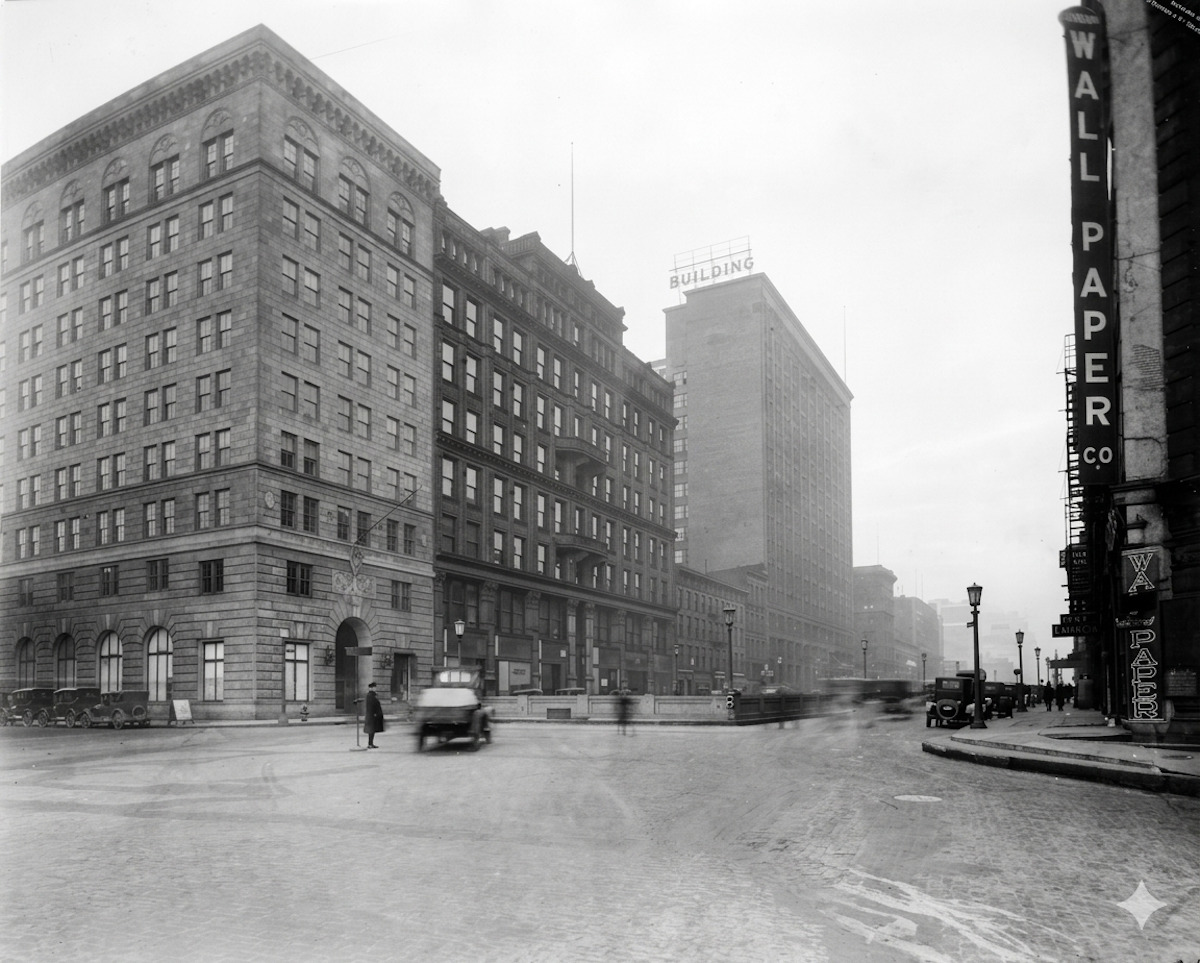
    <summary type="html"><![CDATA[<p><strong><em>Tower City Center, with its Public Square entrance, iconic tower, and flanking hotel and casino, has long overshadowed the office buildings to its rear despite their shared lineage as heirs of the Van Sweringen brothers’ vision. Yet the Landmark Office Towers complex on West Prospect Avenue deserves more attention for its splendid architectural details, novel interior features, and place in the history of some of Cleveland’s most significant corporate giants. </em></strong></p><img src="https://www.clevelandhistorical.org/files/fullsize/cf17bb9783a0e01e8bcbc10cdc20b577.jpg" alt="Original Rendering of Builders Exchange Building" /><br/><p>The three adjoining buildings that comprise Landmark Office Towers were originally conceived as part of Oris P. and Mantis J. Van Sweringen’s Cleveland Union Terminal complex, the “city within a city” the brothers launched in the 1920s. Designed by Graham, Anderson, Probst & White of Chicago and built between 1929 and 1930, the buildings occupied an entire city block bounded by Prospect Avenue, Huron Road, Ontario Street, and West 2nd Street, all of which were built as viaducts above the railroad tracks entering the Union Terminal. </p><p>In keeping with the idea of a city within a city, each building focused on a different sector: the Medical Arts Building was built for physicians’ and dentists’ offices; the Builders Exchange Building was devoted to businesses associated with the building trades; and the Midland Bank Building was dedicated to banking institutions and other business firms. The buildings included passageways connecting them with each other and with other components of the Terminal complex. A skybridge over Prospect, planned to link the Medical Arts Building with Higbee’s department store, was never added. </p><p>The three buildings were all built with structural steel frames clad with gray limestone on the lower four floors, cream face brick above, and terra-cotta trim near the tops. Detailed Art Deco motifs graced each facade, and the complex featured setbacks and light wells to break their bulk and provide ventilation. Inside, they featured travertine marble floors, fluted pilasters, plaster ceilings with ornamental friezes, and bronze elevator doors. The three-story lobby of the Midland Bank Building featured a wood-burning fireplace, a mezzanine, and pillars and panels carved from the trunks of seven giant oak trees. The trees were selected from an English estate and transported by steamship from Liverpool. The Builders Exchange Building included Guildhall, a tenth-floor restaurant inspired by a 15th-century London namesake, and a two-story demonstration house called the <a href="https://clevelandhistorical.org/admin/items/show/1028">Home in the Sky</a> on its two top levels.</p><p>The introduction of such an expansive block of choice office space soon after the onset of the Great Depression had a profound impact on downtown, precipitating a consolidation of business and professional activity around the Terminal and leaving older office buildings with hard-to-fill vacancies. Four major corporate headquarters relocated to the complex between 1930 and 1935. Two were local: Sherwin-Williams moved its offices from its Canal Road property into portions of the Midland Building and Builders Exchange Building, while Standard Oil Co. of Ohio (Sohio) left the East Ohio Gas Building on East 6th for the Midland Building. The Midland Building also attracted the Erie Railroad headquarters away from New York City in 1931 and Republic Steel from Youngstown in 1935. The arrival of the latter led the Medical Arts Building to be renamed the Republic Building. </p><p>Yet the Depression also forced the complex to grapple with challenges. In 1932, Midland Bank went bankrupt and merged into Cleveland Trust, closing its offices in its namesake building. Three years later, the Van Sweringen Company went bankrupt. Thereafter, ownership of the towers complex was administered by the Prospect Terminals Building Co., a subsidiary of Cleveland Terminal Building Co. In 1940, the Cleveland Builders Exchange left for a new headquarters on Euclid Avenue, and Sherwin-Williams expanded to the floors that had housed the Exchange's Home in the Sky. At that time, the building was named the Guildhall Building.</p><p>In 1950, Cleveland Terminal Building Co. sold the entirety of the Union Terminal group except the rail station in 1950 to the 66 Trust of Philadelphia. That same year, the four main tenants of the towers complex — Republic Steel, Erie Railroad, Sohio, and Sherwin-Williams — formed RESS Realty (a portmanteau of their names) to coordinate leasing of office space in the three conjoined towers. For the 35 years that followed, the complex harbored a workforce of around 5,000 people. </p><p>In 1986, ten years after the Erie-Lackawanna Railroad (formerly Erie Railroad) closed its Cleveland headquarters following its merger into Philadelphia-based Conrail, Sohio completed its move from the Midland Building to its new 45-story headquarters on Public Square. Following the departures of these firms and Republic’s recent merger into LTV Steel, RESS Realty was administered by only LTV and Sherwin-Williams. In the year preceding Sohio’s exit, RESS Realty renovated and rebranded the LTV-Guildhall-Midland Building complex as Landmark Office Towers. </p><p>During the renovations, Sherwin-Williams bought the complex, bringing its ownership back to Cleveland. Changes included a central lobby for the elevator banks serving all three buildings, along with the revitalization of the Midland Building’s lobby, which Sohio had modernized into offices with dropped ceilings in 1970, as the Van Sweringen Arcade. The bank’s vault became Haymarket Restaurant, later Piperade, and then Hyde Park Chophouse until the space closed in 2011. </p><p>The renovation and promotion succeeded in turning around the towers at a critical time. After Sohio moved out, the complex’s occupancy dropped from 100% to 62%, but upon completion of the renovations, it bounced back to 90%. Landmark Office Towers had a nearly four-decade run until its owner, Sherwin-Williams, sold the complex to Detroit-based Bedrock in 2023 ahead of the paint and coatings company’s move to its new 36-story headquarters tower on Public Square. Today, the future of the complex seems tied to Bedrock’s Riverfront Cleveland project, but its precise use is uncertain. Office demand in downtown districts has not recovered from the pandemic collapse of 2020, and conversion of such a massive structure to residential use is costly. But the towers — with their Art Deco flourishes, contribution to a big-city atmosphere, and central location in an evolving downtown — deserve a new, bold vision.</p><p><em><strong><a href="https://www.clevelandhistorical.org/items/show/1084">For more (including 21 images) view the original article</a></strong></em></p>]]></summary>
    <published>2026-04-03T13:57:15+00:00</published>
    <updated>2026-04-04T22:02:25+00:00</updated>
    <link rel="alternate" type="text/html" href="https://www.clevelandhistorical.org/items/show/1084"/>
    <id>https://www.clevelandhistorical.org/items/show/1084</id>
    <author>
      <name>J. Mark Souther</name>
    </author>
  </entry>
  <entry>
    <title type="html"><![CDATA[Saint Josaphat of Parma: From Mission to Parish to Cathedral]]></title>
    <summary type="html"><![CDATA[<p><strong><em>Like the Ukrainian population itself in Parma, Saint Josaphat Ukrainian Catholic Church had an inauspicious start—a simple brick and stone schoolhouse built in 1949 on ten acres of land on State Road.  However, less than forty years later, as the Ukrainian population in Parma was growing into the largest in the State of Ohio, Saint Josaphat became a Cathedral church and  the seat of  a new Ukrainian Catholic eparchy whose territory includes Ohio, part of Pennsylvania and most of the South.</em></strong></p><img src="https://www.clevelandhistorical.org/files/fullsize/dd208222bed267ab663c6c38be39d65e.jpg" alt="Saint Josaphat Cathedral in the Shadow of Parma Ukrainian Village Signage" /><br/><p>The first generation of Catholic Ukrainians to come to Cleveland in the late nineteenth and early twentieth centuries were Ruthenians, who had immigrated from a mountainous area within Galicia known as Ruthenia. Their lands were then located within the Austro-Hungarian Empire. Today, they are part of Ukraine and Poland. Religiously, these Ruthenians were Byzantine or Greek Catholics, or sometimes called Uniates. They were spiritual descendants of Eastern Orthodox Ruthenians and other Eastern European groups who, through the Union of Brest in 1596, had sworn allegiance to the Roman Catholic pope, while retaining a right to practice most of their historic Eastern Orthodox customs, rituals, and liturgy.</p><p>Settling in the Tremont neighborhood, the immigrant Ruthenians, in 1910, built a church of their own that still stands today on West 7th Street, near College Avenue. It was first called Saints Peter and Paul Ruthenian Catholic Church, but was renamed <a href="https://clevelandhistorical.org/items/show/738">Saints Peter and Paul Ukrainian Catholic Church</a> at the conclusion of World War I when the first modern Ukrainian state was established.</p><p>For most of the first half of the twentieth century, the children of the parishioners at Saints Peter and Paul Church attended school either in the basement of their church in Tremont or at other places in Cleveland. In 1947, Pastor Dmytro Gresko and his parishioners decided that they would build an elementary school for the parish children on land located in the suburb of Parma. Their decision was likely influenced by the number of parishioners who, since the end of World War II, had been moving out of Tremont and into that fast growing suburb.</p><p>The land selected for the new elementary school was a 10-acre parcel that lay on the west side of State Road between Kenmore Avenue and Liggett Drive. It was located just two blocks north of Saint Francis de Sales Catholic Church, and almost directly across the street from the Saint Stanislaus Novitiate, later renamed the Jesuit Retreat House. In the 1920s, the Order of the Polish Sisters of Saint Joseph had planned to construct a convent and school on this land. However, the Sisters later decided to instead construct those buildings—the latter of which was later known for many years as Marymount High School—on Granger Road in Garfield Heights. The Sisters then sold the land in Parma in 1929. </p><p>The land's new owners agreed, in October 1947, to sell it to Saints Peter and Paul Ukrainian Catholic Church for $17,500. In April 1949, construction began on the new two-story, brick and stone Saints Peter and Paul school building. Completed that fall, it had eight classrooms for students on its north end and a large assembly hall on its south end that could hold 500 persons and also serve as a chapel. On November 6, 1949, a dedication ceremony was held at the new school, led by Ukrainian Catholic Archbishop Constantine Bohachevsky of the Philadelphia Archeparchy, with assistance from Cleveland Bishop Edward F. Hoban and other Catholic church officials. At the ceremony, it was noted that this was the first Ukrainian Catholic grade school built in the Cleveland area. </p><p>Two years after dedicating the new school, Archbishop Bohachevsky returned to Parma on May 12, 1951 to bless the chapel in the school building which was named Saint Josaphat Chapel, after Josaphat Kuntsavych, a Ukrainian priest who had been murdered in 1623 because of his efforts, consistent with the tenets of the Union of Brest, to bring together Eastern Orthodox Christians and Roman Catholics living in Galicia, which in that period was part of the Polish-Lithuanian Commonwealth. </p><p>Classes began at Saints Peter and Paul grade school on November 15, 1949, with a total of 135 students attending only grades one through three in that first year. Because many of those students still lived in Tremont, the parish also purchased a bus to transport children to and from the school in Parma. One of those bus drivers was Father Myroslav Lubachivsky, then an assistant pastor at Saints Peter and Paul. Some thirty-five years later, in 1985, he would be appointed a Cardinal of the Ukrainian Catholic Church by Pope John Paul II. </p><p>During the period 1950-1960, the number of people of Ukrainian, and other Eastern and South European ethnicities, moving into Parma more than tripled, as that city became one of the fastest growing suburbs in America. In order to address the increases in the Ukrainian Catholic population, Saints Peter and Paul added several new buildings to the Parma campus, including another classroom building, a rectory and a convent, and expanded the grades taught at the school to include from kindergarten to eighth grade. </p><p>In August 1959, recognizing the significant increase in the Ukrainian Catholics living in Parma, Archbishop Bohachevsky announced the creation of a new Ukrainian Catholic parish in Parma, to be sited on the grounds of Saints Peter and Paul grade school. The new parish was named—and the grade school renamed—like the chapel, Saint Josaphat. Father Andrew Ulicky, an assistant pastor at Saints Peter and Paul, was appointed the first pastor of this new Ukrainian Catholic parish. </p><p>Shortly after his appointment as pastor, Father Ulicky initiated plans to build a high school on the State Road campus. Construction of the building began in 1961, largely funded through the efforts of parishioners who not only gave money to the project, but also volunteered to do much of the skilled construction work. The new circular-shaped high school building was designed by architect and engineer Michael Stefanyk, who volunteered his services to the parish. </p><p>The building featured a wooden domed roof with a 141-foot diameter. However, because of mounting costs and limitations on the amount of time that could be spent on construction by parish volunteers, construction of the building lagged for years, taking many more years to complete than the two years initially anticipated. In the interim, while it sat unfinished, the building became a favorite haunt of Parma teenagers, who visited it often at night, conducting what might be called an early form of urban (or suburban) exploration. </p><p>The proposed high school building was finally completed in 1969 and blessed by Metropolitan Archbishop Ambrose Senshyn on April 20 of that year. By that time, however, the plan to use the building as a high school had been abandoned, largely due to the establishment of Saint Andrew Ukrainian Catholic parish on the south end of Parma in 1965. The creation of the new parish prompted the departure of about 500 families from Saint Josaphat. </p><p>When the circular, domed building was blessed, it was given the name Saint Josaphat Astrodome Hall—commonly known as the "Astrodome" in reference to Houston's recently completed domed stadium. Rather than serving students as their new high school, the building was repurposed as an assembly hall for the use of the Saint Josaphat parish. Since its completion, it has been the venue for many parish events, as well as serving as a venue for the events of other organizations, such as ethnic festivals, and for individual events, including weddings. </p><p>After the completion of the Astrodome, Father Ulicky and the parish's second pastor, Father Yaroslav Sirko, who succeeded Father Ulicky in 1971, turned their attention to building a church on the State Road campus. The need to do so became pressing when, on April 11, 1973, a horrific fire at Saint Josaphat grade school destroyed the chapel within the school building. As a temporary measure, masses were thereafter held in the Astrodome. Father Sirko, who was the pastor at the time of the 1973 fire, wanted to immediately construct a new church, but was unable to do so due to the state of parish finances at the time. </p><p>As a result, the challenge to build the new church fell to the parish's third pastor, Father Michael Fedorowich, who came to Saint Josaphat in 1979. By 1981, the parish finances had sufficiently improved to enable Father Fedorowich to begin construction. By the summer of 1983, when construction was almost completed, word was received by the parish that the new Saint Josaphat church was to become a Ukrainian Catholic cathedral and seat of a new eparchy—the equivalent of a Roman Catholic diocese—for the Ukrainian Catholic Church in the United States. As a result of this development, additional construction was required in order to render the building's interior suitable as a cathedral. The following year, Father Robert Moskal was appointed the first bishop of the new Ukrainian Catholic Eparchy of Parma, Ohio.</p><p>When the 1990 federal census was taken—the first one following the completion of Saint Josaphat Cathedral and creation of the new Parma Ukrainian Catholic Eparchy, the results of the community questionnaires for Parma showed that the city's Ukrainian population, which in 1950, had been one of the smallest for residents of East European ancestry, had now become one of the largest, behind only the Polish and Slovak populations. In subsequent years, the Parma Ukrainian community continued to grow until it became, according to an article appearing in the Cleveland Plain Dealer on March 24, 2022, the largest in the State of Ohio. </p><p>Along the way of their journey as one of the most important Ukrainian institutions in Parma, Saint Josaphat and its parishioners have experienced their share of joys and sorrows at their now historic State Road campus. In 2008, Saint Josaphat Ukrainian Catholic grade school,which had served children of the parish for nearly 60 years, closed its doors for good. However, in what must have been somewhat consoling to the parish, several years later the school building became home to a new K-8 public community school called the Global Village Academy, which offers language and cultural programs to students in every grade. </p><p>On an even more positive note, in 2008 the Parma City Council passed a resolution recognizing the many contributions that Ukrainians at Saint Josaphat and other institutions in the City had made, and honoring the Ukrainian community with the establishment of <a href="https://clevelandhistorical.org/items/show/863">Ukrainian Village</a>, a section of State Road beginning at Tuxedo Avenue on its north end and extending south all the way to Grantwood Drive, with signs alerting drivers of the existence of the Village. </p><p>Today, visitors to Parma, who drive to the suburb on State Road will, as they cross Brookpark Road, immediately take notice of the colorful signage which announces that they are entering Ukrainian Village. Within moments thereafter, they will see the five majestic onion domes of the beautiful Saint Josaphat Cathedral. The signs and the domes inform visitors not only of the historical importance of Saint Josaphat to Parma's Ukrainian community, but also of its importance to the City of Parma itself.</p><p><em><strong><a href="https://www.clevelandhistorical.org/items/show/1078">For more (including 16 images) view the original article</a></strong></em></p>]]></summary>
    <published>2026-01-08T16:48:20+00:00</published>
    <updated>2026-04-15T14:57:24+00:00</updated>
    <link rel="alternate" type="text/html" href="https://www.clevelandhistorical.org/items/show/1078"/>
    <id>https://www.clevelandhistorical.org/items/show/1078</id>
    <author>
      <name>Jim Dubelko</name>
    </author>
  </entry>
  <entry>
    <title type="html"><![CDATA[U. S. Dearing: Cleveland&#039;s  “Mister Restaurant”]]></title>
    <summary type="html"><![CDATA[<p><strong><em>In 1956, the <i>Call & Post</i>, Cleveland’s weekly African American newspaper, praised a leading light in the city’s restaurant field: “There is a double-star attraction featured by U. S. Dearing ... which has attracted the happy attention of approximately 65,000 Clevelanders during the past six months. Dearing’s double-feature is not a song and dance team or a couple of nationally famed stage stars; it is his Golden Brown Fried Chicken and his Hickory Smoked Barbecue.” So good was Dearing’s food that his wife, said to be a “fine cook” in her own right, confided to the paper that she usually served the restaurant’s food at parties in their 783 East Boulevard home: “I find it just too difficult to match the cooking that comes out of my husband’s kitchens,” she exclaimed.</em></strong></p><img src="https://www.clevelandhistorical.org/files/fullsize/eaf4757cad966edd111dcd2665e4ac21.jpg" alt="U. S. Dearing Outside His Last Restaurant" /><br/><p>Born in 1903 in Washington, Virginia, in the foothills of the Blue Ridge Mountains, Ulysses S. (“Sweets”) Dearing was abandoned at birth and raised by his uncle in a tarpaper shack. At age 14 he joined the Great Migration, arriving in Pittsburgh with no money and no formal education. After a stint working in a Carnegie Steel mill and as a butler, Dearing opened his own restaurant in the Hill District before buying and operating a small hotel there in the early 1930s. Soon thereafter, Dearing tried to open a restaurant and hotel in the rural outskirts of the city but suffered a flood that, with the weight of the Great Depression, returned him to financial ruin. </p><p>As a result, Dearing left the Steel City for the Forest City in 1932. According to a story he told often, Dearing arrived in Cleveland with 97 or 98 cents in his pocket, which he said he threw on the sidewalk after getting off the bus at East 107th Street and Euclid Avenue because he decided someone else might need it more than he. Over the next two years, Dearing worked as a short-order cook before eventually landing a job as the manager of the popular, Green Book–listed <a href="https://greenbookcleveland.org/locations/cedar-gardens/">Cedar Gardens</a> restaurant at 9706 Cedar, a Harlem-inspired “black and tan” club where jazz music brought the races together. There he earned the nickname “Prince of Green Pastures” because Cedar Gardens was the pulsing heart of an emerging upscale Black nightlife district that assumed this name upon the death in 1935 of Black actor Richard B. Harrison, beloved for his starring role in the Broadway hit <i>Green Pastures</i>.</p><p>Over the next decade, Dearing managed other entrepreneurs’ ventures, all of them featured in the <i>Green Book for Negro Motorists</i>, while struggling to launch his own. He managed Jack Hecht’s Cedar Gardens (1933–37), Benny Mason’s <a href="https://clevelandhistorical.org/items/show/967">Cedar Country Club/Mason's Farm</a> in Solon (1938–42), and Mason’s <a href="https://greenbookcleveland.org/locations/blue-grass-club/">Blue Grass Club</a> (1943–45). During his tenure at Mason’s Farm, Dearing briefly owned two restaurants of his own. First, he operated Dearing’s Tasty Shop (1938–39), formerly the <i>Green Book</i>–listed <a href="https://greenbookcleveland.org/locations/the-chicken-coop/">Chicken Coop</a>. Then he bought the Park Avenue Restaurant at 5622 Woodland in 1941 but owned it for less than a year. Dearing then opened his next Dearing’s at 9708 Cedar (next to Cedar Gardens) in the former Palace Cafe in 1943, but within a few months he had moved a block to the former site of <a href="https://greenbookcleveland.org/locations/club-ron-day-voo/">Club Ron-Day-Voo</a> at 9804 Cedar, where he remained until 1945. </p><p>Following the end of World War II, Dearing finally hit his stride, entering what was to turn out to be a nearly four-decade run. In 1946, he opened his newest Dearing’s restaurant at 1035 East 105th Street. His move to 105th, the main commercial thoroughfare running through Glenville, placed Dearing’s among the vanguard of Black-owned businesses in a neighborhood that was soon to transform from one of the city’s prime Jewish communities into the so-called “Gold Coast,” which supplanted “Green Pastures” as the most coveted address for upwardly mobile African Americans. For several years he shared his block with other illustrious Black-owned establishments, including <a href="https://clevelandhistorical.org/items/show/882">Cafe Tia Juana</a>, <a href="https://greenbookcleveland.org/locations/gold-coast-tavern/">Gold Coast Tavern</a>, and <a href="https://greenbookcleveland.org/locations/mercury-bar/">Mercury Bar.</a></p><p>Within a few years, Dearing had expanded to four locations that included the dining rooms Alonzo Wright’s <i>Green Book</i>–listed <a href="https://greenbookcleveland.org/locations/carnegie-hotel/">Carnegie</a> and <a href="https://clevelandhistorical.org/items/show/636">Majestic</a> Hotels, as well as in Club Amvets, which resurrected a former Dearing’s location at 9804 Cedar. He advertised citywide delivery service by 1949, although this effectively meant only a few square miles of the East Side at a time when the vast majority of African Americans still lived in either Cedar-Central or Glenville. Thereafter, with his own restaurant’s “shack fried chicken” and barbecued ribs having become wildly popular, Dearing scaled back to concentrate solely on his Glenville dining room. </p><p>Open 24 hours a day, Dearing’s flagship restaurant was known not only for its unforgettable fried chicken but also for its sumptuous Sunday dinners. One Sunday menu in 1953, for instance, included thirteen entree options — Roast Prime Rib of Beef Au Jus, Roast Young Hen Turkey with Gravy and Cranberry Sauce, Roast Loin of Pork with Candied Yams, Broiled Boston Lamb Chops on Toast Points, Baked Sugar-cured Ham with Fresh Fruit Sauce, Stewed Fresh Country Chicken Dublin Style, Roast Long Island Duckling with Stewed Apples, Sauce Baby Chicken Livers in Butter on Toast, Broiled Prime Boston Strip Steak with Mushrooms, Lobster a la Newburgh in Casserole, Saute Veal Sweet Breads with Fresh Mushrooms, Broiled Fresh Caught Lake Erie White Fish Maitre D’Hotel, Broiled Fresh Caught Red Snapper with Lemon Butter, and Fried Jumbo Frog Leg with Tartar Sauce — all modestly priced between $1.25 and $2.25. </p><p>The Glenville-based Dearing’s enjoyed a long run, proving so successful that Dearing began to expand with the assistance of his son U. S. Dearing Jr. In 1956, he opened Dearing’s Carry-Out Store, whose slogan was, “Your apartment is your dining room.” Between 1960 and 1970, Dearing’s added five additional locations: Dearing’s Chic-A-Rib Room (1960), later named Dearing’s Living Room Lounge, Mark I Lounge, Second Choice Lounge, and finally the Candlelight Room, in the former Gem Snack Bar & Bar-B-Q at 10932 Superior Avenue; Dearing’s Carry-Out (1963) at 12019 Ashbury Avenue; Dearing’s Continental Lounge (1968) at 12804 St. Clair Avenue; Dearing’s Party Center (1969) at 17324 Harvard Avenue; and finally Dearing’s Catering (1970), later known as the Mark III Lounge and Carry-Out, at 11223 St. Clair.</p><p>Amidst his overall expansion, Dearing sold his original Glenville restaurant in 1962 to his employee Grace Sears, but just two years later he bought back the building to attempt a new concept, Mr. D’s Pancake House, which offered more than 80 different pancakes and, like his original restaurant, was open around the clock. Just a year later, he pivoted again, turning it into Mr. D’s Seafood, but then he abruptly closed down before the end of 1965. Perhaps these more specialized eateries fell short of expectations with pancakes mainly appealing in the morning hours and seafood costing more. </p><p>For the remainder of the decade, Dearing’s overall enterprise continued to prosper. However, no sooner had Dearing reached the zenith of being proprietor of his own local chain than he began to scale back. In 1971, he phased out the Continental, and he also shuttered his carry-out on East 105th following a devastating fire in 1972. Four years later, he closed the Mark III on St. Clair and, soon after on the advice of his doctor, in 1977 he also sold the Party Center to Edward Haggins and Dale Carter, with whom he shared his famous fried chicken recipe. Carter then carried on the Dearing’s tradition in Lee-Harvard, first as Dearing’s Lounge and then as Juva De’, which featured musical acts like the O’Jays.</p><p>Dearing, meanwhile, spent his remaining years concentrating on his Candlelight Room at Superior and East 110th, which operated until a few months before his death in 1984. Although only one of the Dearing’s buildings (the one in Lee-Harvard) stands today, Dearing’s legacy lives in the memory of many who remember his culinary prowess and warm hospitality. It is therefore little surprise that the <i>Cleveland Press</i> dubbed him “Mr. Restaurant,” rightly recognizing Dearing’s reputation as one of and possibly<i> the </i>foremost Black restaurateur of the twentieth century in Cleveland.</p><p><em><strong><a href="https://www.clevelandhistorical.org/items/show/1073">For more (including 13 images) view the original article</a></strong></em></p>]]></summary>
    <published>2025-11-24T12:44:21+00:00</published>
    <updated>2026-04-04T22:12:10+00:00</updated>
    <link rel="alternate" type="text/html" href="https://www.clevelandhistorical.org/items/show/1073"/>
    <id>https://www.clevelandhistorical.org/items/show/1073</id>
    <author>
      <name>J. Mark Souther</name>
    </author>
  </entry>
  <entry>
    <title type="html"><![CDATA[Hermit Club : The Evolution of Cleveland&#039;s Oldest Private Club Dedicated to the Performing Arts]]></title>
    <summary type="html"><![CDATA[<img src="https://www.clevelandhistorical.org/files/fullsize/ca4a7f164a9b812e223d53fcf1c3bdfc.jpg" alt="Second Hermit Club" /><br/><p>The Hermit Club was founded in 1904 by Cleveland architect Frank B. Meade, who was inspired by a visit to New York City's Lambs Club, a private social club devoted to the performing arts. After returning to Cleveland, Meade envisioned a similar space to serve the city's musicians and actors. He designed a clubhouse in a British pub style modeled after the Lambs Club.</p><p>Meade and his associates recruited members from all over Cleveland, notably from the Gatling Gun Company, which employed many musicians and performers. A budget of $10,000 was set for constructing a clubhouse on <a href="https://clevelandhistorical.org/items/show/806">Hickox Alley</a> (now East 3rd Street), near the Euclid Avenue Opera House, then the center of Cleveland's theater district. The building's brickwork, leaded windows, and floral wood engravings evoked its English inspiration. </p><p>From its beginning, the Hermit Club was both ambitious and exclusive. By 1909 it had grown large enough to need a bookkeeper, and its annual dues increased from $20 to $60, a substantial sum at the time. This high membership fee ensured that members were affluent and dedicated to musicianship and performance. The Club formed house and finance committees by 1910 to organize events and collaborations. </p><p>The Hermit Club quickly became a center for musical performance. Under the leadership of Meade, himself a trained musician, the Club featured musical concerts by the Original Fadette Jazz Orchestra, which included five violinists, a cellist, a bass violist, a clarinetist, a cornetist, and two pianists. The Club's first production, Hermits in Holland, set the tone for other musical "pilgrimages," including performances set in Spain, Austria, Mexico, Africa, California, the American South, and so forth. These location-specific shows involved elaborate costumes, makeup, and acting as the Hermits tried to embody the cultures they portrayed on stage. By the mid-1920s, the Hermit Club hired an orchestra conductor and began composing original music. </p><p>The Hermit Club also played a notable role in Cleveland's civic and charitable life. Proceeds from early productions supported causes such as the Cleveland Day-Nurse Premature-Babies Dispensary and the Hospital of Cleveland. The Club shared costumes and resources with other organizations, hosted “ladies' nights,” fielded its own baseball team, and even branded tobacco and cigarette boxes. In 1911, the Club began accepting junior members between the ages of 21 and 23, offering them reduced dues and training from senior members, all in an effort to connect with colleges and engage younger performers. </p><p>The Club also adapted to legal and social change. When Ohio adopted prohibition in 1912, the Club halted its alcohol sales, resuming only after repeal in 1933. Membership held steady at around 100 members, but it then dropped during World War II when 40 members left for military service. After the war, membership rebounded. In 1971, the Hermits voted to permit women to attend meetings and participate formally, though women had long been present at some social events and galas. </p><p>A major physical change came in 1928, when the Hermit Club sold its original clubhouse as demand for office and retail space intensified on lower Euclid Avenue. The Club followed the eastward drift of Cleveland's entertainment district to Playhouse Square, building its new clubhouse at 1628 Dodge Court in a similar Tudor style to that of the original. Although Meade stepped down as the Club's president in 1938, the organization he founded continued to thrive. </p><p>In more recent decades, the Hermit Club maintained its status as a private institution with roughly 100 dues-paying members. Its biggest modern transformation came in 2016, when a 50-seat public restaurant serving German cuisine opened inside the building. While most of the clubhouse remains private, the restaurant allows non-members to experience the space and learn about Cleveland's cultural legacy. The Club has also maintained its musical tradition, contributing performances honoring figures such as Judy Garland and Frank Sinatra. </p><p>More than a century after its founding, the Hermit Club remains a living testament to Cleveland's artistic heritage. Like Playhouse Square, it nurtures a performance culture interwoven with civic engagement while providing a place for people to enjoy food and music.</p><p><em><strong><a href="https://www.clevelandhistorical.org/items/show/1070">For more (including 10 images) view the original article</a></strong></em></p>]]></summary>
    <published>2025-11-18T19:35:38+00:00</published>
    <updated>2026-03-28T21:23:14+00:00</updated>
    <link rel="alternate" type="text/html" href="https://www.clevelandhistorical.org/items/show/1070"/>
    <id>https://www.clevelandhistorical.org/items/show/1070</id>
    <author>
      <name>Jordan Gallegos </name>
    </author>
  </entry>
  <entry>
    <title type="html"><![CDATA[Hart &amp; Co. Building: How One Building Helped Save a Struggling District]]></title>
    <summary type="html"><![CDATA[<p><strong><em>By 1980, 40 percent of the structures in the Warehouse District were gone. John Cimperman, head of the Cleveland Landmarks Commission,  summed up the situation best when he stated, “We need luck, money, and cooperation, but saving and restoring this area is [a] must.” The Hart & Co. Building was a starting point for the restoration of the Warehouse District in a broader trend of adaptive reuse.</em></strong></p><img src="https://www.clevelandhistorical.org/files/fullsize/36069c526aa18707bd0098b219f3c1fe.jpg" alt="Hart &amp; Co. Building in 1897" /><br/><p>The Hart & Co. Building is located at 1235 West 6th Street in the Warehouse District and currently contains the Hat Factory Lofts and Richardson Design. The Hart & Co. Building was commissioned in 1888 by Elbert Irving Baldwin, one of the city’s oldest dry goods merchants, who came to Cleveland in 1857. The building’s first tenant was E. L. and F. W. Hart & Co., which leased the building until 1900. Hart & Co. was one of the most prominent millineries in a millinery market that ranked third in the nation (behind New York and Chicago) by 1895. Hart & Co. made hats for women and imported hats and materials from Europe. Hart & Co. sold straw, felt goods, feathers, flowers, ostrich plumes, ribbons, silk, velvets, ornaments, and other goods for making hats; many of these items the company sold made their way to the “far west and extreme south.” Furthermore, in 1897 it was reported that thousands of milliners (most of whom were women) came to Cleveland each year from Ohio, Indiana, Kentucky, Michigan, and Pennsylvania to see the latest spring hat designs. </p><p>On April 15, 1899, catastrophe struck Hart & Co. At noon, a fire erupted in the building occupied by Comey & Johnson behind the Hart & Co. Building. The fire threatened the entire block bounded by West St. Clair Ave and West Lakeside Avenues and West 3rd and West 6th Streets. Eventually, the fire spread to the Hart & Co. Building; by 1:00 p.m. the building was “doomed.” The heaviest loss was suffered by Hart & Co. whose building was a wreck, with damage estimated at approximately $75,000. In 1899, the building was rebuilt and redesigned by F. S. Barnum and Co. and Hart & Co. moved and rented out the Brush Building. It is unclear whether the entire building was destroyed or if only parts of it were destroyed. What is certain is the building suffered significant damage from the fire.</p><p>In 1900, the building was sold to Adams & Ford, a wholesale dealer in rubber goods that primarily made boots and shoes. In 1941, White Tool & Supply Co. bought the building and used it as a warehouse until 1983. White Tool & Supply Co. seemed especially prosperous in the 1950s. In July 1951, it was reported that the company sold more than $3,000,000 of tools, equipment and machinery each year. Business likely declined from the 1960s to 1980s as many of the businesses in Cleveland (and elsewhere) saw a decline due to deindustrialization and urban decline. Additionally, other factors that led to the decline of the machine tools industry included the failure to modernize/innovate, the failure to sell internationally, bigger companies buying smaller companies in the industry, and the dismantling of the iron and steel industry, which was linked with the machine tool industry. Hence, many buildings in cities became vacant/abandoned and left to deteriorate. The solution many cities implemented due to the crisis of deteriorating structures was demolition. From the 1940s to 1970s, approximately one-third of the buildings in the Warehouse District were cleared and replaced with surface parking. By 1980, 40 percent of the structures in the Warehouse District were gone. </p><p>In 1971, in response to demolition in Cleveland, the Cleveland Landmarks Commission was formed. The Landmarks Commission’s mission was to find architecturally and historically significant buildings in Cleveland and label them as landmarks to prevent their demolition. In April 1977, John D. Cimperman, head of the Landmarks Commission and Cleveland City Council member, revealed a plan for the Warehouse District that focused on reusing buildings through renovations and creating urban housing. Cimperman was aware of the historic value of the Warehouse District: it contained early commercial skyscrapers and much of the early wealth acquired in Cleveland was earned in the district. Cimperman summed up the situation best when he stated, “We need luck money, and cooperation, but saving and restoring this area is [a] must.” In 1982, the Warehouse District gained further protection from destruction. That year, Cleveland City Council established the Warehouse Historic District and the National Park Service approved listing the Warehouse District in the National Register of Historic Places. However, in 1983, White Tool & Supply Co. left the Hart & Co. Building, leaving its fate in question. </p><p>Luckily, on January 8, 1984, the Cleveland City Planning Commission approved an Urban Development Action Grant proposal for the building and in March, the U.S. Department of Housing and Urban Development approved the application. This meant funds of $800,000 and a $2 million mortgage were approved to help restore and repurpose the building. The renovation was undertaken by the Old Cleveland Properties division of the Dalad Group and turned into an apartment building with thirty-three loft-style suites. The first floor was used as a commercial space where a restaurant and tavern were expected to be installed. Additionally, the developers tried to keep elements of the industrial history of the building but also made it look like a cozy residential space. In June 1985, the Hat Factory Lofts opened. Thus, the Hart & Co. Building began its life as the first legal housing unit in the Warehouse District. </p><p>The transformation of the Hart & Co. Building into the Hat Factory Lofts was the first step in the spread of adaptive reuse in the Warehouse District. The Hat Factory Lofts was one of twenty-one buildings the Dalad Group planned to develop in the Warehouse District. Additionally, there were plans to establish pedestrian walkways and courtyards in the district to make it pedestrian friendly and to transform it into a mixed-use neighborhood. In 1987, Old Cleveland Properties undertook a $3 million renovation of the Hoyt Block, a four-story Victorian building. This led to the creation of eighty thousand square feet of retail space at ground-level and upper-floor offices. In 1988, Old Cleveland Properties made fifty-six apartments out of upper-story space in the Hoyt Block. In 1990, only three buildings in the Warehouse District had apartments: the Bradley Building, Hat Factory Lofts, and the <a href="https://clevelandhistorical.org/items/show/1062">Hart Building</a>. Hence, the adaptive reuse of the Hart & Co. Building paved the way to revitalize the Warehouse District and served as part of the national trend to use adaptive reuse to save struggling cities like Baltimore, Minneapolis, and Pittsburgh. In the end, the Hat Factory Lofts tips its hat to the building’s first inhabitant, Hart & Co., through its name and architectural features, continuing to provide a sense of Cleveland’s past as the city continues to live on.</p><p><em><strong><a href="https://www.clevelandhistorical.org/items/show/1064">For more (including 8 images) view the original article</a></strong></em></p>]]></summary>
    <published>2025-11-13T19:36:21+00:00</published>
    <updated>2026-03-04T21:32:06+00:00</updated>
    <link rel="alternate" type="text/html" href="https://www.clevelandhistorical.org/items/show/1064"/>
    <id>https://www.clevelandhistorical.org/items/show/1064</id>
    <author>
      <name>Casey Smith</name>
    </author>
  </entry>
  <entry>
    <title type="html"><![CDATA[The Shaker Players: Behind the Footlights]]></title>
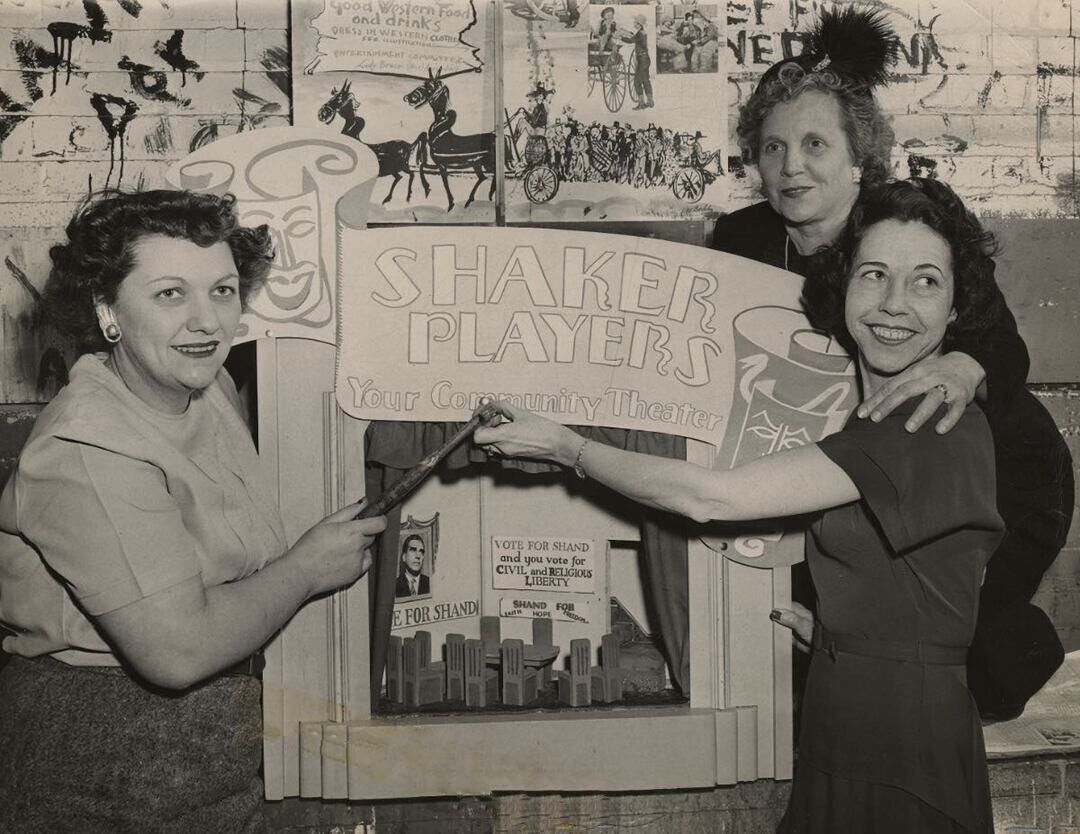
    <summary type="html"><![CDATA[<p><strong><em>Community theater has long been a hallmark of American civic life, offering ordinary people the opportunity to create extraordinary art together. Few local institutions embody this spirit as fully as The Shaker Players, a theater group rooted in Shaker Heights, Ohio. From their humble founding in 1919, the Shaker Players evolved into one of the oldest community theaters in Northeast Ohio, leaving an indelible mark on the region’s cultural landscape. Their story is one of tradition, collaboration, and a devotion to keeping theater accessible to all.</em></strong></p><img src="https://www.clevelandhistorical.org/files/fullsize/179a9e15266e8a5e5ed97b9794038f43.jpg" alt="Shaker Players Diorama" /><br/><p><span class="NormalTextRun SCXW42064403 BCX0">The Shaker Players trace their origins to </span><a href="https://clevelandhistorical.org/items/show/359"><span class="NormalTextRun CommentStart CommentHighlightPipeRest CommentHighlightRest SCXW42064403 BCX0">Plymouth Church</span></a><span class="NormalTextRun CommentHighlightPipeRest SCXW42064403 BCX0"> in Shaker Heights. In 1919, a small group of young church members organized a play to raise funds for a new church building. They could hardly have known that this modest effort would grow into a community theater organization lasting for decades. From the start, the group drew on a wide cross-section of Shaker Heights residents. Business leaders, educators, and civic figures </span><span class="NormalTextRun SCXW42064403 BCX0">participated</span><span class="NormalTextRun SCXW42064403 BCX0"> both onstage and behind the scenes, ensuring the theater was both artistically vibrant and socially </span><span class="NormalTextRun ContextualSpellingAndGrammarErrorV2Themed SCXW42064403 BCX0">embedded.</span></p><p><span class="NormalTextRun SCXW90212961 BCX0">The troupe originally called themselves the Shaker Village Players, reflecting their role as a grassroots community project. Their first productions </span><span class="NormalTextRun SCXW90212961 BCX0">demonstrated</span><span class="NormalTextRun SCXW90212961 BCX0"> a commitment not just to entertainment but also to strengthening the civic bonds of Shaker Heights during its formative years as a </span><span class="NormalTextRun ContextualSpellingAndGrammarErrorV2Themed SCXW90212961 BCX0">suburb. <span class="NormalTextRun SCXW90212961 BCX0">By the 1920s and 30s, the Players had become a fixture of Shaker Heights life. Their productions were staged with professionalism that belied their “non-professional” label, leading the group to be recognized as the oldest non-professional theater company in the </span>region.</p><p><span class="NormalTextRun SCXW216948294 BCX0">Part of their longevity came from a strong set of traditions that reinforced the sense of family within the company. One such tradition was the </span><span class="NormalTextRun SCXW216948294 BCX0">W</span><span class="NormalTextRun SCXW216948294 BCX0">omen</span><span class="NormalTextRun SCXW216948294 BCX0">’s </span><span class="NormalTextRun ContextualSpellingAndGrammarErrorV2Themed SCXW216948294 BCX0">Committee's</span><span class="NormalTextRun SCXW216948294 BCX0">potluck supper on the Sunday before opening night, where </span><span class="NormalTextRun SCXW216948294 BCX0">the cast</span><span class="NormalTextRun SCXW216948294 BCX0"> and crew shared food and camaraderie. After the final curtain, the group held a celebratory Saturday night party, a chance to reflect on weeks of </span><span class="NormalTextRun SCXW216948294 BCX0">hard work</span><span class="NormalTextRun SCXW216948294 BCX0">. Regular meetings were also held on the second Tuesday of every month in the Shaker Heights High School auditorium, further cementing the rhythm of the group’s </span><span class="NormalTextRun ContextualSpellingAndGrammarErrorV2Themed SCXW216948294 BCX0">activities. <span class="TextRun SCXW112279434 BCX0"><span class="NormalTextRun SCXW112279434 BCX0">These rituals gave the Players stability and continuity.</span></span> <span class="TextRun SCXW112279434 BCX0"><span class="NormalTextRun SCXW112279434 BCX0">They also reflected the communal ethos of Shaker Heights itself, which valued civic responsibility, social cohesion, and the arts as a marker of local identity.</span></span></p><p><span class="EOP SCXW112279434 BCX0"><span class="TextRun SCXW223044799 BCX0"><span class="NormalTextRun ContextualSpellingAndGrammarErrorV2Themed SCXW223044799 BCX0"><span class="NormalTextRun ContextualSpellingAndGrammarErrorV2Themed SCXW8718362 BCX0"><span class="NormalTextRun CommentStart CommentHighlightPipeRest CommentHighlightRest SCXW11318878 BCX0">From the beginning, the Shaker Players </span><span class="NormalTextRun CommentHighlightRest SCXW11318878 BCX0">benefited</span><span class="NormalTextRun CommentHighlightRest SCXW11318878 BCX0"> from strong organizational leadership. </span><span class="NormalTextRun CommentHighlightPipeRest SCXW11318878 BCX0">Founders like Rachel Cochran guided the group in its earliest years, while later directors and committee members ensured continuity through decades of change. Many of those involved were prominent members of the Shaker Heights community, which lent credibility and stability to the </span><span class="NormalTextRun ContextualSpellingAndGrammarErrorV2Themed SCXW11318878 BCX0">organization.</p></span></span></span></span></span></span><span class="EOP SCXW112279434 BCX0"><span class="TextRun SCXW223044799 BCX0"><span class="NormalTextRun SCXW223044799 BCX0">Over the decades, the Shaker Players staged an impressive repertoire, ranging from classics to contemporary works. Productions like "</span></span><span class="TextRun SCXW223044799 BCX0"><span class="NormalTextRun SCXW223044799 BCX0">Death Takes a Holiday"</span></span><span class="TextRun SCXW223044799 BCX0"><span class="NormalTextRun SCXW223044799 BCX0"> brought dramatic flair to local stages, while lighter fare ensured </span><span class="NormalTextRun SCXW223044799 BCX0">broad </span><span class="NormalTextRun SCXW223044799 BCX0">audience </span><span class="NormalTextRun ContextualSpellingAndGrammarErrorV2Themed SCXW223044799 BCX0">appeal</span><span class="NormalTextRun ContextualSpellingAndGrammarErrorV2Themed SCXW223044799 BCX0">. </span></span><span class="TextRun SCXW223044799 BCX0"><span class="NormalTextRun SCXW223044799 BCX0">Their shows regularly drew coverage in the local press, including the Cleveland Press, the Sun Press, and the Plain Dealer, highlighting their visibility within Cleveland’s cultural </span><span class="NormalTextRun ContextualSpellingAndGrammarErrorV2Themed SCXW223044799 BCX0">community.</p><p><span class="NormalTextRun SCXW8718362 BCX0">The group marked major milestones with special celebrations. In 1958, Dorothy R. Davis, the president of The Shaker Players at the time, commemorated their 40th anniversary, noting the group’s origins in 1919 and crediting Mrs. William</span><span class="NormalTextRun SCXW8718362 BCX0"> (Rachel)</span><span class="NormalTextRun SCXW8718362 BCX0"> Cochran</span><span class="NormalTextRun SCXW8718362 BCX0">,</span><span class="NormalTextRun SCXW8718362 BCX0"> one of the founding members—for her early </span><span class="NormalTextRun ContextualSpellingAndGrammarErrorV2Themed SCXW8718362 BCX0">leadership. <span class="NormalTextRun SCXW8718362 BCX0">This recognition reinforced the Players’ reputation as a pioneering community theater.</span><span class="NormalTextRun SCXW8718362 BCX0">Five years later, in 1963–64, the company curated a historical exhibit titled </span><span class="NormalTextRun SCXW8718362 BCX0">“</span><span class="NormalTextRun SCXW8718362 BCX0">The Age of the Stage</span><span class="NormalTextRun SCXW8718362 BCX0">”</span><span class="NormalTextRun SCXW8718362 BCX0"> to honor their 45th anniversary. This exhibit highlighted their history and underscored how deeply interwoven the Players were with the life of Shaker </span>Heights.</p></span></span></span><span class="TextRun SCXW236169787 BCX0"><span class="NormalTextRun ContextualSpellingAndGrammarErrorV2Themed SCXW236169787 BCX0">The Shaker Players’ impact extended well beyond their productions. Their activities fostered community spirit, provided affordable entertainment, and gave local residents the chance to participate in the arts. For many, this was their first exposure to theater whether as an actor, stagehand, or audience member. By establishing themselves as a regular part of civic life, the Players helped shape Shaker Heights’ reputation as a suburb committed to culture and community. In this way, the group paralleled larger national trends in which community theaters blossomed after World War I, fueled by a desire to democratize access to the performing arts. Like all volunteer organizations, the Shaker Players faced challenges. Maintaining membership, funding, and audience interest required constant effort. Yet the group’s longevity speaks to their resilience.</p><p><span class="TextRun SCXW240205265 BCX0"><span class="NormalTextRun SCXW240205265 BCX0">Their history also reflects broader patterns in American suburban culture. The postwar years, particularly the late 1950s and early 1960s, saw a flourishing of civic organizations. For the Shaker Players, this meant greater visibility through media coverage and larger audiences as the suburb grew. At the same time, pressures of suburbanization, shifting leisure habits, and increased competition from professional theaters and television made sustaining community theater more difficult. </p><p>In 1964, The Shaker Players announced that they would be leaving their long-time home at The Shaker Heights High School auditorium. Press releases distributed during the closing of their 45th season indicated they were searching for a new venue, expressing optimism about the future. However, in May of that year, their final press release stated, "for its final production at Shaker Heights High School, after 45 years, Shaker Players will cast off with robust Cole Porter musical, 'Anything Goes.'" After their last bow behind the footlights, The Shaker Players faded from the public eye, never finding a new place to call home.</p></span></span></span>The Shaker Players hold a unique place in the history of Shaker Heights and the broader Cleveland region. Their longevity made them one of the oldest community theaters in Northeast Ohio, and their traditions, productions, and celebrations illustrate the power of theater to strengthen civic identity. Archival traces, such as photographs of productions like "The Whole World Over," newspaper articles, and the preserved memories of their members, allow us to reconstruct their vibrant history. These materials, particularly those preserved in collections like that of Dorothy R. Davis, provide invaluable insights into how local communities used theater to express themselves, celebrate milestones, and create lasting traditions. </p><p>Today, remembering the Shaker Players offers more than nostalgia. It highlights the enduring importance of community arts organizations in shaping civic culture. Just as their founders intended back in 1919, theater became not only a means of raising funds or providing entertainment but also a way of building connections among neighbors. From their beginnings as a church fundraiser to their recognition as a cornerstone of community life, the Shaker Players exemplify the vitality of grassroots theater in America. Their story is filled with dedicated volunteers, creative productions, and cherished traditions that spanned decades. While the Players may no longer be active today, their history remains a vital chapter in Shaker Heights’ cultural narrative. They demonstrated how theater, when rooted in community, can thrive for generations and leave behind a legacy that continues to inspire.</p><p><em><strong><a href="https://www.clevelandhistorical.org/items/show/1063">For more (including 10 images) view the original article</a></strong></em></p>]]></summary>
    <published>2025-10-15T01:51:36+00:00</published>
    <updated>2026-03-04T21:32:06+00:00</updated>
    <link rel="alternate" type="text/html" href="https://www.clevelandhistorical.org/items/show/1063"/>
    <id>https://www.clevelandhistorical.org/items/show/1063</id>
    <author>
      <name>Dawn Culp</name>
    </author>
  </entry>
  <entry>
    <title type="html"><![CDATA[Central National Bank Euclid Avenue Office: &quot;Modernity Prevails&quot;]]></title>
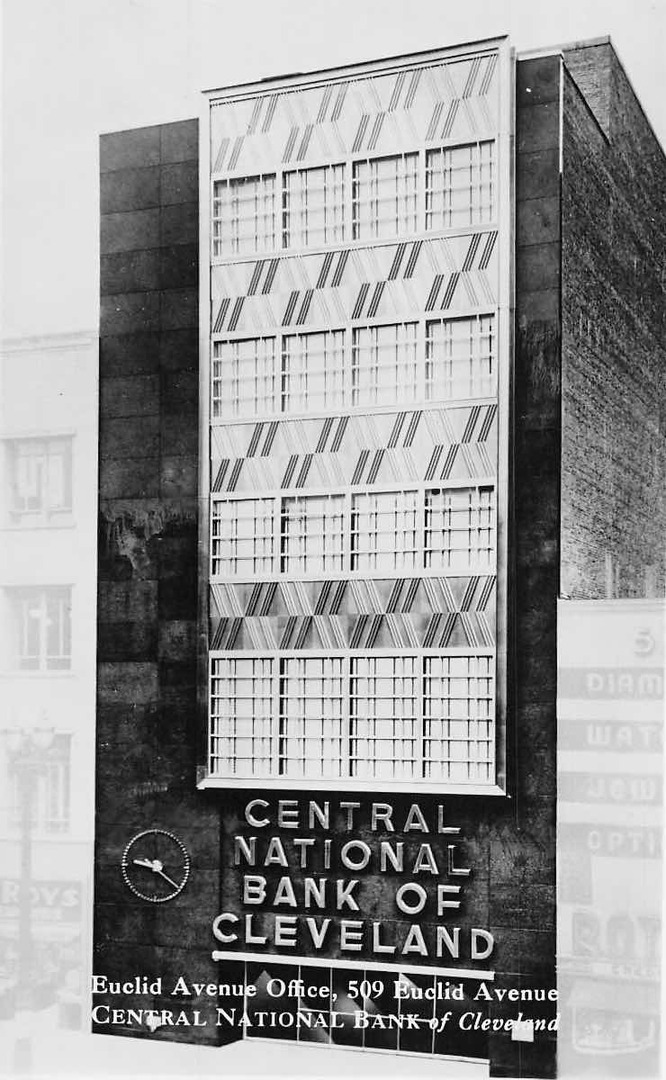
    <summary type="html"><![CDATA[<p><strong><em>In 2019, the 28-story Beacon opened on the northwest corner of Euclid Avenue and East 6th Street as the first newly constructed apartment tower in downtown Cleveland since the 1970s. The Beacon’s undulating, checkered geometrical pattern of dark glass and light metal creates what is known as the “Cafe Wall” illusion. Seven decades before the Beacon and within its giant footprint, another modernist building made its own striking geometrical statement.</em></strong></p><img src="https://www.clevelandhistorical.org/files/fullsize/02cb12ddae0122cb2d66ebb947c0ad64.jpg" alt="Postcard of CNB Euclid Avenue Office" /><br/><p>In 1943, Central National Bank sold its slender 17-story headquarters building at 308 Euclid Avenue to the F. W. Woolworth Co., which later demolished the building for a much shorter retail store (now the House of Blues). The bank continued to lease space in the “matchstick” building until it opened its new headquarters in 1949 in five floors of the Midland Building at West Prospect Avenue and West 2nd Street. Central National also acquired property at 509 Euclid near the northwest corner of East 6th Street to build a “service bank” convenient for downtown shoppers. The separation of main operations from transient services was part of an emerging postwar banking trend in large cities. The bank's purchase of 509 Euclid prompted the termination of Clark's Paul Revere Restaurant's lease, ending the eleven-year run of this replica of the silversmith and Patriot Revere's Boston home. </p><p>The new five-story, air-conditioned Central National Bank Euclid Avenue Office, designed by Conrad, Hays, Simpson & Ruth of Cleveland, opened with fanfare in November 1948. With its facade of imperial red Swedish granite, stainless-steel geometric panels, plate-glass windows, and six-foot electric clock, it could not have been more different from the rustic, log-sided Paul Revere Restaurant. As a <i>Cleveland Press</i> reporter observed, “modernity prevail[ed]” inside as well. The ultra-modern building featured the first “moving stairway” (escalators) to be installed in a Cleveland bank. Its first and second floor lobbies featured terrazzo floors, white oak paneling and furniture, and formica counters in the tellers’ cages under a "luminous ceiling" like that in the United Nations Security Council chamber at Lake Success, New York.</p><p>The new building’s cost ultimately exceeded its million-dollar budget by a quarter, leading Central National to lease most of the three upper floors to other firms to offset its expense. Less than four decades after it opened, Central National’s Euclid Avenue branch closed quietly in 1986 after being sold to Ohio Savings Association as a real estate investment. Ohio Savings also acquired adjacent buildings, giving it control of everything between the Arcade and East 6th. Ohio Savings in turn sold to developers who built a parking garage in 2005 and, in 2019, completed the Beacon apartments above it, lending a new ultra-modern look to the block.</p><p><em><strong><a href="https://www.clevelandhistorical.org/items/show/1060">For more (including 16 images) view the original article</a></strong></em></p>]]></summary>
    <published>2025-08-23T16:00:07+00:00</published>
    <updated>2026-04-04T22:12:22+00:00</updated>
    <link rel="alternate" type="text/html" href="https://www.clevelandhistorical.org/items/show/1060"/>
    <id>https://www.clevelandhistorical.org/items/show/1060</id>
    <author>
      <name>J. Mark Souther</name>
    </author>
  </entry>
  <entry>
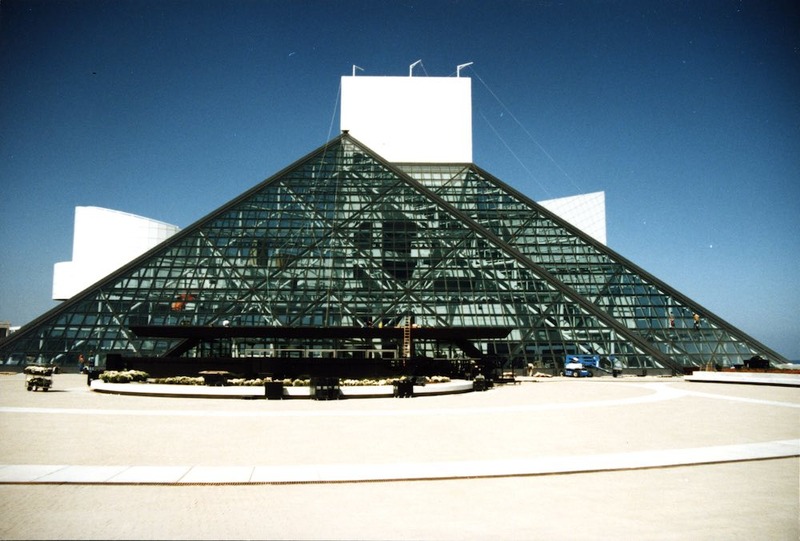
    <title type="html"><![CDATA[WMMS: The Rise of &#039;The Buzzard&#039;]]></title>
    <summary type="html"><![CDATA[<img src="https://www.clevelandhistorical.org/files/fullsize/58d92d98bcc1571870b3872f2630a523.jpg" alt="Pride of Cleveland" /><br/><p>Youth culture writer Jane Scott noted, in an article for the <em>Cleveland Plain Dealer</em>, a handwritten sign hung in the broadcast booth at the first WMMS office that read, “Never play three electric tunes in a row. Never play three acoustic tunes in a row. Be real. Be good. Have fun. Be tight!” The sign was penned by Billy Bass, one of the first disc jockeys employed by the station. The article, published in early 1972, provided a glimpse into the mindset driving one of Cleveland’s newest cultural phenomena. WMMS was, at the time, an underground, progressive-rock radio station gaining traction among the city’s youth for its unique catalog and culture-savvy deejays, who were boldly airing music that reflected the period’s anti-war, anti-establishment, and anti-conservative sentiments. The station would continue to grow, and would later be responsible for breaking such acts as David Bowie, Rush, and Bruce Springsteen. Bass, and the rest of the WMMS crew, would revolutionize the radio industry – and mark Cleveland as the “Rock and Roll Capital of the World.”</p><p>Rock and roll, as a genre, was not born in Cleveland. But the genre was forever linked to the city when Cleveland deejay Alan Freed coined the term for the rhythm-and-blues records he was playing on his radio show for WJW-AM. Following his Moondog Coronation Ball in 1952, regarded as the first rock ‘n’ roll concert, the city was flooded with bars and clubs boasting live music, attracting the coming-of-age Baby Boomer population, and creating a prevalent youth culture within the city. In August of 1968, local AM station WHK debuted its first FM sister-station under the name WHK-FM. A few weeks later, the call letters were changed to WMMS. This new station became the first in Cleveland to feature full-time progressive rock programming.</p><p>The crew solidified their format in the early 1970s, officially becoming an album-oriented rock station and challenging the standards of radio broadcasting. They began airing “Coffeebreak Concerts,” mid-afternoon acoustic performances from popular local, national, and international artists, free for all listeners. They played songs that, subliminally or overtly, criticized war or politics. They quickly gained a loyal following of young rockers who, bored of their declining Midwest city and empowered by the student, feminist, and civil rights movements of the previous decade, were finally seeing themselves embodied in public media. The mid-’70s saw the debut of several on-air acts who would become household names in Cleveland, including Matt “the Cat” Lapczynski, later host of the Coffeebreak Concerts, Lawrence “Kid Leo” Travagliante, afternoon-drive host, late-night rocker Betty “Crash” Korvan, and Jeff Kinzbach and Ed Ferenc, cohosts of the “Buzzard Morning Zoo,” also known as “Jeff and Flash.” </p><p>The bizarre, irreverent antics of these deejays became a source of power for WMMS and were reflected in multiple aspects of the station’s programming and persona. The station ran PSAs promoting safe abortion services, much to the dismay of local conservatives. When corporate management insisted that they run more commercials, deejays discreetly fought back by playing humorous sound effects over the ads. Outside of the studio, WMMS staff made appearances at local events such as sponsored concerts and community gatherings, including a rally at nearby Cleveland State University advocating for youth voices and participation in government.</p><p>The station’s mascot itself exemplified their cheeky brand of humor. After a failed run of advertisements featuring the call letters as signifiers of the phrase “Where Music Means Something,” orchestrated by corporate leaders (leading some locals to adopt instead the phrase “Weed Makes Me Smile”), WMMS personnel took the reins and employed an artist to create an official logo. This artist, Jane Tiburski Elliot, drew a logo featuring a large mushroom shading a blissful-eyed alien as he smokes a joint. This, however, obviously did little to negate the claims that WMMS promoted drug use and it was dropped by management in 1974. Again, the station needed something new. As the story goes, program director John Gorman was driving home through the east side of Cleveland one night contemplating his work and its role within the city when he was struck by the first idea for what would become <em>the buzzard</em>. He describes it in his memoir as “A bird of doom for a dying city whose centerpiece was a crumbling building with the name ‘Terminal Tower.’” Gorman employed American Greetings card illustrator David Helton to create what is now one of the most recognizable mascots in rock radio history. With a sly grin, a mane of blond hair, and his common accessories of guitars and mushrooms, the Buzzard became the face not only of WMMS, but of Cleveland. The figure would later be printed on merchandise of all kinds – apparel, keychains, stickers, and so on – and stood as a symbol of the city’s perseverance. </p><p>In the station’s glory days, generally considered to be the mid-’70s through the late 1980s, it enjoyed soaring ratings. Music director and deejay Denny Sanders claims that of the 1.7 million people living in the Cleveland metropolitan area at the time, around 700,000 of them were WMMS listeners. Outside of Northeast Ohio, WMMS gained national recognition. It won the <em>Rolling Stone </em>magazine nationwide readers’ poll for “Best Radio Station” nine years in a row. <em>Wall Street Journal</em> writer Robert Werner noted in a 1979 article that “The primal energy of hard rock and roll apparently captures and abounds here [in Cleveland] more effectively,” largely due to the influence of WMMS. In the 1980s, it was WMMS deejays leading the lobby for the newly-conceived Rock and Roll Hall of Fame to be built in Cleveland, promoting on-air and to any Rock Hall board members that would listen that Cleveland was really <em>the rock and roll capital of the world </em>(a nickname coined years before by deejay Billy Bass), and in the late ’80s, the Rock Hall was constructed on the shores of Lake Erie.</p><p>WMMS, however, saw a period of decline in the 1990s, in both popularity and credibility. Increasing corporate oversight led to format changes and employee turnover as a few of the station’s most recognizable names, including Gorman, Sanders, “Kid Leo,” and “Jeff and Flash” departed. A <em>Cleveland Plain Dealer </em>article published in 1988 exposed an in-office memo addressed to staff from upper-management demanding they fill out hundreds of <em>Rolling Stone </em>poll ballots, leading to local outrage and a loss of national respect. The station is still in operation today, though new management has moved away from much of the station’s classic branding.</p><p>Though WMMS never quite recovered from corporatization or scandal, the <em>legend</em> of WMMS remains. The WMMS of the ’70s and ’80s revolutionized radio. The WMMS of the ’70s and ’80s gave a new, heartfelt nickname to a city once commonly referred to as “the mistake by the lake.” The WMMS of the ’70s and ’80s was progressive, was loud and obnoxious, was obscene, and was one-of-a-kind. But the WMMS of the ’70s and ’80s had to come to an end. “Kid Leo” was quoted in a <em>Cleveland Plain Dealer</em> article in 1989 saying, “We were a family that lived, worked, and played together… The station was like a family dinner table that went on 24 hours a day.” That same article quotes John Gorman: “These kinds of utopias don’t last.” It’s true – WMMS did not, in essence, <em>last</em> – but its influence on the culture of Cleveland is everlasting.</p><p><em><strong><a href="https://www.clevelandhistorical.org/items/show/978">For more (including 8 images&#32;&amp;&#32;4 audio files) view the original article</a></strong></em></p>]]></summary>
    <published>2022-11-21T22:22:02+00:00</published>
    <updated>2026-03-04T21:32:05+00:00</updated>
    <link rel="alternate" type="text/html" href="https://www.clevelandhistorical.org/items/show/978"/>
    <id>https://www.clevelandhistorical.org/items/show/978</id>
    <author>
      <name>Sophia Warner</name>
    </author>
  </entry>
  <entry>
    <title type="html"><![CDATA[Kamm Building: Kamm&#039;s Corners and the Legacy of Oswald Kamm]]></title>
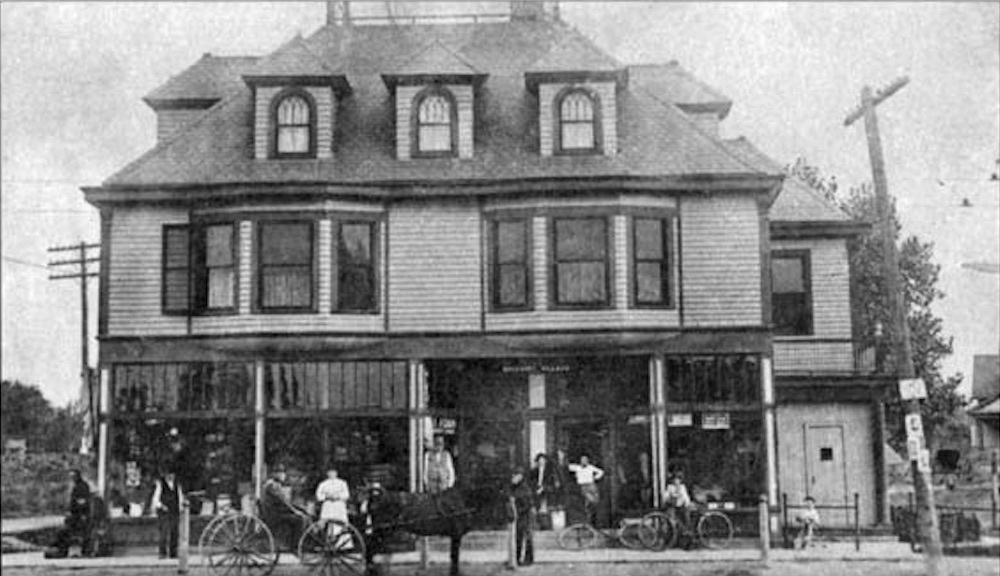
    <summary type="html"><![CDATA[<p><strong><em>Oswald Kamm ran a popular grocery store and post office, at the main intersection of what is today known as “Kamm’s Corners.” He was an influential and popular figure in the early history of West Park, with a lasting legacy that has carried his namesake throughout generations, though few know his entire story. </em></strong></p><img src="https://www.clevelandhistorical.org/files/fullsize/fac12f260fb02ae7f82d42e2396973be.jpg" alt="Front View of Kamm&#039;s Post Office/General Store" /><br/><p>Standing at the southwest corner of Rocky River Drive and Lorain Avenue (previously Lorain Street), the Kamm Building has been the centerpiece of Kamm's Corners for more than a century. Originally built in 1898-1900 for Oswald Kamm’s general store and later used as a post office, it has been home to many businesses, mostly restaurants, during its time. Its recognition is important, as Kamm served as a popular town figure and played a role in the development of the Kamm’s Corners neighborhood in West Park.</p><p>Oswald Kamm was born in Elm, Switzerland, in 1845. He came to the United States as a young man, and in 1874 he settled on buying a four-acre property at the corner of Lorain Street and Rocky River Drive (formerly Riverside). In the previous year, Kamm had married Anna "Lena" Klaue, who was a member of the local Colbrunn family (her mother was a Colbrunn) who were prominent landowners in Rockport Township. The Colbrunns may have sold Kamm the four-acre property, as they are listed as the owners in 1858. At this corner, Kamm set up a grocery store. (He had previously been a grocery clerk in the Duck Island area of Cleveland.) </p><p>Kamm's original building, a modest one-story structure, faced Rocky River Drive instead of Lorain, as it was the more heavily traveled street at the time. In 1886, Kamm was approached by township officials to become an official post clerk during President Grover Cleveland’s administration. This new venture required Kamm to wake up at four or five every morning and make his way to the Nickel Plate Road rail station (in present-day Rocky River) to pick up the mail and return to his store by six A.M. This eventually led to the coincidental naming of “Kamm's Corners,” which has since become one of four neighborhoods within West Park. Numerous old plat maps refer to the southwest corner of Rocky River Drive and Lorain Street as “Kamm’s Ohio”, and it was written on any mail expected to go to Kamm’s post office. </p><p>The area Oswald Kamm would call home for nearly four decades changed rapidly during their time. When Kamm had arrived at what would have been considered part of “Rockport Township,” it was little more than farmland and a few stately homes. As Lakewood, Rocky River, and Goldwood (Fairview Park) split from Rockport Township and formed as townships, villages, and eventually cities, West Park also became an independent village of about 12.5 square miles. There were several name changes to the area during Kamm’s life: Rockport Hamlet, West Park Township, the Village of West Park, and eventually the city of West Park in 1921. </p><p>In the late 1890s, when Rockport gained rail service, Kamm’s post office became an interurban stop of the Cleveland, Southwestern, and Columbus Railway Co. (CS&C), which was “the second largest operator of interurban railways in Ohio at the time.” In the early 20th century, streetcars and rail lines were a main source of public transportation. Kamm’s stop linked to nearby Puritas Springs Park and ran south toward Berea. CS&C eventually discontinued operations in 1931 due to stock market failure, unprofitable lines, and growing automobile ownership. In 1913, a streetcar known as the “Cleveland Green Line” ran west on Lorain Avenue from Public Square and stopped at Kamm’s Corners. These rail lines shaped the early development of the West Park area. By the 1920s, subdivisions and commercial development had significantly increased in West Park. Kamm’s stop played a major role in the commercialization of Kamm’s Corners. He was a well-known businessman and postal clerk amongst community members and farmers from surrounding areas. Despite Kamm’s role, little was written about him while he was alive.</p><p>In 1909, Kamm constructed a rowhouse-style apartment building known as “Kamm’s Terrace” at 3890 Rocky River Drive, which still exists as an office building. By 1918, a three-story home to the west of his store was built on Lorain Street. Kamm’s house was moved in 1925 to 17134 Fernshaw Avenue, directly behind where it stood before. It stands today as a private residence. Kamm’s daughter Lena and her husband Fred A. Colbrunn, great-grandson of the largest landowning family in the village, lived in a smaller home directly to the north of Kamm’s Terrace, and the couple owned the apartment building until the 1950s. The Colbrunn family owned the Rockport Racing Track at the northeast corner of Lorain and Rocky River Drive and were local contractors and businessmen. The Kamm and Colbrunn families were close in business, and it is possible they assisted Kamm in the construction of his buildings. Both families were involved in the Lorain Greenhouse Co., one of many greenhouses at the time in the former Rockport area. Despite this connection, it appears there is no known architect for any of Kamm’s buildings.</p><p>Oswald and Lena Kamm raised their family in West Park, and had five children: Jacob, Fred, Oswald Jr., Lena, and Dora (who passed away at a young age). When Kamm's wife Lena died in 1917, the village of West Park had a variety of businesses and around 5,000 residents. One year later, Oswald’s eldest son Jacob (born in 1874) died from a murder-suicide, committed by an uncle after a dispute. The crime occurred at a home owned by the uncle further north on Rocky River Drive. Kamm himself died on November 17, 1922, ten days after the city of West Park voted yes on a proposition to be annexed into the city of Cleveland. Overwhelmingly, “The residents of West Park had chosen to become Clevelanders, largely due to promises of five-cent fares and extended streetcar services.”</p><p>After Oswald Kamm’s death, his surviving daughter Lena and various relatives, including members of the Colbrunn family, divided the properties that Kamm had owned. Kamm’s store was converted to a lunch hall and candy store referred to as “Rockport Kelly’s.” A son of a local politician is said to have run the shop. From about 1940 to 1947, it housed Benders Cafe, a dance hall owned by John Bender. In 1944, a rear addition was constructed to allow for a small kitchen. </p><p>After Bender's, the building became perhaps what most West Parkers remember best: Tony’s Spaghetti House, later Tony’s Restaurant under different ownership. The original owners of Tony's were members of the local Zappone family, well-known by locals for their other nearby restaurants, including Mr. Z's and Tony's Diner. Under a second owner, Tony's expanded in 1975 with a rear addition (replacing the previous kitchen) to create a second bar and more dining space. Another addition followed in 1980, this time to expand the kitchen to be fully on the first floor. In the original building, this had been an enclosed porch with a second-story balcony, but by 1980 it was a courtyard that connected the rear parking lot with Lorain Avenue. Tony's lasted just over 50 years before a fire destroyed the interior of the building in 1997. </p><p>Following the fire, Kamm's Corners Development Corporation (now West Park–Kamm’s Neighborhood Development) teamed up with local developer Jim Carney on a $400,000 renovation. The project made use of the City of Cleveland's Storefront Renovation Program (SRP). An initial design by SRP staff member Tim Barrett proposed relocating the building's entrance to the street corner, keeping in character with its appearance during the Bender Cafe and Tony's days. Ultimately, however, a more symmetrical appearance was adopted, with the building's entry centered on the front facade. </p><p>The original building had not been symmetrical. Its entrance was offset, with two proportional storefront windows to the east and a smaller window to the west. The transoms on the original building were longer, and the bulkheads were lower. Notably, the project team was able to color-match the building for a historically accurate paint scheme. </p><p>After renovation, the building housed Alfonso’s Tuscan Grill for just over ten years before becoming Panini’s Bar and Grill. When Panini’s closed, it sat vacant for around two years. Ironwood Cafe began operating in the building in 2015 and later changed its name to Kamm’s Cafe, honoring the Kamm name once again. However, Kamm’s Cafe closed within a year of the name change. In late 2025, legislation was introduced to nominate the Oswald Kamm building as a designated Cleveland landmark under the Landmarks Commission. Plans to re-establish the building as the heart of the neighborhood are underway at this time.</p><p><em><strong><a href="https://www.clevelandhistorical.org/items/show/935">For more (including 13 images) view the original article</a></strong></em></p>]]></summary>
    <published>2021-01-10T02:49:30+00:00</published>
    <updated>2026-04-04T22:14:02+00:00</updated>
    <link rel="alternate" type="text/html" href="https://www.clevelandhistorical.org/items/show/935"/>
    <id>https://www.clevelandhistorical.org/items/show/935</id>
    <author>
      <name>Nate J. Lull</name>
    </author>
  </entry>
  <entry>
    <title type="html"><![CDATA[Burke Lakefront Airport: The Landfill Airport]]></title>
    <summary type="html"><![CDATA[<img src="https://www.clevelandhistorical.org/files/fullsize/4da6a05500e4caf70e871485f8b69af6.jpg" alt="Burke Lakefront Airport" /><br/><p>In 1923, the Air Service, a part of the U.S. Army, published and distributed a basic how-to manual on airport construction for America’s cities. This publication, titled “Airways and Landing Fields,” contained information on the Model Airway program as well as a list of suggestions to be followed by a city on “How An Airport Should Be Built.” These suggestions listed in the Air Services bulletin regarded the location suitable for building, related to the size and shape, ground material, markings and accommodations. These attributes that the Air Service bulletin prescribed included being within proximity to ground transportation, merchandise and business districts of a city, which the City of Cleveland took to a different level for building its second an airport.
The lakefront and its subsequent use or misuse, as the case may be, has been a point of contention among Clevelanders for decades. Before the turn of the twentieth century there had been a park on top of the bluff overlooking the lake, appropriately if unimaginatively named <a href="https://clevelandhistorical.org/items/show/996">Lake View Park</a>. Then during the Great Depression the shoreline between what is now called East 9th Street and East 12th Street was a dumping ground for the city’s refuse both material and human. In this area a makeshift “Hooverville” as shantytowns were christened after President Hoover, was constructed by the hundreds of jobless and homeless Clevelanders as a result of the Depression. To combat this refuse and homeless problem several influential and wealthy Clevelanders put forth an idea to clear the area and build a World’s Fair type event in the location. This event would be known as the <a href="https://clevelandhistorical.org/items/show/71">Great Lakes Exposition</a> of 1936. During the exposition, future ideas and plans were proposed, displayed and developed about what use the lakefront could be to the city. Eventually the most practical solution was proposed of transportation facilities either marine or aerial in nature. The proposal contained the early building blocks for a lakefront plan that included the entire shoreline of the city of Cleveland and would contain an aviation point which would become Burke Lakefront Airport. The Lakefront area where the refuse and Great Lakes expositions were once located was not suitable enough for a full-fledged airport according to the Air Services suggestions made in 1923. Nevertheless, a Lakefront location for an airport was seen locally as a huge draw for tourists, businessmen and Clevelanders alike. Proposed as only a short ten-minute drive from Public Square in the center of the city, it was viewed by many as what could be a great alternative to the more distant Cleveland-Hopkins Airport. In the early 1940s construction on a dike retaining wall in Lake Erie by the U.S. Army Corps of Engineers began, which was the outer support area, where within the interior was to be completely filled with hundreds of tons of dirt dredgings from the Cuyahoga River. The interior area was partially completed and secure enough in August 1947 for a temporary runway to be built and the first airplane to land at the site. On the shoreline, off Memorial Shoreway and in between East 9th and East 12th Streets Mayor Thomas Burke and Major John Berry, City Commissioner of Airports, were on hand to perform an opening ceremony with the first plane to land at the site. Over the next year the Army Corps of Engineers continued to develop what would become the permanent airport by depositing over 700,000 cubic yards of dredging on both the east and west ends of the temporary runway. Even though the completed airport was far from completion, within about five years, it still managed to set records for the numbers of flights and passengers traveling through the area in 1949. There was a total increase of about 200 aircraft and over 400 more passengers than in the previous year. The 1950s saw a need for the attribution of more money through bonds to make improvements and completions to the Lakefront Airport. The 1960s were a decade of change and celebration surrounding the nearly completed Lakefront Airport. Continuous flights were flying in and out of the Lakefront Airport, and the first commercial business, Lake Central Airlines, planned to move some operations to the Lakefront Airport. A Nike missile facility that was built near the Lakefront Airport in the late fifties was shut down with updates to technologies which rendered the site obsolete. Controversy and near closure followed the airport surrounding the proposed installation of a new heavy-lift crane at the West 3rd Street docks. The proposed site would have caused disruptions to the flight paths of planes into and departing the Lakefront Airport. This was such a controversy that even Port Director William Rogers proclaimed that he would quit if the city approved the proposed crane installation on the piers north face. Throughout all this, entertainment was still to be had in the form of high-flying action during the annual Memorial Day air shows held at Burke Lakefront Airport especially in the form of the "Girl on the Wing" (aircraft wing walks by stuntwomen).
The 1970s saw expansion at Burke Lakefront Airport with a focus on attracting more small airlines providing destinations such as roundtrip flights to Detroit, Michigan. An increase in numbers of flights and passengers from the sixties into the seventies produced a need for construction of new West and East Concourses. The 1980s, on the other hand, saw no further expansion of buildings or rise in numbers of passengers or flights but instead the inclusion of a new opportunity for an entertainment location for the city. The first Cleveland Grand Prix (similar to the Indianapolis 500) was held on the airport's runways and approach aprons on July 4, 1981. </p><p>Over the years since its heyday, Burke Lakefront has steadily lost numbers in planes delivering cargo as Cleveland lost its onetime #3 rank as a Fortune 500 headquarters city, and as many companies moved toward larger planes that the airport could not support. The land on which the airport sits has also been a contentious subject for Clevelanders, although unlike Mayor Daley in Chicago with his midnight raid to destroy Meigs Field and avoid court proceedings and costs, Burke has remained as Clevelanders continue to discuss and debate the future of the airport. </p><p><em><strong><a href="https://www.clevelandhistorical.org/items/show/889">For more (including 12 images) view the original article</a></strong></em></p>]]></summary>
    <published>2019-11-26T02:41:59+00:00</published>
    <updated>2026-04-04T22:14:32+00:00</updated>
    <link rel="alternate" type="text/html" href="https://www.clevelandhistorical.org/items/show/889"/>
    <id>https://www.clevelandhistorical.org/items/show/889</id>
    <author>
      <name>Ryan Oergel</name>
    </author>
  </entry>
  <entry>
    <title type="html"><![CDATA[The Cleveland Buckeyes: The City&#039;s Forgotten Team]]></title>
    <summary type="html"><![CDATA[<p><strong><em>Hidden within the lore of Cleveland sports history, the Cleveland Buckeyes existed in an era of war and racial strife. Overshadowed by the Indians' World Series title in 1948, the Buckeyes were a very prominent team in the Negro American League, having won a World Series in 1945. The unfortunate decline of the Buckeyes was not a result of decreased competitive play on the field, but rather the integration of Major League Baseball.</em></strong></p><img src="https://www.clevelandhistorical.org/files/fullsize/39a780c944d18fa6327920b22ffdc6e3.jpg" alt="Cleveland Buckeyes Team Photo 1947" /><br/><p>The drive, the fumble, the shot, the meltdown, the move, the decision. The history of Cleveland sports is filled with failures, heartache, and plain old bad luck. But failure is a more recent trend of Cleveland sports history. The catastrophes of the 1980s Bernie Kosar-led Browns, the meltdown of Jose Mesa in the 1997 World Series, and the mind-numbing minutes leading up to LeBron James’ decision to take his talents to South Beach, all overshadow the past rich heritage of Cleveland sports history. Jim Brown and Otto Graham of the Browns, Bob Feller and Larry Doby of the Indians, are just several names that harken back to the lore of past great teams. But memory of sports is fickle; most people only remember great successes or epic failures, but forget the moments when teams of less notoriety, the underdogs, achieve victory. For example, in 2007, Appalachian State, then a Division I FCS (Football Championship Series) school, defeated the no. 5 team in the nation, Michigan, at Michigan, by a score of 34-32. The game is cemented into the lore of college football, but the narrative centers less on Appalachian State’s tremendous upset victory than on Michigan’s epic loss. It is in similar fashion that the long-forgotten Cleveland Buckeyes of the Negro League experienced a similar lack of notoriety. The story of the Buckeyes is of great victory, saddening loss, and an abrupt end that coincided with the integration of Major League Baseball. </p><p>Fall, 1945. The Cleveland Buckeyes had, in monumental fashion, swept the Homestead Grays in a best of seven series to earn the title of Negro American League World Series champions. It was a historic event; the Grays had posted back-to-back championships in the ’43 and ’44 seasons, only to be dislodged by a relatively new and unknown team, the Cleveland Buckeyes. The Buckeyes, minimized in Cleveland sports memory, were not only an impactful team in the Negro leagues, but a great historic franchise of professional baseball. </p><p>The team was formed at the end of 1941 by an Erie, Pennsylvania nightclub and hotel owner named Ernest Wright as well as a local Cleveland sports promoter named Wilbur Hayes, who served as the team’s general manager. Ernest Wright was a successful black business owner whose long list of business ventures included barbershops, nightclubs, restaurants, and pool halls. Most notably, Wright owned Erie’s Pope Hotel, which was a hotspot for black culture and music. According to Dave O’Karma of Cleveland Magazine, “Wright’s ventures and solid business acumen provided something the white business structure of the time ignored: entertainment and jobs for black people by black people.” </p><p>Wilbur Hayes, on the other hand, did not attain the level of financial success that came to Wright. Hayes, born in Cleveland, dreamed of forming a professional ball club, but without any financial backing he had been unable to see that dream to fruition. However, that was about to change. Wright, in his hunt for players to form a professional baseball team, arrived in Cleveland during the spring of 1941. After talking with a local reporter in Cleveland, Wright was told that Wilbur Hayes was the man he needed to see. That is when Wright approached Hayes at his Central Avenue shoe shine stand to present him with an opportunity. “For years,” stated O’Karma, “Hayes had tried unsuccessfully to get financial backing for a professional club in Cleveland. Hayes’ confidence and enthusiasm impresses Wright enough for him to back a local semi-pro team.” </p><p>The first years of the Buckeyes' existence coincided with the United States’ involvement in World War II. For professional ballclubs, especially those in the Negro League, players came and went. For example, Bob Feller, Hall of Fame pitcher for the Cleveland Indians, was the first professional athlete in the United States to enlist in the war. He served in the Navy during the peak of his career. Inconsistent play on the field led to a lack of revenue for Negro League teams and forced them to cut expenses. One popular cut was team transportation, a decision that proved fateful for the Buckeyes. </p><p>In the early hours of September 7, 1942, a carload of Buckeye players were involved in a tragic accident near Geneva, Ohio, while carpooling between road games. The resulting crash led to the tragic deaths of catcher Ulysses “Buster” Brown and pitcher Raymond “Smokey” Owens. Among the injured were pitchers Alonzo Boone, Eugene Bremerton, and Herman Watts as well as team General Manager, Wilbur Hayes. Despite such tragic losses, the Buckeyes chose to complete the remainder of their season. Unfortunately for the Buckeyes, the last two weeks of the season were all on the road. The Buckeyes lost every game. </p><p>The tragedy of 1942 was soon eclipsed by the great victories of the 1945 season. The Buckeyes had developed all-star centerfielder, Sam Jethroe, along with pitcher Willie Grace into a formidable core. To add to this talent, the Buckeyes signed all-star catcher Quincy Trouppe to act as player manager during that year’s campaign. Other all-stars who rounded out the 1945 squad included third basemen and team captain Parnell Woods and right fielder Lloyd “Ducky” Davenport. Call and Post sports editor Bob Williams declared “With the exception of the World Champion Homestead Grays, the Bucks are reputed to be the highest-paid Negro club in America.” The money Ernest Wright invested did bear fruit. The Buckeyes went 53-16 in the 1945 season and as stated above, swept the two-time Negro American League Champions, the Homestead Greys, in a best of seven series. The offense was prolific in 1945, having a team batting average of .270 while hitting 78 homeruns in 74 games, but it was the pitching that really set the tone. The Buckeyes, in 147 innings pitched, compiled a team Earned Run Average (ERA) of 2.57. </p><p>The Buckeyes again reached the Negro League World Series in 1947. Quincy Trouppe continued to guide the Buckeyes as player manager and posted a 44-25-1 record that year. Unfortunately, the Buckeyes fell short of their World Series title goals and lost to the Cuban Giants (New York) four games to two. The team’s defeat on the World Series stage was matched by a greater defeat off the field. </p><p>As was true of many Negro American League teams in the late 1940s, money became more of an issue for the Buckeyes. Starting in 1947 the Buckeyes began to lose money at a faster rate. In an attempt to save the franchise, Wright moved the team to Louisville, Kentucky, for the 1949-50 seasons. This attempt proved futile and the team returned to Cleveland. After a 3-33 start in the 1950 season, Wright folded the team. It is not surprising that the decline of the Buckeyes came at a time when Major League Baseball began to integrate. Larry Doby broke the American League color barrier in 1947 when he joined the Cleveland Indians. 1948 saw a title return to Cleveland in the form of an Indians World Series Championship. As a result of this progression, the Buckeyes faded into the shadows of Cleveland sports memory. The integration signaled the end of the Negro League as the black community was absorbed into the larger fan base of the Cleveland Indians. </p><p>The legacy of the Buckeyes is overshadowed by the integration of baseball in 1947 and the Indians’ World Series title in 1948. The onetime phenom of the Buckeyes, Sam Jethroe, played for the Boston Braves in 1950. At the age of 32 he hit .273, with 35 stolen bases, and 18 homeruns. He won the National League Rookie of the Year. Other former players also found success in the big leagues, but it was their experiences in the Negro Leagues that made them a formative force in baseball. </p><p>The Buckeyes deserve a place in the larger sports history of Cleveland. Decades before embarrassments such as the drive, the fumble, the shot, the meltdown, and the move, took over the Cleveland sports narrative, the Buckeyes reigned supreme in a city that was divided. The Buckeyes brought prominence and hope to many of its fans as they followed their favorite players' transition into Major League Baseball.</p><p><em><strong><a href="https://www.clevelandhistorical.org/items/show/867">For more (including 4 images) view the original article</a></strong></em></p>]]></summary>
    <published>2019-04-04T02:51:45+00:00</published>
    <updated>2026-04-04T22:06:33+00:00</updated>
    <link rel="alternate" type="text/html" href="https://www.clevelandhistorical.org/items/show/867"/>
    <id>https://www.clevelandhistorical.org/items/show/867</id>
    <author>
      <name>Cory Ross&amp;#32;&amp;amp;&amp;#32;James Blockett</name>
    </author>
  </entry>
  <entry>
    <title type="html"><![CDATA[The 1909 Tornado]]></title>
    <summary type="html"><![CDATA[<img src="https://www.clevelandhistorical.org/files/fullsize/d556da53c77d7888d3322ea751497aa6.jpg" alt="Damaged Home, April 1909" /><br/><p>April 21, 1909 started out like any other day in Cleveland but that was quickly to change. Around noon the sky over the city darkened and the temperature dropped rapidly. A few minutes later at 12:36, wind speeds increased rapidly, creating a deadly tornado that would tear a path through Cleveland and bring tragedy to the Broadway (Warszawa) neighborhood, known today as Slavic Village. Although the storm only lasted five minutes, it left behind a wake of death and destruction.</p><p>A number of industries were impacted and forced to halt production for days following the storm. Leisy Brewing Company, 3400 Vega Avenue, was heavily damaged when the roof was blown from the building. Rain damaged a number of machines  and spoiled the beer that was brewing as well as the entirety of raw supplies kept on hand. Initial estimates of the damage were a little over $100,000. </p><p>After carving a broad swath of the city's Near West Side, the tornado bore down on the Cedar-Central neighborhood to the east. Standard Tools Company’s roof was also blown off due to the high winds, injuring three employees. Fire walls were broken and the blacksmith and finishing areas sustained heavy water damage that destroyed machinery. The company, located at 2250 East 71st Street, suspended work for two days in unaffected areas as workers attempted to repair what they could and prevent further damage. The roof of Standard Tools was blown onto the building of Williams-Seaver-Morgan causing that roof to cave injuring 15 workers. Homes in the vicinity near the three companies were damaged from the flying debris, particularly from the roof of the brewery, forcing families from their homes. </p><p>Although the Broadway (Warszawa) neighborhood stood well away from the largest concentrations of damage, it bore the worst single outcome on that April afternoon.  The greatest damage sustained during the storm was to St. Stanislaus Church on East 65th Street. High winds toppled the steeples of the church, causing debris to fly in all directions, some of which caused damage to the nearby St. Stanislaus School. One boy, Arthur Neibralski, died when a brick fell from one of the steeples and struck him. The damage to the church was estimated at $125,000, over half of what it initially cost to build the church. </p><p>While St. Stanislaus suffered the most damage, it was not the only church affected. St. Wenceslas’ steeple broke, landing on two homes and reducing them to rubble. Immanuel Church’s steeple did not fall but was loosened and had a large crack running its entire length.</p><p>Despite the amount of destruction the storm left in its wake, the city reacted swiftly and was able to restore power and telephone lines to most of the city within four days. Following the storm, new policies and regulations were put into place in attempts to prevent such extensive damage in future. Immediately after the storm, city leaders looked to pass an ordinance that would forbid the building of high steeples. While the regulation was not passed to the extent originally intended, an ordinance was approved that prohibited roof structures to be more than 70 to 150 ft. above the grade (ground) depending on the classification of the structure. If a steeple's height exceeded 100 feet, the supports had to be carried down to the ground. This ordinance limited the height of future steeples and effectively halted efforts to rebuild the damaged ones. </p><p>Prior to the storm, tornado insurance advertisements show its being purchased solely as part of a package with fire insurance, and the amount of coverage was limited. A number of insurance companies did not even advertise tornado insurance as it was not a prominent concern in the city. In the immediate aftermath of the storm, this practice was revised and tornado insurance advertisements brought attention to the purchasing of tornado coverage as a separate plan, and almost twice as many companies began to advertise their coverage.</p><p>The storm left a six-mile-long path of destruction estimated to be over $2,000,000 in damages, halted production throughout the city, and left many without power or even homeless. Nevertheless, the storm also showed the resilience of Cleveland – within days the power was back on, the streets were cleared of debris, most businesses had reopened, and repairs were underway. </p><p><em><strong><a href="https://www.clevelandhistorical.org/items/show/715">For more (including 9 images) view the original article</a></strong></em></p>]]></summary>
    <published>2015-07-01T14:47:53+00:00</published>
    <updated>2026-04-04T22:07:09+00:00</updated>
    <link rel="alternate" type="text/html" href="https://www.clevelandhistorical.org/items/show/715"/>
    <id>https://www.clevelandhistorical.org/items/show/715</id>
    <author>
      <name>Danielle Rose</name>
    </author>
  </entry>
  <entry>
    <title type="html"><![CDATA[Rock and Roll Hall of Fame and Museum: Why is the Rock Hall in Cleveland?]]></title>
    <summary type="html"><![CDATA[<p><strong><em>After Rock and Roll Hall of Fame Foundation leaders visited Cleveland in July 1985, they were very impressed with the city's rock roots. But rather than picking Cleveland right away, they decided to hold a national competition to pick the location. The race to land the Rock Hall was on.</em></strong></p><img src="https://www.clevelandhistorical.org/files/fullsize/804da837ed89452cfc8762f839a3576e.jpg" alt="Grand Opening, 1995" /><br/><p>In 1979, the year that Ian Hunter released “Cleveland Rocks,” the <i>Wall Street Journal</i> proclaimed Cleveland the nation’s “Rock and Roll Capital.” The city had earned this reputation through the influence of WJW disc jockey Alan Freed, Record Rendezvous owner Leo Mintz, jukebox supplier and, later, <a href="https://clevelandhistorical.org/items/show/1">Agora Theater</a> operator Hank LoConti in breaking emerging talent. It didn’t hurt that downtown Cleveland also housed many of the leading record companies’ warehouses, which supplied a seemingly insatiable demand for rock among Cleveland youth. Despite the city’s strong reputation as a rock and roll town in the 1970s, Cleveland was suffering a dismal decade economically. At a time when Cleveland had become the butt of jokes on national television, few could have imagined the city’s landing one of the world’s most iconic shrines to rock and roll.</p><p>The idea for a Rock and Roll Hall of Fame was conceived by Atlantic Records founder and R&B producer Ahmet Ertegun. Ertegun and other music industry luminaries formed the Rock and Roll Hall of Fame Foundation in 1983 in hopes of creating a permanent shrine to rock music. The Foundation planned to locate the new facility in Manhattan, close to the heart of the recording industry, and at first few outsiders had any inkling of the plan. In Cleveland, Hank LoConti and his friends separately envisioned a museum to honor the city’s seminal role in popularizing rock music, particularly local disc jockey Alan Freed’s coining of the term “rock and roll” and hosting the first rock concert, the Moondog Coronation Ball, in 1952.</p><p>Through Norm N. Nite, a Cleveland native with close ties to New York’s music scene, LoConti learned of the Foundation’s plan for a rock and roll shrine. Nite agreed to present Cleveland to Ertegun as an alternative site for the Rock Hall. Nite opened the door for a contingent of Cleveland boosters to present their case to the Foundation. Armed with letters of support from Cleveland’s leading cultural institutions, the group highlighted Cleveland’s claim as the cradle of rock—including Freed and the Moondog Coronation Ball; the role of LoConti’s Agora and radio station <a href="https://clevelandhistorical.org/items/show/978">WMMS</a> in breaking new talent (including David Bowie, Rush, and Bruce Springsteen); and longtime music businesses like Record Rendezvous and Record Revolution—as well as the fact that a Rock Hall would be a singular tourist attraction in Cleveland but only one among many competing points of interest in Manhattan.</p><p>After a July 1985 visit to Cleveland by Foundation leaders, the Foundation decided to hold a national competition to host the venue. The race to land the Rock Hall was on, with Cleveland, Memphis, New York, San Francisco, New Orleans, and Philadelphia as leading contenders. All cities vying for the Rock Hall pointed to the star power behind their respective bids. San Francisco used (Jefferson) Starship’s hit “We Built This City” as a theme song for its bid. Cleveland claimed support from Michael Jackson, the Kinks, and some 50 other musicians. As the selection process progressed, the choice narrowed to Chicago, Philadelphia, and Cleveland. Spurred by WMMS, 120,000 listeners voted for Cleveland as the Rock Hall site in a <i>USA Today</i> poll. Then Cleveland backers gathered 600,000 signatures on a petition that the Greater Cleveland Growth Association presented to the Foundation in New York. They banked on more than just the city’s preeminent historical stake in the genre—turning to the city and state governments and local Foundations, which collectively raised $26 million to lure the Rock Hall. Thanks largely to these efforts, the Foundation selected Cleveland in May 1986.</p><p>Once Cleveland got the nod, attention turned to a site. Early prospective locations for the Rock Hall included the lakefront, Public Square, the Flats, Playhouse Square, the Mall, and a couple of sites along Huron Road behind the Terminal Tower. Ruling out the adaptive reuse of an old building, Rock Hall officials opted for a “signature building” at the urging of architect I. M. Pei, whom the Foundation retained to design the hall despite his public admission that he knew little about rock music. The Foundation selected Tower City as the preferred site. Pei’s original design included an 18-story glass tower overlooking the Cuyahoga River with a concourse connecting to the Tower City Center complex.</p><p>Relations between Cleveland and New York soured by 1989, notably when the Foundation announced it would keep induction ceremonies in Manhattan rather than moving them to the Cleveland Rock Hall. In addition, Clevelanders’ tax dollars would be required, thus diverting millions of dollars away from the city’s school system—a stark contrast to what a <i>Plain Dealer</i> editorial called “a rock ’n’ roll industry grown fat on its successes.” The Rock and Roll Hall of Fame’s construction cost ballooned to $100 million, four times the original budget. When a record store opened inside Tower City in 1990, Rock Hall officials became angry and began to look at other sites besides Huron Road, which they now claimed was too small to permit construction. After several anxious months, a new site was chosen on city-owned land at North Coast Harbor. With the new location came a reduction in height. Pei’s glass tower was too tall to place so near Burke Lakefront Airport. Instead a shorter tower and glass pyramid design emerged, evoking the slanted glass wall of his Louvre design. The Rock Hall opened in September 1995.</p><p>While Cleveland civic leaders rightly lauded the Rock Hall as a coup for the city’s image and economy, many musicians and fans were ambivalent; a few were outright hostile to the very idea of a museum for rock and roll. In contrast to the music industry leaders who saw the Rock Hall as a means to foster mainstream appreciation for rock and roll’s cultural impact, many saw irony in the formal enshrinement of rock and roll, an art form often associated with rebellion and counterculture. As one reporter observed of the first induction ceremony in New York in the 1980s, “Once the sole-soul property of gifted wild men who shocked America with their three-chord songs, rock ’n’ roll is now so middle class it was accorded a most civilized honor…. It was given a dinner.”</p><p><em><strong><a href="https://www.clevelandhistorical.org/items/show/704">For more (including 12 images&#32;&amp;&#32;5 audio files) view the original article</a></strong></em></p>]]></summary>
    <published>2015-04-28T09:17:46+00:00</published>
    <updated>2026-04-04T22:07:36+00:00</updated>
    <link rel="alternate" type="text/html" href="https://www.clevelandhistorical.org/items/show/704"/>
    <id>https://www.clevelandhistorical.org/items/show/704</id>
    <author>
      <name>CSU Center for Public History and Digital Humanities</name>
    </author>
  </entry>
  <entry>
    <title type="html"><![CDATA[Progressive Field: The Cleveland Indians Find a Home of Their Own]]></title>
    <summary type="html"><![CDATA[<img src="https://www.clevelandhistorical.org/files/fullsize/4fdee760b77a05e58d40ef50ae115a40.jpg" alt="Progressive Field, 2008" /><br/><p>Art Modell. The very mention of his name in Cleveland still stirs up vitriol. In 1963 he angered many by firing legendary Cleveland Browns coach Paul Brown, only two years after Art assumed principal ownership of the team. Most was forgiven in 1964 when the Browns won the NFL championship; but for decades after, Art was regularly criticized for meddling in on-field affairs. More bridges were burned in 1986 when the Ohio Supreme Court declared that Modell had enriched himself unfairly through the buying, operating and selling of Stadium Corporation, a company he founded to manage Municipal Stadium. Acrimony reached the stratosphere in 1995 when Art announced that he was moving the Browns to Baltimore. </p><p>The loss of the Browns — a blow from which many Cleveland sports fans have not fully recovered (even though the team name, colors, and traditions were salvaged when the NFL awarded Cleveland an expansion team in 1999) — is inseparable from the history of Jacobs Field, as the new stadium was known before Progressive Insurance acquired naming rights. That history is filled with perennial disappointments on the playing field for the Browns and Cleveland's professional baseball team, the Indians. </p><p>From the beginning of the 20th century, Cleveland Indians home games were played at League Park (also known as Dunn Field) at Lexington Avenue and East 66th Street. Beginning in 1932, some Indians games were staged in the newly built Cleveland Municipal Stadium on the city's lakefront. After 1947, the Indians used Municipal Stadium exclusively. Built as a multipurpose facility, Municipal Stadium began hosting football in 1946 — the year the Cleveland Browns came into being as part of the All-America Conference (the team joined the National Football League in 1950). By the early 1970s, the forty-year-old stadium was aging and needed major repairs, which the financially strapped City of Cleveland could not afford. In 1973, Art Modell agreed to lease the stadium and take responsibility for its upkeep. Over the years his Stadium Corporation made much more money from the stadium than it paid the city in rent, in part because Modell refused to share with the Indians any of the revenues from the 108 loges he added in the mid-1970s.</p><p>By the early 1980s, plans surfaced for a domed stadium that might house both the Indians and the NBA Cavaliers. At the same time, Cleveland State University was planning a convocation center for its basketball team, concerts, and university events. At Governor Richard Celeste's urging, the university agreed to study the feasibility of building a larger domed stadium that would serve CSU’s needs as well as those of Cleveland’s pro baseball and basketball teams. Researchers subsequently concluded that such a combination facility would lose money unless the Indians dramatically improved their dismal attendance. Advocates claimed a domed stadium would stimulate downtown revitalization and boost civic pride. Skeptics noted that the Silverdome in Pontiac, Michigan, and the Louisiana Superdome in New Orleans had fallen short of expectations and required constant public subsidies to break even. Many believed that the Indians didn't deserve a new home and that any money spent on the franchise should be used to field a team worthy of attracting larger crowds. Unsurprisingly, voters refused to foot the bill—rejecting a property tax issue to fund the dome in May 1984.</p><p>The Indians had threatened to leave Cleveland before, in 1958 and 1964, prompting emergency campaigns to "save the Indians." And when owner F.J. “Steve” O'Neill died in 1983, the Cleveland Indians’ tenancy was once again under threat. Salvation came in the form of sibling developers Richard and David Jacobs, who acquired the team in 1986. The newly formed Greater Cleveland Domed Stadium Corporation began assembling land around the former site of the old Central Market, just south of Prospect Avenue at East 9th Street and Carnegie Avenue. But even though the Jacobs family pumped new life into the Indians franchise, Art Modell continued to demand a new 20-year lease on Municipal Stadium in return for his agreement to make much-needed improvements. Among the most serious problems were structural concerns, antiquated restrooms, a paucity of concession stands and poor field drainage. The situation was chaotic: Art was adamant. CSU was going forward with its convocation center. And now the Domed Stadium group was proposing two stadia: an open-air baseball field and an adjacent arena to lure the Cavaliers back from suburban Richfield.</p><p>In May 1990, voters approved a 15-year "sin tax" on sales of alcoholic beverages and cigarettes to help fund what was now being called the Gateway Sports and Entertainment Complex. Combined with Jacobs money, the new Jacobs Field was built in what has sometimes been called the "retro-modern ballpark" style first used a few years before for Baltimore's Oriole Park at Camden Yards. Like Oriole Park, Jacobs Field aimed not only to revive a city's fan base, it also sought to stimulate downtown development and build upon Cleveland's "comeback" under George Voinovich, Cleveland's counterpart to "messiah mayor" William Donald Schafer of Baltimore.</p><p>On April 4, 1994, President Bill Clinton threw the ceremonial first pitch at the new Jacobs Field. Roughly 18 months later, the Indians appeared in their first World Series since being swept by the New York Giants in 1954 (the Tribe lost the ’95 Series to Atlanta in six games). Jacobs Field enjoyed a record 455 consecutive sold-out home games between 1995 and 2001. That same period marked the demise and rebirth of the Cleveland Browns. Art Modell, who had steadfastly refused to participate in the effort to build the Gateway complex, incurred millions of dollars in revenue losses when the Indians departed for Jacobs Field. Already burdened with excessive debt, Art turned his back on the crumbling Municipal Stadium and reestablished the Browns as the Baltimore Ravens in 1996. </p><p><em><strong><a href="https://www.clevelandhistorical.org/items/show/703">For more (including 9 images&#32;&amp;&#32;4 audio files) view the original article</a></strong></em></p>]]></summary>
    <published>2015-04-28T09:16:25+00:00</published>
    <updated>2026-04-04T22:07:55+00:00</updated>
    <link rel="alternate" type="text/html" href="https://www.clevelandhistorical.org/items/show/703"/>
    <id>https://www.clevelandhistorical.org/items/show/703</id>
    <author>
      <name>CSU Center for Public History and Digital Humanities</name>
    </author>
  </entry>
  <entry>
    <title type="html"><![CDATA[Hotel Cleveland: Cornerstone of the Union Terminal]]></title>
    <summary type="html"><![CDATA[<img src="https://www.clevelandhistorical.org/files/fullsize/ac13857ba82613efeace6c3b7f3c9354.jpg" alt="Before the Terminal Tower" /><br/><p>Shaped like an "E" opening onto Superior Avenue, Hotel Cleveland was built in 1918 by the Van Sweringen brothers on the corner of Superior and Public Square. The hotel was built long before the construction of the adjacent Cleveland Union Terminal (dedicated in 1930). The site where the new Hotel Cleveland was built already had a long and proud history of lodging and hospitality. A popular tavern and hotel had existed on this site since 1812, the year that Phinney Mowrey opened Mowrey's Tavern. Mowrey sold the inn in 1820, and it was renamed twice (Cleveland Hotel and then City Hotel) before being destroyed by a fire in 1845. </p><p>City Hotel was rebuilt in 1848 as the Dunham House, and in 1852 it underwent an expansion and assumed the name Forest City House and then remained largely unaltered for the next six decades. By 1915, the aging building was run down. In an attempt to revitalize the Public Square area, investors closed the old hotel and built a new 1,000-room Hotel Cleveland at a cost of $4.5 million. The Van Sweringen brothers purchased the hotel to make it part of their Cleveland Union Terminal complex in the 1920s. They reinforced the structure and dug a tunnel underneath the building to accommodate their rapid transit project. Subsequently, Hotel Cleveland became an integral part of the Union Terminal complex. The exterior of the hotel also served to balance the <a href="https://clevelandhistorical.org/items/show/21">Terminal Tower</a> building which was set at an angle on Public Square. </p><p>The fortunes of both the hotel and the Van Sweringen brothers diminished during the Great Depression. Whereas the Vans' empire fell apart, Hotel Cleveland and the Terminal Tower both survived the economic tempest. In 1958, the Sheraton chain acquired the hotel. The new owner promptly renamed the hotel the Sheraton-Cleveland and installed a new $5.2 million ballroom as part of its renovation. New owners and a new name did not guarantee success, however. The changing nature of Cleveland's downtown — transitioning from a retail focus toward offices and services — soon began to take its toll, causing the hotel to falter during the 1960s. </p><p>The hotel kept up its tradition of changing names and owners. Beginning in 1978, and managed by Stouffer Corp., the refurbished hotel reopened as Stouffer's Inn on the Square. In 1989, anticipating the opening of a new shopping mall in the old Terminal concourses, it was renamed the Stouffer-Tower City Plaza. Only four years later, in 1993, the hotel changed hands yet again. Purchased by Renaissance International, it became known as the Stouffer Renaissance Cleveland Hotel. In early 1996, the hotel dropped the Stouffer affiliation and became simply the Renaissance Cleveland, part of Marriott's Renaissance brand. After losing this affiliation for a few years, it underwent an extensive remodeling before reopening in 2024 as part of Marriott's Autograph Collection under its original name, Hotel Cleveland.</p><p><em><strong><a href="https://www.clevelandhistorical.org/items/show/465">For more (including 13 images) view the original article</a></strong></em></p>]]></summary>
    <published>2012-05-21T15:26:09+00:00</published>
    <updated>2026-04-04T22:03:12+00:00</updated>
    <link rel="alternate" type="text/html" href="https://www.clevelandhistorical.org/items/show/465"/>
    <id>https://www.clevelandhistorical.org/items/show/465</id>
    <author>
      <name>Lisa Alleman&amp;#32;&amp;amp;&amp;#32;F.X. O&amp;#039;Grady</name>
    </author>
  </entry>
  <entry>
    <title type="html"><![CDATA[Donald Gray Gardens: Great Lakes Exposition]]></title>
    <summary type="html"><![CDATA[<img src="https://www.clevelandhistorical.org/files/fullsize/215bcf92919ba548bb90cfeb1c650e21.jpg" alt="Sunken Garden in Donald Gray Gardens" /><br/><p>The Donald Gray Gardens were situated on 3.5 acres of lakefront just to the north of Cleveland Municipal Stadium. The gardens and the Horticulture Building (1000 feet to the west of the gardens) were built in 1936 as part of the Great Lakes Exposition. One visiting the Expo had to pay twenty-five cents to reach the gardens, entering through the building. Ironically, the gardens sat on what was once the city dump, also a haven for the homeless during the Great Depression. Winsor French of the <em>Cleveland Press</em> remarked on this saying, "Incredible, to pass a dump one day and the next to find it a garden, complete with rolling lawns and flowering shrubs, but that's the way they do things."</p><p>Hundreds of workers from the New Deal's WPA (Works Progress Administration) were in charge of planting and landscaping the gardens. The man who designed the gardens was a prominent Cleveland architect by the name of A. Donald Gray who also had a private landscaping business and served as gardening editor for the Cleveland Press. Gray accomplished the task of constructing the gardens in only sixty-eight days. He created a rich and diverse setting in his landscape with waterfalls, ferns, mosses, vines, annuals, perennials, and rhododendron, to name just a few. Different gardens existed within the space, too, such as the various nationality gardens in the "Gardens of the Nations" and period gardens representing the eras of the frontier, Civil War, World War I, and the garden of the future. Expo visitors could relax in the gardens and enjoy views of Lake Erie on one of the many benches that lined a gravel walkway. </p><p>The Horticulture Building, meanwhile, was 60 feet wide and stretched 190 feet in length, with outdoor terraces at the top two levels holding umbrella tables and floral boxes It was built with the intention of being one of the permanent gifts left behind after the two year Expo ended, along with the gardens and the East 9th Street underpass. The building was designed in a modern, oval-tiered shape. Its fifty-foot tall entrance was embellished with Roman-style murals depicting harvesting and gardening scenes intricately painted by local artists. The building was under the sponsorship of the Garden Center of Greater Cleveland with contributions from other groups such as the Mentor Headlands Garden Club and Our Garden Club of Rocky River. Chairman of the project was Mrs. Elizabeth Mather, who planted the first tree outside the gardens. There were rotating flower shows in the building each month, along with space for garden club meetings and exhibition areas. </p><p>Unfortunately, the Horticultural Building burned down in 1941, only five years after it had opened. The gardens, however, lasted longer than any other part of the Expo. Indeed, they remained in their original location north of Municipal Stadium until being dug up and destroyed during the construction of the new Cleveland Browns Football Stadium in the late 1990s.</p><p><em><strong><a href="https://www.clevelandhistorical.org/items/show/291">For more (including 9 images&#32;&amp;&#32;2 audio files) view the original article</a></strong></em></p>]]></summary>
    <published>2011-07-24T09:05:50+00:00</published>
    <updated>2026-03-04T21:31:59+00:00</updated>
    <link rel="alternate" type="text/html" href="https://www.clevelandhistorical.org/items/show/291"/>
    <id>https://www.clevelandhistorical.org/items/show/291</id>
    <author>
      <name>Judy MacKeigan</name>
    </author>
  </entry>
  <entry>
    <title type="html"><![CDATA[Weddell House and Rockefeller Building: A President&#039;s Shrine and an Industrialist&#039;s Investment]]></title>
    <summary type="html"><![CDATA[<img src="https://www.clevelandhistorical.org/files/fullsize/823875ad8a7ceb18b176d8d1104277e2.jpg" alt="Ironwork Detail" /><br/><p>On February 15, 1861, the streets surrounding the Weddell House, as well as the windows, porches and even rooftops that looked upon the hotel, were dense with faces eager to see the newly elected president, Abraham Lincoln. Once inside his overnight lodgings on the corner of Superior Avenue and Bank (now W. 6th) Street, Lincoln walked onto the second floor balcony to greet the crowd of Clevelanders: "To all of you, then, who have done me the honor to participate in this cordial welcome, I return most sincerely, my thanks, not for myself, but for Liberty, the Constitution and Union." In 1931, the room in which Lincoln stayed during his visit was turned into a shrine to the late president. The public was welcome to visit, and fifteen presidents were among the many who visited the room. Other notable people who stepped through the Weddell House doors include the General Philip H. Sheridan, General George A. Custer, Swedish opera singer Jenny Lind, and many others.</p><p>The famous Weddell House opened in 1847. Its 200 rooms were used for offices, stores, parlors, dining, a tavern, and overnight lodgings. Important and historical events took place in the five-story, brick and sandstone structure. In August 1851, the Weddell House exhibited the first sewing machine, an invention that would soon help expedite Cleveland's industrialization. Another example of the hotel's historic significance occurred on November 13, 1869. An organization for teachers that promoted educational and professional improvements — the North Eastern Ohio Teachers Association (NEOTA) — was formed and still operates today. By 1853 the popularity of the Weddell House was so great that a four-story addition was built on Bank Street to accommodate for the high demand for rooms. </p><p>In 1903, <a href="https://clevelandhistorical.org/items/show/328">John D. Rockefeller</a> became owner of the Superior Avenue portion of the Weddell House. After two years of construction, the original section of the historic hotel had been replaced by the Rockefeller Building, a design by Knox & Elliott, a local firm whose partners got their start working for Daniel Burnham in Chicago. The design emulated the celebrated Chicago-style skyscrapers of Louis H. Sullivan. In 1910, four more sections were added in the same "Sullivanesque" architectural style. Offices in the new seventeen-story building were dedicated to iron, coal, and lake shipping. John D. Rockefeller Jr. bought the million-dollar Rockefeller Building from his father for one dollar. It was later passed into the hands of Josiah Kirby in 1920 who renamed the building after himself. The Kirby Building did not keep its new name for long. Rockefeller repurchased the property simply to change it back to its original name.</p><p>In recent years, the vacant Rockefeller Building has suffered from repeated vandalism and break-ins. The forlorn skyscraper is in desperate need of investors who see its historic value and adaptive reuse potential.</p><p><em><strong><a href="https://www.clevelandhistorical.org/items/show/247">For more (including 12 images) view the original article</a></strong></em></p>]]></summary>
    <published>2011-07-12T21:27:32+00:00</published>
    <updated>2026-03-04T21:31:59+00:00</updated>
    <link rel="alternate" type="text/html" href="https://www.clevelandhistorical.org/items/show/247"/>
    <id>https://www.clevelandhistorical.org/items/show/247</id>
    <author>
      <name>Heidi Fearing&amp;#32;&amp;amp;&amp;#32;J. Mark Souther</name>
    </author>
  </entry>
  <entry>
    <title type="html"><![CDATA[Fenn Tower: &quot;The Campus in the Clouds&quot;]]></title>
    <summary type="html"><![CDATA[<img src="https://www.clevelandhistorical.org/files/fullsize/297fec656bd9767cd0df86a03e24c740.jpg" alt="Fenn Tower ca. 1955-60" /><br/><p>The origins of Cleveland State University date to 1870, when the Cleveland Young Men's Christian Association began offering free evening classes in French and German. After a decade of sporadic course offerings, the YMCA's evening educational program became firmly established in 1881. In 1906, the YMCA combined its newly created day school with the evening program under the name Association Institute. Fifteen years later, it was renamed the Cleveland YMCA School of Technology.</p><p>The need to achieve accreditation led the YMCA to reorganize its educational program in 1930. At that time, the school was renamed Fenn College, in honor of Sereno Peck Fenn, who had served as president of the Cleveland YMCA for 25 years and as a board director between 1868 and 1920. College lore holds that another motivation for the name change was students’ desire for a more prestigious-sounding diploma.</p><p>With several private colleges in Cleveland, including Case Institute of Technology and Western Reserve University, Fenn College focused on serving students for whom college otherwise would be financially unattainable. It offered a low-cost, high-quality education and became the second college in Ohio, after the University of Cincinnati, to adopt a cooperative education program. This model of alternating classroom study with paid employment was required for all day students and optional for evening students. Fenn also operated Nash Junior College, the first such program in the state, for a few years in the 1930s.</p><p>In 1937, Fenn College purchased the 22-story National Town and Country Club building at Euclid Avenue and East 24th Street. The tower had been conceived during the height of Cleveland’s Roaring Twenties prosperity. Composed of many of the city’s leading businessmen and professionals, the club broke ground only days after the 1929 stock market crash. Designed by George B. Post—the architect of the New York Stock Exchange and the Cleveland Trust Company—the building reflected the Art Deco style with strong Mayan motifs. </p><p>Its lower floors contained resort-like amenities, including six bowling alleys, an English pub, formal dining rooms (one of them paneled with Macacauba wood from East Africa), a Turkish bath, a natatorium, a gymnasium, and handball and squash courts. Upper floors served as guest rooms for members and their guests from out of town. The tower’s crown featured a terrazzo-tiled solarium that even provided “ultraviolet ray equipment” to counter Cleveland’s dreary winters.</p><p>The club held only one event in the building before the Great Depression forced its dissolution, leaving the tower vacant until Fenn College acquired it. Renamed Fenn Tower in 1939, the former club provided much-needed classroom and office space and gave the college a prestigious Euclid Avenue address. Variously nicknamed the "Skyscraper Schoolhouse" and the "Campus in the Clouds,” the reconfigured Fenn Tower contained classrooms, a library, a gymnasium, a pool, student lounges, and other amenities—all within its vertical confines.</p><p>Throughout its history, Fenn College never operated at a deficit. By 1963, however, increasing operating costs, competition from the new Cuyahoga Community College, and rumors of a possible state takeover placed the institution under severe financial strain. That year, the college released <i>A Plan for Unified Higher Education in Cleveland–Northeastern Ohio</i>, calling upon the state to charter a public university in Cleveland, using Fenn College as its nucleus.</p><p>In his 1962 campaign for governor, James A. Rhodes proposed that every Ohioan should live within 30 miles of a state university. At the time, the nearest such institution to Cleveland was Kent State. On December 18, 1964, Governor Rhodes signed legislation creating Ohio's seventh state university, Cleveland State University, and announced the appointment of a board of trustees with James Nance as its first chairman.</p><p>For the next forty years, as CSU expanded westward along Euclid Avenue, Fenn Tower continued to serve a variety of functions, including classrooms, offices, and a class-registration and health center. In 2006, this once self-contained skyscraper “campus” for commuters became a residence hall, marking CSU’s first step toward developing a substantial residential student population.</p><p><em><strong><a href="https://www.clevelandhistorical.org/items/show/54">For more (including 17 images, 2 audio files,&#32;&amp;&#32;2 videos) view the original article</a></strong></em></p>]]></summary>
    <published>2010-09-22T10:45:14+00:00</published>
    <updated>2026-04-15T17:20:44+00:00</updated>
    <link rel="alternate" type="text/html" href="https://www.clevelandhistorical.org/items/show/54"/>
    <id>https://www.clevelandhistorical.org/items/show/54</id>
    <author>
      <name>J. Mark Souther</name>
    </author>
  </entry>
  <entry>
    <title type="html"><![CDATA[Cleveland Museum of Art: “For the Benefit of All the People Forever”]]></title>
    <summary type="html"><![CDATA[<img src="https://www.clevelandhistorical.org/files/fullsize/f74a9ce7fe875fd0fda734a99589c1de.jpg" alt="Cleveland Museum of Art Reflected in Wade Lagoon" /><br/><p>The Cleveland Museum of Art is one of the foremost art museums in the world, having internationally renowned collections that span the globe. Local industrialists Hinman B. Hurlbut, John Huntington, and Horace Kelley underwrote the museum's original endowment, and Jeptha H. Wade II (grandson of the Western Union Telegraph founder) donated the land. <a href="https://clevelandhistorical.org/items/show/970">Planning for the museum</a> unfolded in a series of fits and starts over nearly twenty-five years before construction finally proceeded. Designed by the Cleveland-based architectural firm Hubbell & Benes in the Neoclassical Revival style and faced with white marble quarried in Tate, Georgia, CMA opened to the public on June 6, 1916. </p><p>Wade's original donation of land for the museum included the stipulation that it be used "for the benefit of all the people forever," a vision that CMA embodied. From its inception, the museum was free two days each week and later became free year-round, apart from special exhibitions. Of similar importance, CMA embraced education as a focus. Whiting shepherded the formation of an educational department that offered many programs for children and adults. Later museum leaders continued to emphasize educational programs, including innovative uses of technology.</p><p>Inside the museum, notable features included the Armor Court, an enduring exhibit that resulted from the original museum director Frederic Allen Whiting's insistence on having a prominent collection of armor near the center of the new museum. Another important space, the Garden Court, featured a fountain pool, palms, and tropical plants, but nearly a century later it was transformed into a gallery of Italian Baroque paintings and sculptures. </p><p>Outside, the setting for the museum reflects early work by the Garden Center of Greater Cleveland (now Cleveland Botanical Garden), which originated in a boathouse on the east side of Wade Lagoon. The Garden Center hired Frederick Law Olmsted Jr.'s landscape design firm to fashion the Fine Arts Garden to complement the museum. The resulting design created a series of two outdoor "rooms" and otherwise embellished the sweeping vista from Euclid Avenue to the museum's south facade. Among the original installations were Chester Beach's <em>Fountain of the Waters</em>, a marble fountain and sculptures, and his twelve plinths representing signs of the Zodiac. The Fine Arts Garden opened in 1928. Ninety years later, the Nord Family Greenway opened a perpendicular vista that encourages people to move between the museum and the Maltz Performing Arts Center across Doan Brook.</p><p>In the post–World War II years, CMA became a fixture in the international art collecting circuit as a result of substantial bequests, including from the John L. Severance Fund. The arrival of Sherman Lee, who became the third director of CMA in 1958, did much to elevate the museum's stature. Originally from Seattle, Lee, who attended Western Reserve University and started his career as a curator of Asian art at the Detroit Institute of Art just before the war, oversaw a major expansion of CMA's Asian collection during his quarter-century tenure as director. Fortuitously, in the same year he became the director, CMA completed its first expansion and received a large bequest from Leonard C. Hanna Jr. Midway through Lee's time as director, the museum expanded again. Hungarian-born Modernist architect Marcel Breuer designed the addition, which opened in 1971. </p><p>Near the end of Lee's directorship in 1983, the museum opened its third addition. From there, the collection continued to grow — so much so that by the early 21st century, such a small proportion of CMA's collection could be displayed that another major expansion was necessary. This time, museum leaders opted to remove the 1958 and 1983 additions, neither of which was considered as architecturally significant as Breuer's 1971 wing. The museum's $350 million expansion, designed by Rafael Viñoly and completed in 2014, included the massive new Ames Family Atrium between the 1916 and Breuer buildings, flanked by new East and West Wings. The expansion, one of the largest construction endeavors in the city's history, reinforced CMA's stature among the leading art museums on the eve of its second century.</p><p><em><strong><a href="https://www.clevelandhistorical.org/items/show/29">For more (including 12 images&#32;&amp;&#32;3 audio files) view the original article</a></strong></em></p>]]></summary>
    <published>2010-09-17T08:37:41+00:00</published>
    <updated>2026-03-04T21:31:57+00:00</updated>
    <link rel="alternate" type="text/html" href="https://www.clevelandhistorical.org/items/show/29"/>
    <id>https://www.clevelandhistorical.org/items/show/29</id>
    <author>
      <name>J. Mark Souther</name>
    </author>
  </entry>
</feed>